


I used this concept in this Rack I built:

That pic was taken before the system was actually functioning, but here is a conceptual drawing:
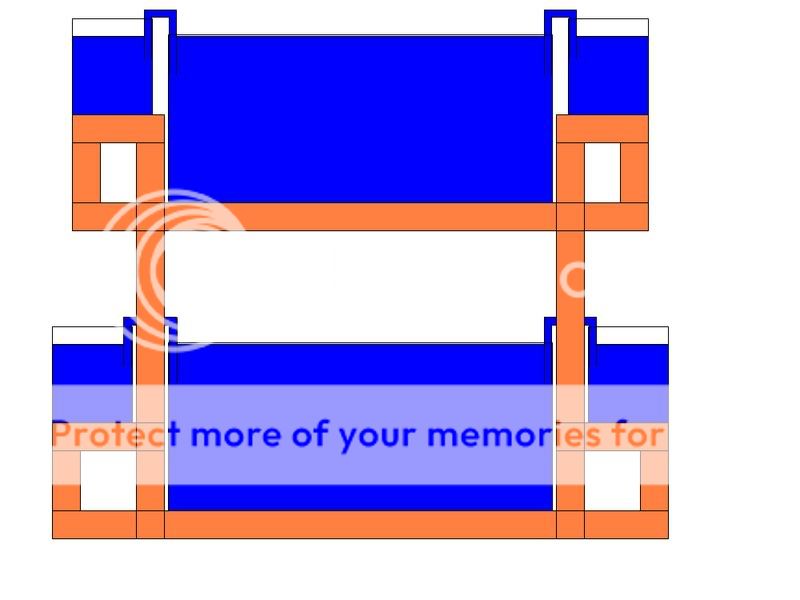
Water was pumped from the main tank (75 gal) to the end tanks (10 gal) then siphons drew water from the end tanks back into the main tank.
I built it so the top lip of the end tanks sat about 2" higher than the lip of the main tank. When I did water changes I turned the pumps off and refilled the tank to a level that did not allow either tank to overflow.
Not so fast there...
In the DIY there is a thread that usggests the "maximum" flow rate of different diameter pipes/hoses. But we should not foolishly assume that every pipe or hose will flow at the maximum flow rate. That chart/thread clearly explains that there is a minimum drop required to acheive the maximum flow rate.
We all know when siphoning water out of a tank, if we want to slow the flow of the hose we raise it up. This is because the flow rate of the siphon pipe/hose is directly dependant on the distance below the main tank's surface the pipe/hose releases.
Well in the case where we are siphoning water from one body to another, such as one tank to another, the flow rate is directly dependant on the elevational different between the water surface of the two tanks.
Since in my case (pictured above), and in the case the Original Poster is asking about, the water surface of both tanks connected by a siphon are at almost the same elevation, the siphon will function very slow.
In my situation photo'ed above, the functioning difference in water surfaces between the tanks was 1"~1.25"... I used four 3/4" PVC U tubes... at a flow rate of 75~100 gph (actual flow rate)...
That pic was taken before the system was actually functioning, but here is a conceptual drawing:
Water was pumped from the main tank (75 gal) to the end tanks (10 gal) then siphons drew water from the end tanks back into the main tank.
I built it so the top lip of the end tanks sat about 2" higher than the lip of the main tank. When I did water changes I turned the pumps off and refilled the tank to a level that did not allow either tank to overflow.
pjsmetana;5028398; said:lol a 1inch tube could handle 250gph. I would go larger for insurance... dont want it getting clogged!
Not so fast there...
In the DIY there is a thread that usggests the "maximum" flow rate of different diameter pipes/hoses. But we should not foolishly assume that every pipe or hose will flow at the maximum flow rate. That chart/thread clearly explains that there is a minimum drop required to acheive the maximum flow rate.
We all know when siphoning water out of a tank, if we want to slow the flow of the hose we raise it up. This is because the flow rate of the siphon pipe/hose is directly dependant on the distance below the main tank's surface the pipe/hose releases.
Well in the case where we are siphoning water from one body to another, such as one tank to another, the flow rate is directly dependant on the elevational different between the water surface of the two tanks.
Since in my case (pictured above), and in the case the Original Poster is asking about, the water surface of both tanks connected by a siphon are at almost the same elevation, the siphon will function very slow.
In my situation photo'ed above, the functioning difference in water surfaces between the tanks was 1"~1.25"... I used four 3/4" PVC U tubes... at a flow rate of 75~100 gph (actual flow rate)...

