


Again thank you man, you've been a big help with all the info. you shared. I did as you suggested and tried looking up some more info. myself it's one of the reasons I took so long to respond. Unfortunately I couldn't find any clear info. as it was spread between pike id threads and the opinions of those responding sometimes contradicted one another. Another problem is the info. that was out there(that is what I could find) was focused more on differentiating Atabapo I and II and not much about differentiating Tapajos except how to differentiate them from the Atabapos. Here's what I gathered, the major difference between Atabapo and Tapajos(physically) is that Atabapo tend to be thicker/chunkier while Tapajos are a more streamlined and slender pike and Ta[pajos I have a ocellated tail spot. Atabapo I are one of the redder of the red pikes, has a humeral spot and tail spot but it's not ocellated and lacks a suborbital mark below it's eye. Atabapo II has a unique bar pattern along it's back and no tail spot but does have suborbital marks below the eyes. Still I'm confused about Cobra pikes and if that's just another nomenclature for one of the Atabapos and if Tapajos get as red as Atabapo. In the rare instances I saw something identified as a Tapajos it was also called a red headed pike and the fish pictured had a orange body with only the head being red. Another thing that was mentioned in some of my reading stated that females also tend to be redder as adults then males of the same species. Guess I'll try to dig up more info. and see if i can find anything else.Yeah no problem I love pikes man. Unfortunately I think your confused about how the species thing is/works. Tapajos 1 and atabapo 1 are two VERY different SPECIES. Not a subspecies or a geographical variant. Same with Atabapo II and tapajos 2. In fact atabapo II are more closely related to Lents than tapajos sp.. However it can also be confusing since crenicichla Johanna can have many different variants and geographical variations but still are Johanna: here are a few variations but same sp.
It'll just take time for you to figure it out but you should the hang of it on no time.
The pikes in Question from aqua scape are indeed atabapo II. Good price on a good sized fish. However their shipping is quite expensive, so unless you're local or doing a group order idk haha. They sold a 3 inched at my lfs for 75 haha. Here's my guy the day I got him at a solid foot. Idk how well it'll work for you if you comm them, but if you so I would get 3 atabapo 2s. People seems to have better luck comming pikes when adding a group as opposed to 1. Atabapo II are supposedly less aggressive than other lugubris, but mine has proved the opposite. However he's a fully mature large male. Regardless of that I've seen many around 7 inches with other pikes Lents and marmoratas. I'd give it a go if you have an extra tank. Also another side note is that atabapo II are VeRY suspectible to hole inthe head. Clean water is a must and addition of tannins and lower ph is recommended. Peanut power, used to be a pike fanatic and very knowledgeable had a group of three he lost them to something. But they were like 2-3 inches so idk. U should be ok tho, just water change and use the search bar on your computer to find more info and I will say you're golden
Sent from my iPod touch using MonsterAquariaNetwork app

Thanks for helping with the id. Even with the info. I got it never really mentioned juvenile colors so I'd probably still be confused. Luckily I'm about 40 minutes away from Aquascape so picking up is totally an option so I can save on those shipping costs. Wow, I have to say from what I've seen most pikes are fairly expensive, especially for cichlids. Your Atabapo II looks sweet, even without the red coloration I like the way they look but can I ask do Atabapo II get red? I only ask because I would think at 12 inches he'd have some red going on if he was going to get red as he matured? Or is their different color variants of Atabapo II? And can I ask which are the reddest of the pike cichlids? I've seen some really red individuals pictured but I'd see very similar looking fish pictured id'ed differently in different threads. I was hoping to get something that was had the slender look of the Tapajos with a consistent red body color through out like this which where posted as Atabapo I's but don't seem to have the thick rounded body that the descriptions I read said they'd have.
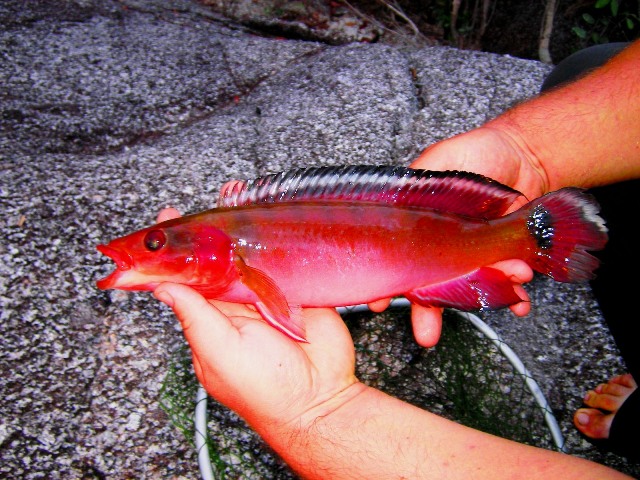
Thanks man that's what I had read as well and the others who responded before said the same, still it's always good to get as much input as possible. It helps you feel the info. is more certain that way.I learn n read most female has tht white on fin
Sent from my SM-G900P using MonsterAquariaNetwork App
Thanks for pointing out that they're both susceptible to HITH. Can I ask though is it more likely to occur if you raise up a juvenile or if you buy a large sized wild adult/subadult? I've never had much dealings with fish that need soft water so I'm going to have to do some reading to freshen what I already know about soft water as well as see if I missed anything. The most experience I've had with soft water is recent as I was hoping to breed my trachycorystes cats and though they survive just fine in any water I thought making the water closer to what they live in nature would help induce spawning which so far has eluded others who tried to breed them.I agree they are atabapo 2. Both atabapo species arE susceptible to hth. Soft water fish on general can be a pita.
As for mixing different species, I would refrain. Not worth mixing and watching a hundred dollar fish kill another unless you have a huge tank.
I'll give it some serious thought before I decide whether I'll mix or not but I am leaning toward trying. I'm only leaning toward trying because for the most part I was reckless and uninformed when I mixed a lot of species and had luck comm'ing fish that supposedly weren't so easy to comm(knock on wood). Though I will admit the successful comm's where predators comm's and when ever I tried comm'ing cichlids that were supposedly bad mixes my success rate was significantly less. On second thought I'll give it a lot more thought as I haven't been responsible for a fish of mine's death for years and would hate killing an animal simply because of my own vanity blinding me to how risky mixing will be.
Again man thanks for the advice and helping me make more informed and intelligent decisions.
That's a good thing to be aware of too, especially since so far from my understanding it's Atabapo I which is one of the reddest red pikes and considering obtaining a true red colored pike is my primary goal. Hmmm, I'm still considering the comm. but I will do my best to make the best and most informed decision before deciding as I said above I'd hate to kill an animal because I vainly tried to comm. fish that would have been better left to their own species. But as you also mentioned I do have a back up tank in case the comm. doesn't work out so I'm still in the process of making a definite decision. Still I appreciate the input and am considering it all carefully.I find that atabapo I is much hardier. On the subject of mixing them that aren't like armatus payara me and colt have had. With cicichlids they nip and bully and you can try them out as long as size is appropriate. Payara one nip can equal missing eye or worse. Anyways it's always the owners decision what to do with his fish and money, but IMO as long as you have back up tanks I'd give it a try, like why not? Lol
Sent from my iPod touch using MonsterAquariaNetwork app
You know whats funny, Armatus are one of those fish I heard aren't good to comm. especially with themselves but I always had success with(knock on wood(sorry I'm superstitious but I also don't want to tempt fate). I've comm'ed Armatus with other silver colored fish and with each other and only had one bad incident. I comm'ed them just fine with Aro's, Silver Dollars, Hoplias Curupira and Shortnose Gars. All supposedly horrible combinations but I had no incidents even when moving fish around and having to reintroduce them again. My one bad experience was mixing Armatus with Vulpinus. The Vulpinus where smaller then the Arms but not by much but the Vulpinus streamlined body made them look edible I guess to the Armies so they went for them. So from my experience I think Arms don't have true aggressive instincts toward silver fish as has been stated often but instead have a high instinctual drive to predate other silver fish. Since they're primary food source is probably other Characins I think that makes more sense to then the aggression thing. Hunting by sight and stalking silver fish would also be one of the easier prey to track while other fish might be less choosy about prey colors because of different habits when hunting such as ambush predators. For an ambush predator long range recognition and long time tracking and precise aim are less important as hiding till the prey is within range wouldn't need eyes that hone in on flash of light and glints from long range or the pin point accuracy the Arms use to catch prey. Sorry for running off but I always wanted to put that out there.


