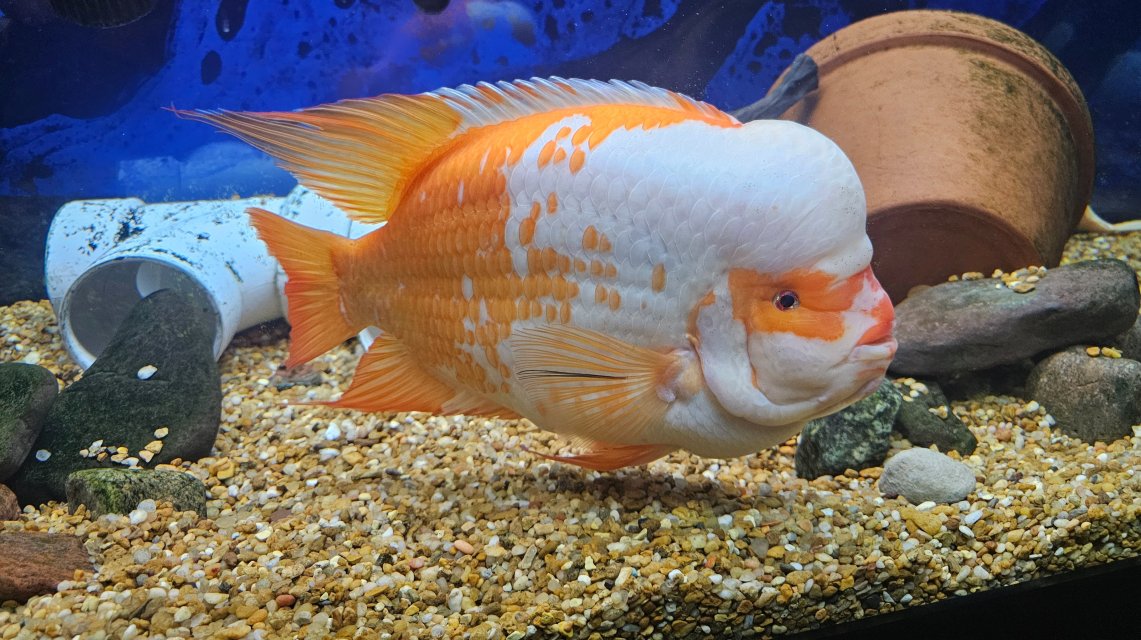
Hi all, I was looking through the Wet Spot’s website and came across a few different “red devils”. As some of you may know, they don’t always have pictures or information about a lot of their fish. Does anyone have any information and at least some pictures of these? I did read an old post that was saying that some don’t exist in certain lakes, still wasn’t what I was looking for even though the posts were very interesting. The different ones are ( Yaxha, Isla Zapatera, Managua and just labiatus). Also they have different citrinellus.
Different types of Red Devils
- Thread starter Brazzen1
- Start date
You are using an out of date browser. It may not display this or other websites correctly.
You should upgrade or use an alternative browser.
You should upgrade or use an alternative browser.


The term ¨red devilï is sometimes a catch a term for those species of the genus Amphilophus , of Ncaraguuan great lake cichllids..
There are pehaps at least a dozen, but not all members of the genus Amphilophus are called , or lumped into the red devil catagory by discriminating cichlid keepers.
A trimaculatus would not usually thought of as a red devil, neither would A islanus, being from Mexico.
A hogaboomorum is from Honduras, and superficially resembles many banded red devils, but is not usually lumped into the red devil catagory
It would be more appropriate to use each species scienticic name, instead of cramming them into the common name =red devil ,
if accuracy is desired.
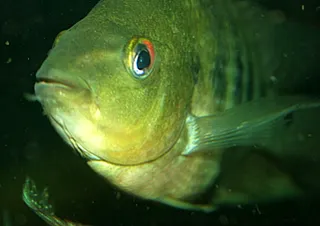
Left is Amphilophus flaveolus, right A amarillo
Below A trimaculatus
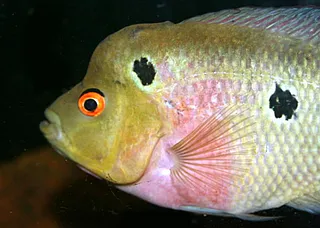
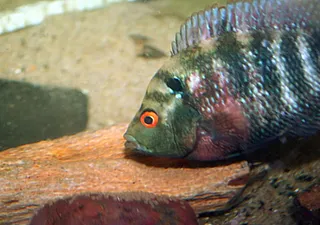
Left a male, right a female.
The thing is , most Amphilopus have within each species, the ability to havecolor morrphs that can suggest the term ¨red devil¨
but as you see above, are hardly red.
It´s that the red color morphs are sometimes most desired by aquarists.
I just happen to prefer the non red varieties
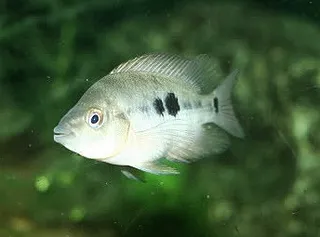
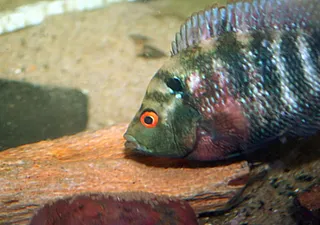
Most start out as juvies looking like the one below, before turning red
There are pehaps at least a dozen, but not all members of the genus Amphilophus are called , or lumped into the red devil catagory by discriminating cichlid keepers.
A trimaculatus would not usually thought of as a red devil, neither would A islanus, being from Mexico.
A hogaboomorum is from Honduras, and superficially resembles many banded red devils, but is not usually lumped into the red devil catagory
It would be more appropriate to use each species scienticic name, instead of cramming them into the common name =red devil ,
if accuracy is desired.
Left is Amphilophus flaveolus, right A amarillo
Below A trimaculatus
Left a male, right a female.
The thing is , most Amphilopus have within each species, the ability to havecolor morrphs that can suggest the term ¨red devil¨
but as you see above, are hardly red.
It´s that the red color morphs are sometimes most desired by aquarists.
I just happen to prefer the non red varieties
Most start out as juvies looking like the one below, before turning red
Last edited:

It wasn´t until the mid 2000s, and DNA testing came into vogue, that many Amphilophus (from different Nicaraguan lakes) were officially identified and realized to be separate species.
Before that time, almost all midevils, red devils and most Amphilophines were though to be one species, so in fact hybrids.
Only the midas and labiatus were some what separated, but the reality is, they too, many were also hybrids..
You relly can´t tell anything by just looking.
To know for sure about species, the aquarist must know which lake they or their ancestors were caught in, or have DNA analized.
The pic of the A amarillo I posted above, had parents that were wild caught in Lake Xiloa
The A flaveous pic, came from Lake Apoyo.
Unless the Amphilophus come with some sort of provinence (catch location) itprobably should be consided a n aquarium strain hybrids.
Before that time, almost all midevils, red devils and most Amphilophines were though to be one species, so in fact hybrids.
Only the midas and labiatus were some what separated, but the reality is, they too, many were also hybrids..
You relly can´t tell anything by just looking.
To know for sure about species, the aquarist must know which lake they or their ancestors were caught in, or have DNA analized.
The pic of the A amarillo I posted above, had parents that were wild caught in Lake Xiloa
The A flaveous pic, came from Lake Apoyo.
Unless the Amphilophus come with some sort of provinence (catch location) itprobably should be consided a n aquarium strain hybrids.
I was thinking as such, that’s why everything except the trimac and the 2 midas that I got from Kenc56 (Jeff Rapps) were always considered midevils. Maybe one could have slipped by, I got them when I was a kid at a lfs long before the internet and before wild locations became that important to me.It wasn´t until the mid 2000s, and DNA testing came into vogue, that many Amphilophus (from different Nicaraguan lakes) were officially identified and realized to be separate species.
Before that time, almost all midevils, red devils and most Amphilophines were though to be one species, so in fact hybrids.
Only the midas and labiatus were some what separated, but the reality is, they too, many were also hybrids..
You relly can´t tell anything by just looking.
To know for sure about species, the aquarist must know which lake they or their ancestors were caught in, or have DNA analized.
The pic of the A amarillo I posted above, had parents that were wild caught in Lake Xiloa
The A flaveous pic, came from Lake Apoyo.
Unless the Amphilophus come with some sort of provinence (catch location) itprobably should be consided a n aquarium strain hybrids.
Slipped by, meaning been an actual RD or Midas. I didn’t think to ask about collection locations or importers at that age. I am excited about knowing these things now though.

Back then, and even now, most LFS wouldn't have collection point information. Most come from Florida Fish Farms or local customers selling back fry from fish they got through Florida Fish Farms. And those Farms are about production, not preservation. That's not a criticism, without those Farms the Home Aquaria hobby would have never existed.
It wasn't until shipping fish was mastered that hobbyists could expand enough to establish small-medium businesses to distribute pure lines with locale information. Tangled Up In Cichlids / Rapps being the most well known and recognized from those early distributors.
I've ordered from Wet Spot before and I'm sure will again. They seem to be a reputable online Fish Supplier. That said, I'd consider them more like a LFS that offers shipping than an business like TUIC / Rapps or COTA.
But for a simple hobbyist who wants to raise cool fish, Wet Spot is a great source.
It wasn't until shipping fish was mastered that hobbyists could expand enough to establish small-medium businesses to distribute pure lines with locale information. Tangled Up In Cichlids / Rapps being the most well known and recognized from those early distributors.
I've ordered from Wet Spot before and I'm sure will again. They seem to be a reputable online Fish Supplier. That said, I'd consider them more like a LFS that offers shipping than an business like TUIC / Rapps or COTA.
But for a simple hobbyist who wants to raise cool fish, Wet Spot is a great source.

Don't forget Ken Davis ....he is the only big breeder left( thatvi know of) who carries a nice supply of pure Citrinellus and Labiatus....I consider myself fortunate to have 2 Citrinellus males from him !.....mainly big guy 'Cheddar'