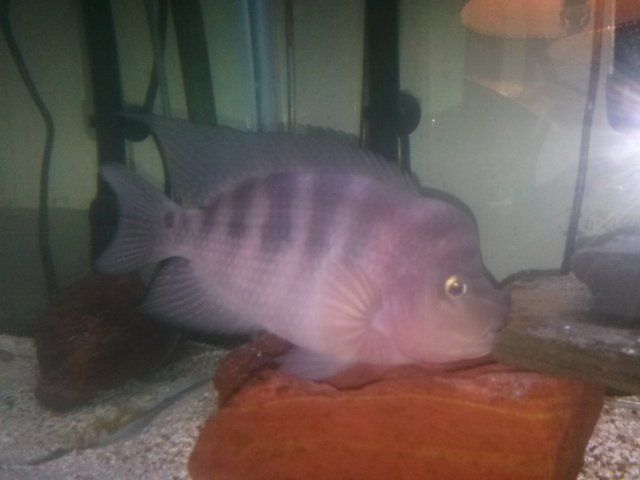
It's a trade name used to just get more money for the same fish, no difference I've been to a few spots on nicaragua, some barred ones have pink or red some not and all found together.....
It's a shame someone emailed me to look at this thread to possibly add something positive or helpful to the discussion.
When I read a reply like this, however, I have to ask myself 'to what means or to who's benefit can the above comment be applied?'
If I categorized or sorted barred midas and sold the more red individuals for a greater amount, or if I gave them cute names like Pyro or mucho masculine names to generate increased trade, then the above statement may apply. If I dubbed some 'flame head zebra midas' or 'blushing tiger midas', I may actually increase sales of the fish. But I could never.
That is not my way and I wish to make that clear if it's not already.
I use a straightforward approach that if the fish come from a known geographical area, then I will provide that information in parenthesis after the species name.
Case in point (copied and pasted directly from my stock list below):
Amphilophus citrinellus ‘wild Managua’ 7-8” 75.00 or 2 @ 65.00 ea. black barred/redhead barred wild caught San Francisco Libre, Managua ‘barred midas’
“ citrinellus ‘Rio Tempisque’ 3-3.5” 12.50 or 5 @ 10.00 ea. F1 redhead barred midas cichlids from Costa Rica
These races of midas originate/were collected from known locations.
While the drainages they occur are not connected, the fish are mostly similar in appearance. Granted, variations are observed (as should be expected) among individuals in a given population. Some are more boldly barred, some have red over cranial area, some more or less red over operculum or even on flanks. Some fish are more gold base color over body, etc.
I haven't an adult photo of the midas from Rio Tempisque, but I have collected and seen many.
I think the fish from Siquirres (pictured immediately below) would most closely match their general appearance at that size indicated.
Further below is a photo of the Rio Tempisque midas at their current size of 3-3.5".
The 'many faces of barred midas' limited edition to follow, including some older photos of the midas collected from Isletas on the big lake.


One male and one female were collected and received in separate imports that featured this golden color. They are here and I hope to have fry from them this summer. Maybe I should call them 'bumblebee midas'


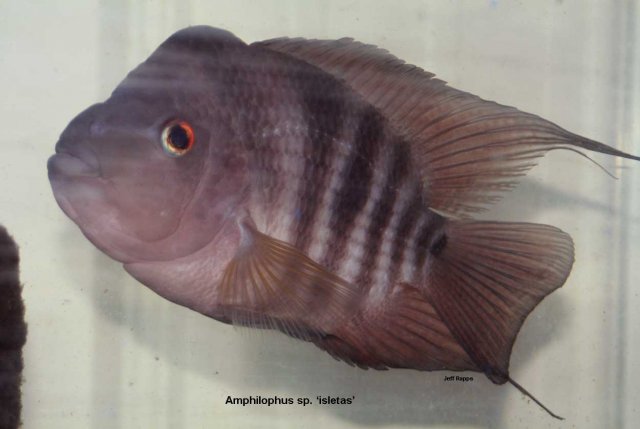

And does anyone remember 'Bighead'?