"don't keep them alone, they like to be in groups"

  • We are currently upgrading MFK. thanks! -neo
I all about space.
Put 2 uropthalmus in a 50 gal, and 1 ending up dead is not surpise.
Put the same 2 or even more in a 300 gal.....
or
All about space, absolutely. My point is how frequently you hear that some fish, like Geophagus, "need to be in groups," but practically no one says this about some other social species that are routinely kept singly, or even alone, in tanks. I'm not even saying one way is "right" and the other "wrong," simply pointing out the learning curve about the wild habits of some of these fish.
 
  • Like
Reactions: RD.
All about space, absolutely. My point is how frequently you hear that some fish, like Geophagus, "need to be in groups," but practically no one says this about some other social species that are routinely kept singly, or even alone, in tanks. I'm not even saying one way is "right" and the other "wrong," simply pointing out the learning curve about the wild habits of some of these fish.
The problem is the entertainment world of cichlids on YouTube that most people follow and don't care to listen how each species really is depicted in nature. Hobby isn't what it used to be. Facebook is a prime example of recklessness and carelessness of how people come into the hobby and get horrible advice. Many groups of just unbelievably!
 
Some species exhibit shoaling or schooling behaviour, having adapted to it for reasons of safety from predators. They've evolved to behave this way on a continuous basis, and it seems reasonable that species like this would be uncomfortable or stressed if kept alone. The commonly seen beginners' tanks that contain a dozen or more tetras or barbs, but no more than 1 or 2 of each species, are a perfect example of this. It's an unnatural situation for those fish and not surprising when some of them "go rogue" and become aggressive.

But contrast that to species that don't necessarily need or want to remain together, but are thrust into close proximity at certain times by low water levels, high food concentrations in a small area, breeding activity or other environmental and behavioural factors. Aside from the breeding example, these fish aren't seeking one another out; they are seeking food, shelter, etc. and this places them in specific locations where these things can be found. They tolerate each other, but that's about it. And, of course, going back to the "space" thing...we may see a group of fish in nature that appear to be very tightly packed into a small area, but compared to the densities that are usually found in almost every tank of any size, those wild fish are still widely separated and have their own personal spaces. Most "community" tanks could more accurately be described as "overcrowded prison exercise yard" tanks.

I can't play those videos right now, so...if they said the same thing...well, never mind. :)
 
Last edited:
I realize the average aquarist might consider a HOB filter, with an airstone or 2, in a 4 ft tank, akin to be simulating a riverine system,
but I find that wimpy non-directional water movement and tank size so lacking, compared to even moderate flow rates in nature, as not feasible trying to force a group of Geophagus, Thorichthys, or Cribroheros (normally considered social cichlids)
or even Heros, as a group, not realistic, or adequate.
Minimal size, ¨slighty directional¨ riverine system might be, 5 HOB filters lined up on the back of 6 foot tank, and enhanced with a low powered wave maker located on one end, pushing directionally along the tanks entire length.

This may give some semblance of moderate riverine flow, rate for non-rheophillic geophagines, and some more small Heros species, or small riverine Central Americans, or those from riverine habitats west of the Andes, such as juvie Mesoheros, and Andinoacara.

I know I harp on this a lot…..
But for true rheophillic social species, to live even remotely, and socially, as they do in nature, a much more robust flow rate across the length of that same size tank may be required, just to get close, for true rheophiles used to living in faster flows, in massive water courses.
 
Some species exhibit shoaling or schooling behaviour, having adapted to it for reasons of safety from predators. They've evolved to behave this way on a continuous basis, and it seems reasonable that species like this would be uncomfortable or stressed if kept alone. The commonly seen beginners' tanks that contain a dozen or more tetras or barbs, but no more than 1 or 2 of each species, are a perfect example of this. It's an unnatural situation for those fish and not surprising when some of them "go rogue" and become aggressive.

But contrast that to species that don't necessarily need or want to remain together, but are thrust into close proximity at certain times by low water levels, high food concentrations in a small area, breeding activity or other environmental and behavioural factors. Aside from the breeding example, these fish aren't seeking one another out; they are seeking food, shelter, etc. and this places them in specific locations where these things can be found. They tolerate each other, but that's about it. And, of course, going back to the "space" thing...we may see a group of fish in nature that appear to be very tightly packed into a small area, but compared to the densities that are usually found in almost every tank of any size, those wild fish are still widely separated and have their own personal spaces. Most "community" tanks could more accurately be described as "overcrowded prison exercise yard" tanks.

I can't play those videos right now, so...if they said the same thing...well, never mind. :)
All this depends on which fish we mean, though biological reasons for a behavior, which reasons may vary in different species, doesn't discount the behavior. But I agree if you're saying this can vary in some species by season, location, age, breeding season or not, etc. Angelfish, for example, that separate into pairs which stake out their own branch or stick for breeding, stay in near proximity to each other, but they resume traveling in schools afterward and they're often in association with Mesonauta, sometimes Heros, as well as frequently sharing the same space in communities with additional species (making for some natural combinations of species in your tank, including angels and Satanoperca, for example). In a tank, however, all you might see them do is fuss with each other, because of its limitations. Heros, which I often bring up in this context, travel in groups in the wild and breed in proximity to each other, though they can behave quite differently in a tank. Still, that the limitations of a tank might change their behavior doesn't change their social behavior in the wild or that you may see it yourself keeping a group of them in a large enough tank (with "large enough" depending on the specific species).

The reasons for 'communities' of different species in the wild are interesting, also. The reasons for it aren't necessarily, or always, that there's nowhere else to go, and the benefits aren't always limited to security in numbers. For example, a Geophagus or Satanoperca may stir up food for other species that know this and follow them and there are often biological system reasons behind such 'communities' of different species-- whether on land or sea. :-)
 
I realize the average aquarist might consider a HOB filter, with an airstone or 2, in a 4 ft tank, akin to be simulating a riverine system,
but I find that wimpy non-directional water movement and tank size so lacking, compared to even moderate flow rates in nature, as not feasible trying to force a group of Geophagus, Thorichthys, or Cribroheros (normally considered social cichlids)
or even Heros, as a group, not realistic, or adequate.
Minimal size, ¨slighty directional¨ riverine system might be, 5 HOB filters lined up on the back of 6 foot tank, and enhanced with a low powered wave maker located on one end, pushing directionally along the tanks entire length.

This may give some semblance of moderate riverine flow, rate for non-rheophillic geophagines, and some more small Heros species, or small riverine Central Americans, or those from riverine habitats west of the Andes, such as juvie Mesoheros, and Andinoacara.

I know I harp on this a lot…..
But for true rheophillic social species, to live even remotely, and socially, as they do in nature, a much more robust flow rate across the length of that same size tank may be required, just to get close, for true rheophiles used to living in faster flows, in massive water courses.
I think the thing here is to understand which are rheophilic species and which ones live in slow to moderate current. For quite a few non-rheophilic species, directional current isn't much of a factor in my experience, considering in the wild they'll find all sorts of niches and varying current to hang out in, even in moderately flowing rivers. Not saying for some that tend to be aggressive having good current in the tank doesn't calm them down and acknowledging that this is less current than a large river with moderate flow-- my point has been that there are also places or times of year where some of these fish experience very low current, so they don't have super particular requirements beyond clean water and plenty of oxygen.

Along such lines, I've seen video of Heros that venture out into the fast current in the middle of a river to catch something floating by, then retreat back to the quieter water of a branch tangle near the river edge. By the same token I've seen (and posted) videos of fish like angelfish or severums in surprisingly fast current vs what's typical for them. Then there's my Geophagus sveni, for example, two canister outlets pointing forward in a 6 ft tank, so not uni-directional (though I've done that in some tanks), and spend most of the day in the middle of the tank where flow is slowest. (Meanwhile, an L14 pleco spends most of its time at either end and an L200 is all over the place.)

The other thing, sometimes, is which species in the genus are rheophilic and which aren't, or which are the outliers in a generally rheophilic genus. So, for example, I saw a wild video of Retroculus acherontos in relatively slow water, which surprised me. So I looked up their description as a new species, which said they're distinguished (in part) by being higher bodied and living in quieter water than other Retroculus.
 
  • Like
Reactions: Woefulrelic and RD.
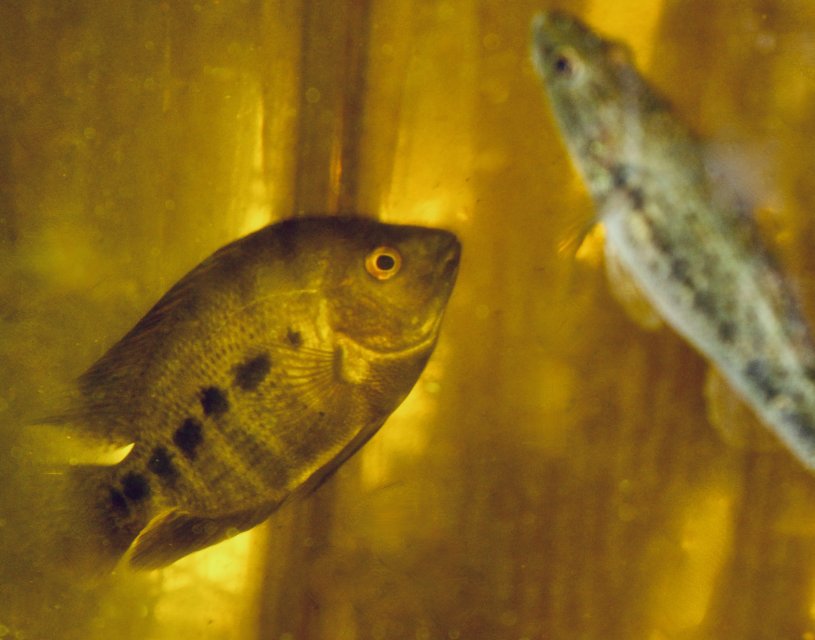
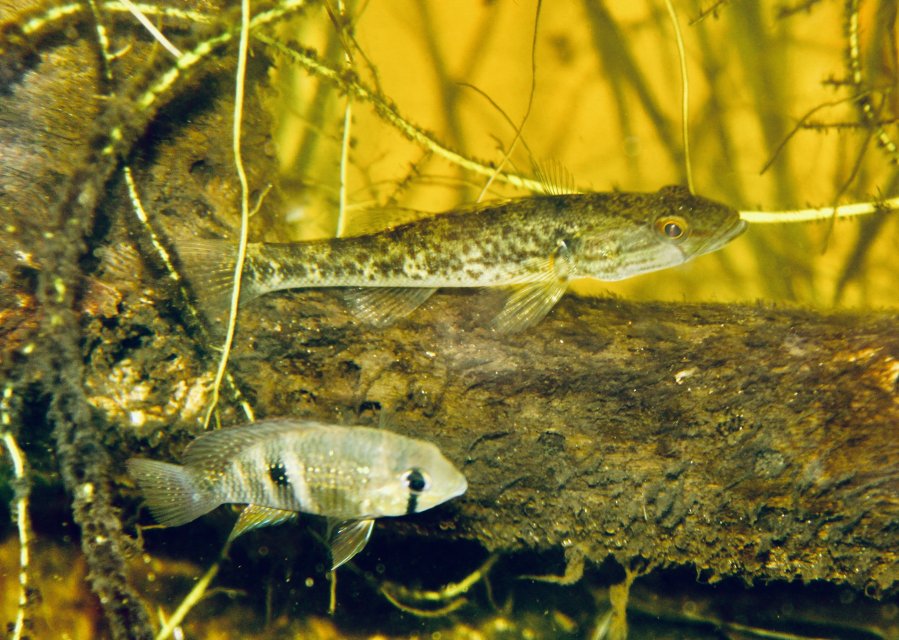
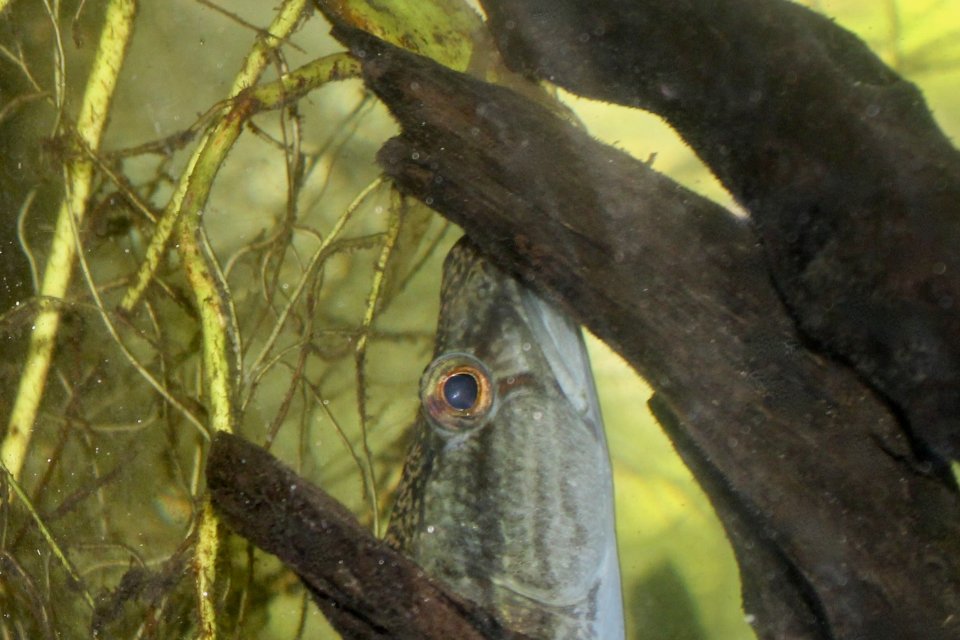
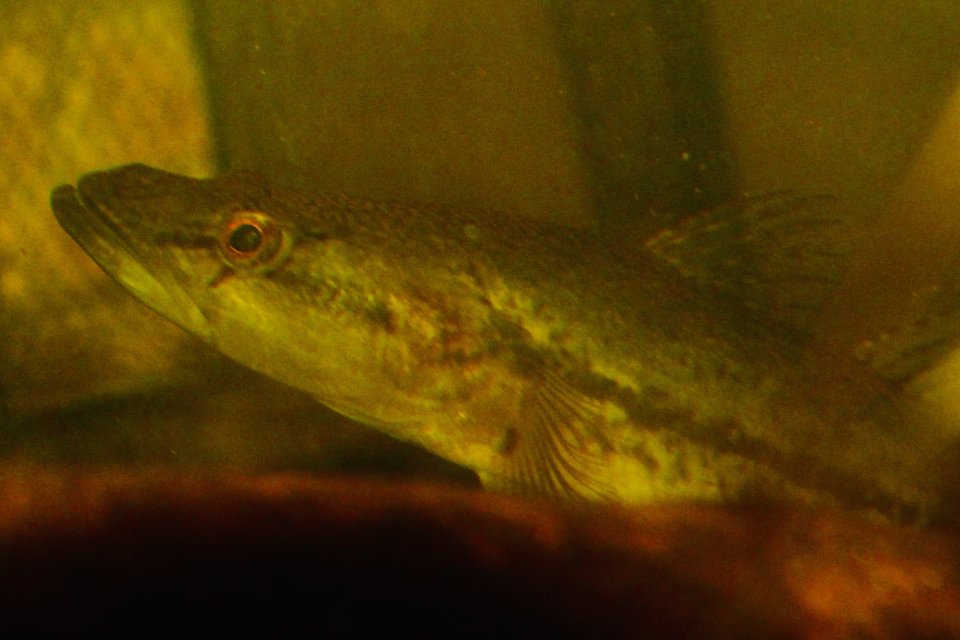
I try to be very careful with my biotopes, because of the predator prey relationships in rivers they share.
I can keep simlar size cichlids, with similar size predatory gobies, but vary too much, and the goby will eat the cichlids.
IMG_9277.jpeg
IMG_1857.jpeg
At the size above, all was copaseptic, all cichlids were safe, but when I experimented by adding a 12¨ adult goby, cichlids, plecos and tetras all quickly
disappeared.
IMG_2964.jpeg
IMG_3036.jpeg
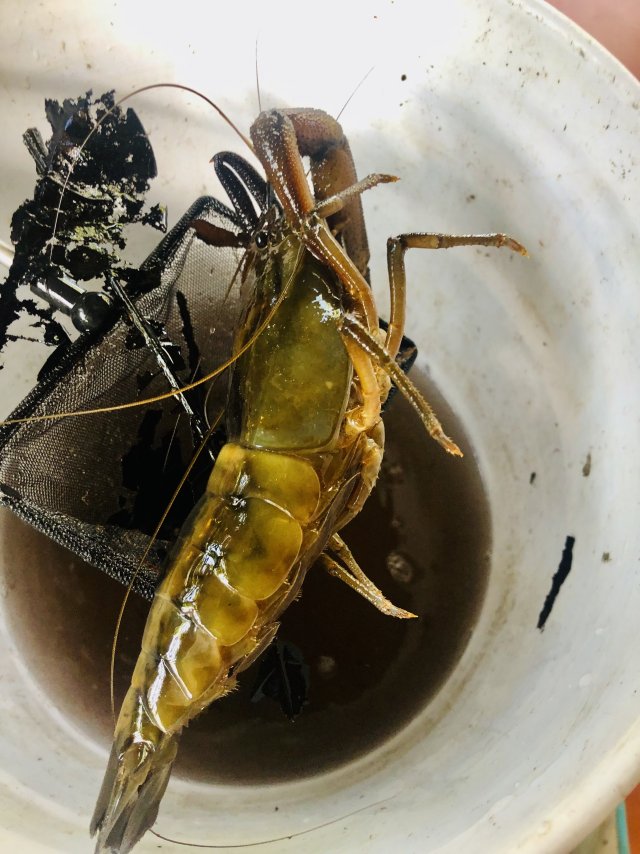
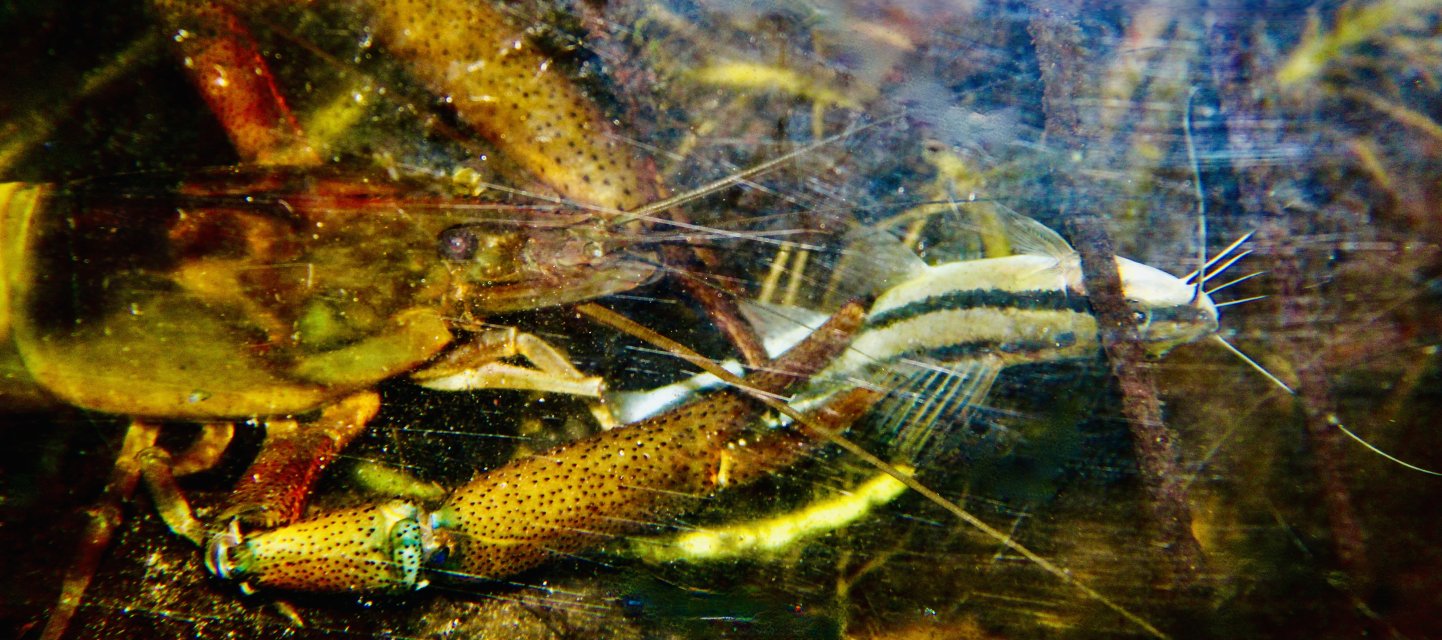
Same thing happened when I tried adding an adult Macrobracium shrimp.
IMG_6373.jpeg
As you can see, it mage the 5 gallon bucket look tiny, and soon after being added to the tank, did a number on some Pimelodus chagresi catfish
IMG_1134.jpeg
At least the pH was right.
 
MonsterFishKeepers.com