


I have not failed one magnetic drive motor. I had my first motors over 30 yeats ago from Aquaclear,dynamite, whisper and marineland, none failed. The only failed parts are worn out impeller or seal between the motor and impeller chamber. These low energy, air cooled motor never get burnt out, and who know may outlast human heart.
Extremely over filtered okay?
- Thread starter Aidan
- Start date
You are using an out of date browser. It may not display this or other websites correctly.
You should upgrade or use an alternative browser.
You should upgrade or use an alternative browser.


Agree with RD, and a tiny hard shelled snail, can do the same. A little redundancy isn't a bad thing, especially when dealing with a small tank, sometimes all it takes is a few hours, and the tank is toast.
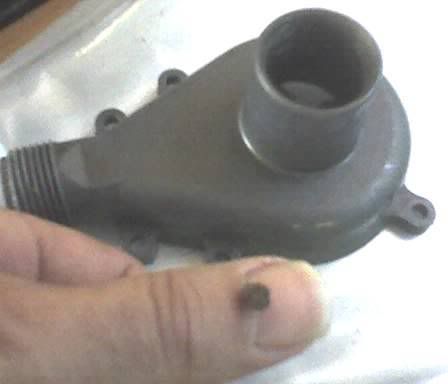
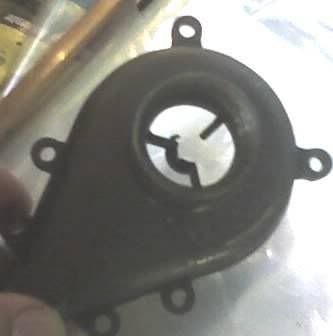


Among other things, a single grain of sand can stop a magnetic drive motor in its tracks, no matter if its 30 yrs old, or 30 minutes. Been there, done that.
Agreed. I've lost quite a few filters to a combination of my love of high flow and white sand. It's why I typicaly run bare bottoms now.

In my mind i understand there can be no limit to mechanical filtration
But this does make me wonder if there are limits to effective biological filtration
As you need to feed the good bacteria if there is too much bio filtration (matrix, sponges etc) would it share the bio load over all the filtration therefore having smaller weaker colonies over all bio filters ???
Just thinking out loud
But this does make me wonder if there are limits to effective biological filtration
As you need to feed the good bacteria if there is too much bio filtration (matrix, sponges etc) would it share the bio load over all the filtration therefore having smaller weaker colonies over all bio filters ???
Just thinking out loud

would it share the bio load over all the filtration therefore having smaller weaker colonies over all bio filters ???
Yup, you'll just end up with all the media being more lightly colonized. I guess if you had a very long path through the media at some point you'd end up with none because the ammonia/nitrite had been consumed. But I think in practice you're closer to all your media colonized lightly.
It depends. As an example, there is a plus side to chloramine treated tap water, which is one can build massive bio beds with nothing more than water changes. How so? It's really quite a simple concept.
When one performs water changes (with a proper water conditioner) there will always be 'total' ammonia left behind, which is safe for your fish, but at the same time is still utilized by your bio bacteria. If you have a large capacity of bio media, eventually you can take a bio bed that supports a few small juvies, and expand that bio bed to one which will support a colony of adults, by nothing more than water changes.
The more water changes you perform, and the larger they are, the faster & larger the bio bed will grow.
Many years ago I experimented by I placing two AC 300's on a 25 gallon tank, which contained 4 very small (approx 1.5 inch) juvenile African cichlids. I performed a 50% water change every 5 days, and within 3 months the bio bed had grown to where I could add 13 sub adult cichlids (2.5-3.5 inches) with no spike in ammonia, or nitrites. The tank already contained enough bio bacteria to easily keep the ammonia produced from the fish, in check. It's basically a fishless cycle, using nothing more than tap water. With chloramine treated tap water, and large frequent water changes, my bio-bacteria is kept at max limits by both the fish, and the water.
When one performs water changes (with a proper water conditioner) there will always be 'total' ammonia left behind, which is safe for your fish, but at the same time is still utilized by your bio bacteria. If you have a large capacity of bio media, eventually you can take a bio bed that supports a few small juvies, and expand that bio bed to one which will support a colony of adults, by nothing more than water changes.
The more water changes you perform, and the larger they are, the faster & larger the bio bed will grow.
Many years ago I experimented by I placing two AC 300's on a 25 gallon tank, which contained 4 very small (approx 1.5 inch) juvenile African cichlids. I performed a 50% water change every 5 days, and within 3 months the bio bed had grown to where I could add 13 sub adult cichlids (2.5-3.5 inches) with no spike in ammonia, or nitrites. The tank already contained enough bio bacteria to easily keep the ammonia produced from the fish, in check. It's basically a fishless cycle, using nothing more than tap water. With chloramine treated tap water, and large frequent water changes, my bio-bacteria is kept at max limits by both the fish, and the water.
