Fatty Liver Disease, Stop over feeding your Peacock Bass.
More Information to come.
With adult peacock bass, fatty liver disease (hepatic lipidosis) is quietly one of the most common killers, and it almost never looks dramatic beforehand. That’s why you always hear:
“They were fine yesterday.”
Because they were — until the liver finally said I’m done.
Here’s what actually happens behind the scenes:
Why it sneaks up on people
Peacock bass are stoic predators.
They don’t show “off” signs like some fish. No flashing, no gasping, no clamped fins. They’ll:
• Eat aggressively
• Swim normally
• Look “healthy” externally
Meanwhile internally:
• Excess dietary fat gets stored in the liver
• Liver cells swell with fat
• Organ function slowly declines
• Eventually → acute failure
When it crashes, it crashes fast.
The feeding trap hobbyists fall into
Most adult deaths trace back to the same combo:
• Too frequent feeding (daily or near-daily)
• High-fat foods (feeder fish, silversides, tilapia, goldfish, etc.)
• Low activity (aquarium ≠ Amazon basin)
People feed based on:
• Begging behavior
• Aggression = “they’re hungry”
• “They eat everything I give them”
But peacocks are wired to eat whenever food appears, not when they need food.
The visual red flag people ignore
A lot of keepers think this is healthy:
• Rounded belly
• Thick body
• Bulging sides behind the head
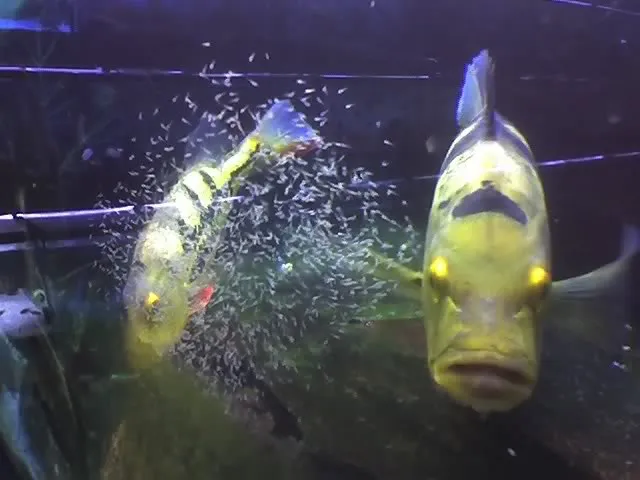
In reality, an adult peacock bass should be:
• Athletic
• Streamlined
• Slightly lean, not “full”
Chunky ≠ healthy
Chunky = metabolic stress
Why adults are most affected
Juveniles can get away with more because:
• Rapid growth
• Higher metabolic demand
Adults:
• Slower metabolism
• Growth plateaus
• Extra calories go straight to fat storage
So feeding an adult like a juvenile is a ticking time bomb.
The brutal truth
Most overfed peacock bass don’t die of:
• Parasites
• Water quality
• Random “bad luck”
They die of chronic overnutrition, and the owner never connects the dots because the fish never “looked sick.”
More Information to come.
With adult peacock bass, fatty liver disease (hepatic lipidosis) is quietly one of the most common killers, and it almost never looks dramatic beforehand. That’s why you always hear:
“They were fine yesterday.”
Because they were — until the liver finally said I’m done.
Here’s what actually happens behind the scenes:
Why it sneaks up on people
Peacock bass are stoic predators.
They don’t show “off” signs like some fish. No flashing, no gasping, no clamped fins. They’ll:
• Eat aggressively
• Swim normally
• Look “healthy” externally
Meanwhile internally:
• Excess dietary fat gets stored in the liver
• Liver cells swell with fat
• Organ function slowly declines
• Eventually → acute failure
When it crashes, it crashes fast.
The feeding trap hobbyists fall into
Most adult deaths trace back to the same combo:
• Too frequent feeding (daily or near-daily)
• High-fat foods (feeder fish, silversides, tilapia, goldfish, etc.)
• Low activity (aquarium ≠ Amazon basin)
People feed based on:
• Begging behavior
• Aggression = “they’re hungry”
• “They eat everything I give them”
But peacocks are wired to eat whenever food appears, not when they need food.
The visual red flag people ignore
A lot of keepers think this is healthy:
• Rounded belly
• Thick body
• Bulging sides behind the head
In reality, an adult peacock bass should be:
• Athletic
• Streamlined
• Slightly lean, not “full”
Chunky ≠ healthy
Chunky = metabolic stress
Why adults are most affected
Juveniles can get away with more because:
• Rapid growth
• Higher metabolic demand
Adults:
• Slower metabolism
• Growth plateaus
• Extra calories go straight to fat storage
So feeding an adult like a juvenile is a ticking time bomb.
The brutal truth
Most overfed peacock bass don’t die of:
• Parasites
• Water quality
• Random “bad luck”
They die of chronic overnutrition, and the owner never connects the dots because the fish never “looked sick.”



 How accurate is the “1 pellet = 1.8 goldfish” claim, really?