Flow rate misconseptions

  • We are currently upgrading MFK. thanks! -neo
But even if you achieved this how would you go a step further and replicate drought or flood seasons? Surely just as important factors if you want to address all the issues of giving the fish a "natural" environment so they can deal with "life"?
I've seen people try this, raising and lowering water levels and such things, closer to the real thing in a large, public aquarium (years ago, forget where). I think (at least beyond a certain point) it can be as much about what the aquarist enjoys doing as what's actually essential to the needs of (most) fish, though for some species that kind of thing can unlock breeding. I definitely try to create an environment for fish to be comfortable and it's something I believe in, but it would be a much more arcane hobby if most fish weren't as adaptable as they are.
 
I do find it interesting that many of the fish I collect are found in very niche habitats in Panama, and are not found as often outside of those certain altitudes and climate zones.
The most common widespread cichlid species in Panama seem to be Andinoacara, and it is interesting to me, that it is one of only 2 cichlid that has a direct link and genera in S America, with all the other species of the genus found only there.

The two are the Andinoacara, and Geophagus crassilabris.
I have found Andioacara coeruleopunctatus in almost every riverine, and lacustrine body of water in Panama I have collected.
Artificial lakes created by the Panama Canal (such as Arinosa, Bayano, and Alejuera, the canal itself, some fast flowing smaller rivers, steams, oxbows, and ponds, from east to west throughout Panama, and north into Costa Rica.
The only place they were not found (by me, as of yet), are in shallow rivulets in higher altitudes.


Whereas Darienheros calobrensis is found only in streams bordering the fast flowing Mamoni river and easterly into the Darien itself.
Where it is found, they dominate in rheophillic fast flowing habitats, and although the Andinoacara are also found in those habitats, they seem to prefer oxbows, is less rheophillic flows, pools, and conditions, especially as adults.


The only other endemic cichlid I’ve yet to find in this eastern section, south and east of the Cordillera Central mountains is Isthmoheros tuyrensus, originally endemic to Lake Bayano. But it seems it has been driven from much of the lake proper by introduced Tilapia, and Cichla species.


Locals I talked to recommended the only place to find tuyrensus, I would need to search the smaller, more remote riverine tributaries, but not in the lake proper these days. When I did attempt to throw the net in the lake itself, all I found were introduced Tilapines, and tetras.
Lake Bayano below


The same kind of flow rates apply to the catfish I’ve caught for far.


Pimelodus chagresi and Rhamdia guatamalensus were found in shallow moderately flowing and almost stagnant streams, and Pleco species such as Ansistrus, Chaetostoma, and especially Sturosomaticthys, were found in fast flowing waters, and even rapids, especially as large adults.


It may be that as far a cichlids go, introduced exotics are gradually replacing endemic species. Many locals from areas around the Panama City area I talk to, claim to only see Tilapia in local rivers.


I wonder in some cases, like some pleco species, if it's at least partly about seeking niches that are less accessible to predators or competition for food, territories, etc.. I've had pleco species that do need clean water and good oxygen levels, while they also come from fast moving water, but in my tanks they didn't necessarily seek out or stay in the spots with highest flow, instead it's been more about which pieces of driftwood they like to hang out on or under, etc.
 
  • Like
Reactions: jjohnwm and HUKIT
...if someone was to play around with the average 1.5mph flow rate for example, how does one calculate that from gallons per hour? I’m not very tech savvy and I hate AI but this is what their example gave but it doesn’t seem correct. I have an electronic flow meter on two different sumps.

Example:
  • A pump outputs 100 GPH through a 1-inch diameter pipe.
  • Step 1:
    100GPH×231=23,100in/hr
  • Step 2: Area of 1-inch pipe:
    3.14159×(0.5)2=0.785in2
  • Step 3: MPH =
    23,100÷(0.785×3600)≈8.2MPH
Trust me, you're more tech savvy than I am and you can't possibly distrust AI more than I do. But in looking at your data above, I am struck by the idea that while X gph flowing through a 1-inch pipe may be moving at some very high velocity, once that same number of gph enters your aquarium it now has a much larger area...the height x depth of the tank...to cover, so the same amount of water will be moving far more slowly, speeding up again only once it enters the filter intake at the other end of the tank. The actual velocity at which the water is moving while in the tank will be, relatively, far lower.

I am also assuming that the official numbers published for the flow rate in a given river are calculated using the total number of gallons that pass a fixed point per unit of time. How the researchers produce those numbers is a mystery to me, but even if they are accurate, they would depend upon the cross-sectional area of a particular point in the river. If the water is funneled down through a narrow portion of the waterway, it would flow much faster, creating an area of rapids. When the river widens and/or deepens the water speed would drop dramatically. This doesn't even take into account obstructions like rocks, driftwood etc. that would break up and slow the flow in certain areas...which, coincidentally, are the areas where most fish spend most of their time.

I'm just spitballing here and would love to be corrected or proven wrong. Right now it seems to me that a given fish in a river will be exposed to wildly differing flow rates simply by moving around within even a small area. That seems to be what I observe in my limited experience as a fisherman and casual snorkeler. Trying to quantify this type of data seems like an impossible task...with results that, thanks to all the variables concerned, can't be completely trusted...and one which doesn't have much practical value.
 
  • Like
Reactions: HUKIT
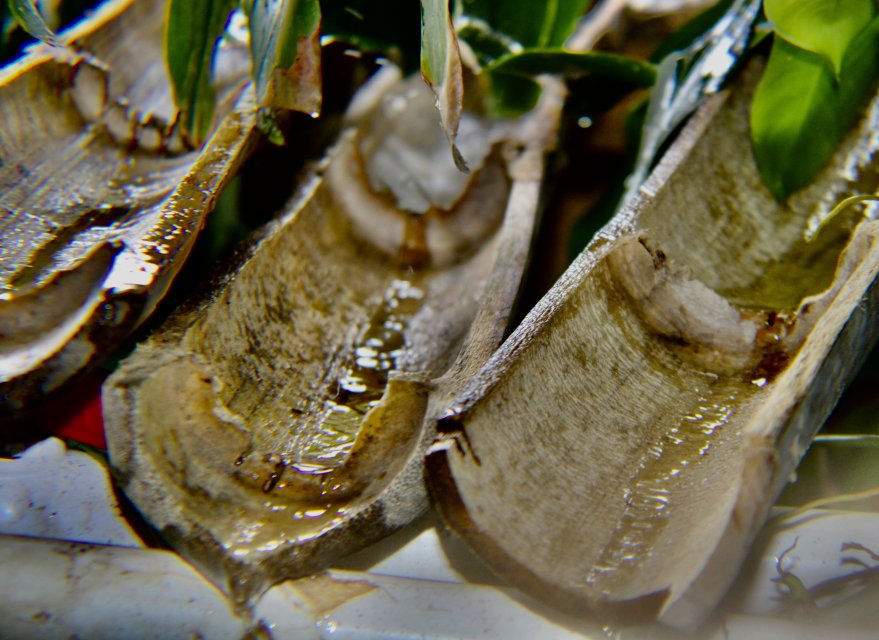
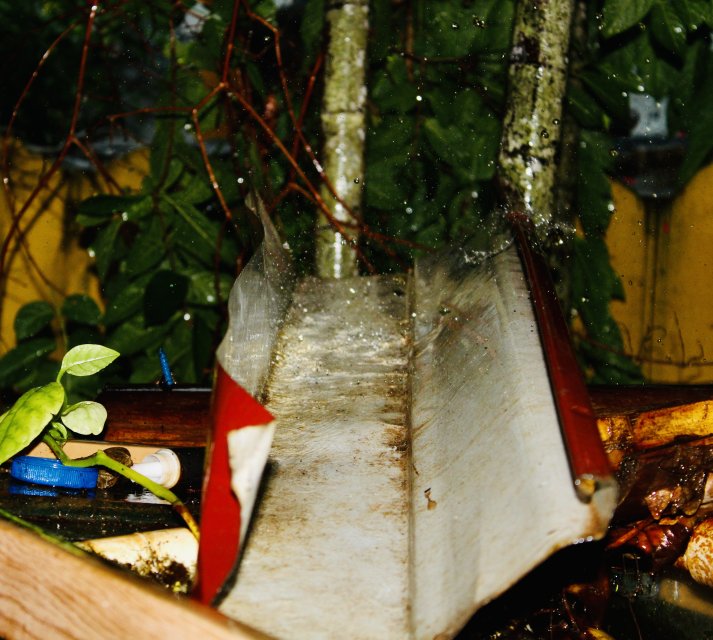
It is interesting that although I can´t mimic these raging torrents, daily rains, and the conduets emplyed funneling rain water into the sump, at times the tank ends up with twice daily large, 40% water changes over 24 hours, instead of my 30 -40% every other day routine, in the dry season.
IMG_0054.jpeg
IMG_1114.jpeg
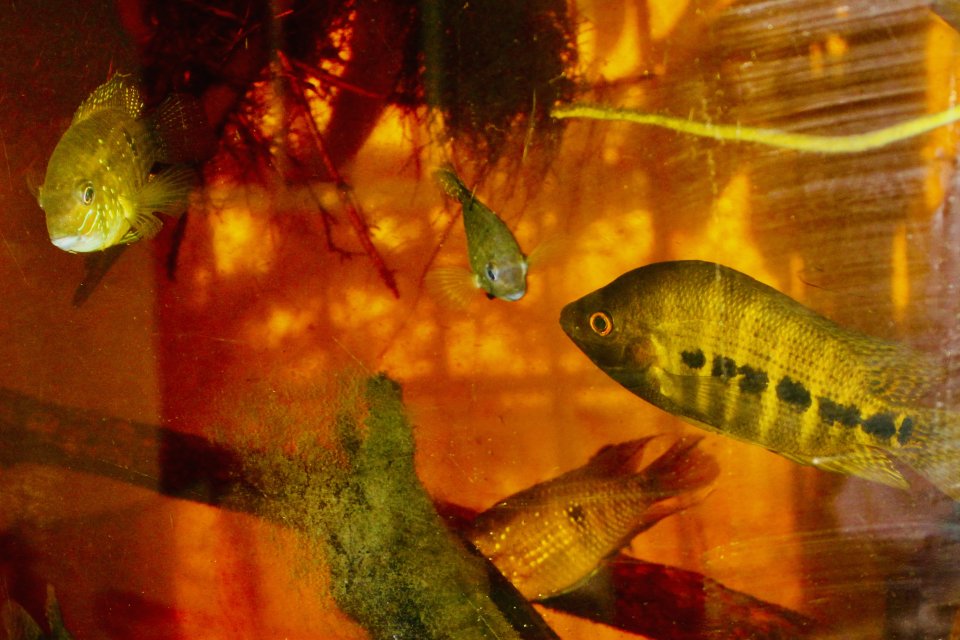
And with these rains, some leaf litter gets washed in from surrounding foliage, dropping pH a tenth or so, and temporarily raising tannins, coloring water tea brown, until those tannins get washed out again with the next rain storm, or become even more intense., if more leaf litter is washed in
IMG_7271.jpeg.
 
Trust me, you're more tech savvy than I am and you can't possibly distrust AI more than I do. But in looking at your data above, I am struck by the idea that while X gph flowing through a 1-inch pipe may be moving at some very high velocity, once that same number of gph enters your aquarium it now has a much larger area...the height x depth of the tank...to cover, so the same amount of water will be moving far more slowly, speeding up again only once it enters the filter intake at the other end of the tank. The actual velocity at which the water is moving while in the tank will be, relatively, far lower.

I am also assuming that the official numbers published for the flow rate in a given river are calculated using the total number of gallons that pass a fixed point per unit of time. How the researchers produce those numbers is a mystery to me, but even if they are accurate, they would depend upon the cross-sectional area of a particular point in the river. If the water is funneled down through a narrow portion of the waterway, it would flow much faster, creating an area of rapids. When the river widens and/or deepens the water speed would drop dramatically. This doesn't even take into account obstructions like rocks, driftwood etc. that would break up and slow the flow in certain areas...which, coincidentally, are the areas where most fish spend most of their time.
Yes sir, the calculation the artificial non-intelligence calculation didn’t make any sense to me. I spent a an hour or two trying to figure out a way to come up with an actual calculation as the size of the tank plays a vital role. I do run all my tanks as open as far as my overflows will allow. So I personally don’t need to know what the actual miles per hour of my flow is but out of curiosity I’d like to now.
 
Of course most fish must effectively deal what ever environment they find themselves in, at any moment, and seasonal changes may randomly dictate those moments, but most fishes have preferences, and they are usually obvious.
They also develope trophic (predatory) skills to help cope with those preferred environments.

We as aquarists, often haphazardly combine these species with little regard to the complexity of such diverse natural habitats, and specific environments.

As an example
Asian Denison barbs normally come from fast flowing, cool, highly oxygenated streams in the Indian Kerala Ghat highlands (water temps 65´F).

Most gouramis prefer oxbows at low elevations where water flows are minimal, and water temps heat up into the mid 80 at times, in stagnant pools and rice paddies, where they feast of ccontinous suppy of mosquito larvae.

And cope, with their abilty to use atmospheric oxygen in those low disolved O2, poor conditions, that labyrinth organ.
Do they actually belong in the same tank?

Oscars prefer oxbows, and slow moving walls of consistant fairly sedate riverine environments.
Retroculus prefer and seek out micohabitat rapids.
Same tank?
 
Most gouramis prefer oxbows at low elevations where water flows are minimal, and water temps heat up into the mid 80 at times, in stagnant pools and rice paddies, where they feast of ccontinous suppy of mosquito larvae.

And cope, with their abilty to use atmospheric oxygen in those low disolved O2, poor conditions, that labyrinth organ.
Do they actually belong in the same tank?

Oscars prefer oxbows, and slow moving walls of consistant fairly sedate riverine environments.
Retroculus prefer and seek out micohabitat rapids.
Same tank?
In SE Asia stagnant rice paddies, temp can rise to mid 90s and oxygen drop to nearly zero where labrinth fish have evolved to breath air. So are fish in the Amazon low land forests during dry season where receding oxbow lake water reach 90s and oxygen < 2 ppm. Many perennial Amazonian fish, such as pacu and pleco, have evolved to survive in low oxygen water, while others, such as Arapaima and arowana can breath air directly and survive.
 
  • Like
Reactions: neutrino
MonsterFishKeepers.com