

Fx6 Output/agitation Concern

  • We are currently upgrading MFK. thanks! -neo

JJ05

Jack Dempsey
MFK Member
Jun 26, 2008
27
15
33
USA
Hi all, I’m in the process of setting my 180 up. Do you guys think I have my output nozzle too low? I get some surface movement but it’s not much to the point it’s breaking the water or causing bubbles. It is just causing the surface to slightly move. I have both nozzles pointing up to cause more movement. My question is should I move my nozzle up more? I fear once I put more water in the tank it will cause less surface agitation. How much surface movement do I need anyways for proper oxygen? I hear people say from slight surface movement to breaking water. I can add a couple air stones/discs with a power head or two to help if needed. Or just turn the filter off and adjust the nozzles a little. What do you guys think? Sorry for the cloudiness, just added the water.

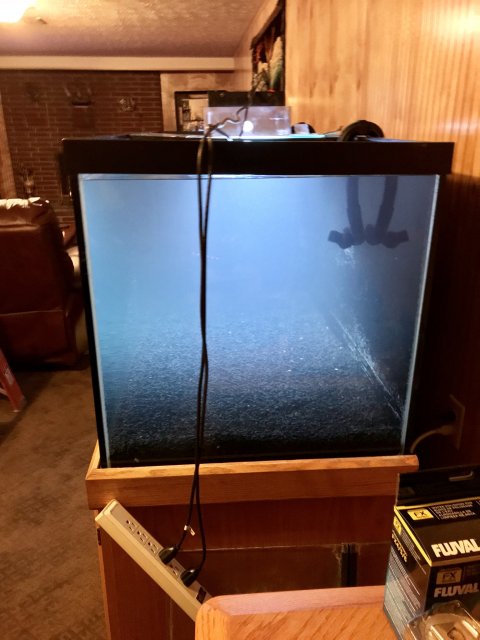
B6A37410-CB39-48DF-9EC3-F9FECC2EBD66.jpeg 464B1006-9D61-49D1-995E-77200F0B4E10.jpeg
 
I agree with Rocksor, the more surface agitation the better.
This of course may depend on the fish you plan to keep in the tank.
If you are keeping species that live in low flow situations, like swamp or oxbow dwellers, you may want to spread the flow and agitation out.
If normal riverine species, no prob.
Or if rheophillic species, you may to want to concentrate flow more.
My favorites are rheophillic to I concentrate flow and place outflows just above the surface, or use ventures to create riffle type environment.

venturi below in a 6 ft length tank

 
  • Like
Reactions: FishBeast and Dloks
Surface gas exchange will occur even with a moderate amount of surface movement but you can certainly get more if you shorten the tube and have the nozzles closer to the surface. You can even point one up and the other one down.
 
Surface gas exchange will occur even with a moderate amount of surface movement but you can certainly get more if you shorten the tube and have the nozzles closer to the surface. You can even point one up and the other one down.

Did you measure this with a dissolved oxygen meter? Aquarium Co-op said it took a ridiculous amount of surface agitation to match an air stone.

I have a meter but haven't tested it yet. It's probably unnecessary as scientists have studied it extensively.

aeration 2.png
 
  • Like
Reactions: FishBeast
Did you measure this with a dissolved oxygen meter? Aquarium Co-op said it took a ridiculous amount of surface agitation to match an air stone.

I have a meter but haven't tested it yet. It's probably unnecessary as scientists have studied it extensively.

View attachment 1337948
Agreed but the question is how much dissolved O2 would your tank really need? At what point would the added surface agitation from an airstone be superfluous compared to pointing the return at the surface? Many factors come into play not the least of which is the oxygen demands of the inhabitants, stocking density, etc. and some other ones that I am not so familiar with including resistance of the viscous sublayer of water, friction velocity of surface airflow.

e.g. A Toyota Corolla and a Lamborghini Aventador both get you to 65 mph if 65 mph is as fast as you need to go anyway.
 
Agreed but the question is how much dissolved O2 would your tank really need? At what point would the added surface agitation from an airstone be superfluous compared to pointing the return at the surface?

Ideally, over 5 mg/L.

Simply rippling the surface probably has little to no effect so I'd say never.
 
  • Like
Reactions: FishBeast
MonsterFishKeepers.com
