Gap / Air bubbles in Tank silicon

  • We are currently upgrading MFK. thanks! -neo
The guy who did this told it won't leak and said these things are normal ?‍♂️ and he said if it does then will remove the side panel and clean the silicone and re-fix this side panel (only this panel)
Will that be ok if remove the panel completely and re apply the seams and seal again from inside also
That's the best option.
But considering the tank size I think it's 12mm glass. And I firmly believe that removing a 12mm panel stuck with silicone will be a pain in the ass.
Just take a surety from the guy that hell be able to do it cause removing silicone from the sides is easier than removing silicone from the bottom due to the pressure of the weight of glass. Because once you start removing the panel and going through silicone with the blade there's no coming back.
I had my 4*2*2 tank crack ( not leaking) from the bottom, tried removing the panel but in vain. Tank was made from 12mm glass . I got a 48*18" Piece of 12mm glass and stuck it over the bottom panel from the inside.
Just saw that you're from sri Lanka.
You could try out this JUGAAD if you know what I mean.
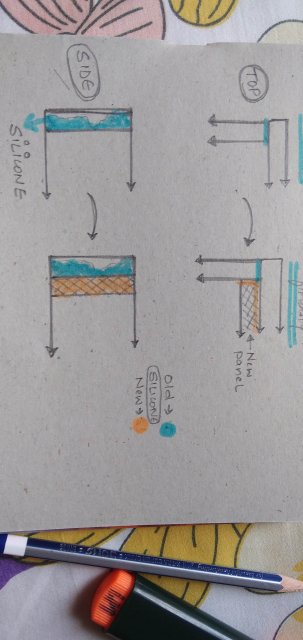
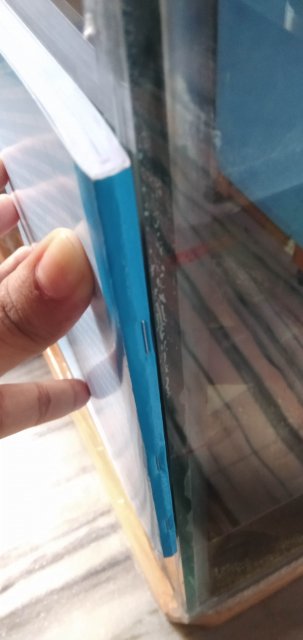
Just stick a 3" Thick panel of thick glass the way I'm holding the copy against glass .
If sticking from outide I'd take a 8mm glass, if from the inside I'd take the exact thickness as the glass used in the construction of the tank.
Sticking from the inside would be more beneficial.
IMG_20210805_104258.jpg
 
Last edited:
  • Like
Reactions: A201 and WARCRAFT
Yah
That's the best option.
But considering the tank size I think it's 12mm glass. And I firmly believe that removing a 12mm panel stuck with silicone will be a pain in the ass.
Just take a surety from the guy that hell be able to do it cause removing silicone from the sides is easier than removing silicone from the bottom due to the pressure of the weight of glass. Because once you start removing the panel and going through silicone with the blade there's no coming back.
I had my 4*2*2 tank crack ( not leaking) from the bottom, tried removing the panel but in vain. Tank was made from 12mm glass . I got a 48*18" Piece of 12mm glass and stuck it over the bottom panel from the inside.
Just saw that you're from sri Lanka.
You could try out this JUGAAD if you know what I mean.
Yeah, thought of removing the bubble gap with a blade carefully without damaging the inner seam and clean the glass much as possible and fill the gap with silicone once the two glass gaps are cleaned. But having second thoughts about it also and removing the entire side panel and applying the seams and inner silicone was my final thinking. Will that hold if we go ahead with full panel removal and siliconing it ? Will the old and new silicone overlap start to leak?
 
T
Yah

Yeah, thought of removing the bubble gap with a blade carefully without damaging the inner seam and clean the glass much as possible and fill the gap with silicone once the two glass gaps are cleaned. But having second thoughts about it also and removing the entire side panel and applying the seams and inner silicone was my final thinking. Will that hold if we go ahead with full panel removal and siliconing it ? Will the old and new silicone overlap start to leak?
Once you remove the panel you'll have to remove every bit of silicone from where the panel attaches with the tank. Every pindrop of it with a blade, acetone, paint thinner , maybe some petrol. Old silicone will not adhere to new silicone even if the time gap in between is 2-3 hrs.
You'll have to get even the tiniest smudge of silicone off the glass to get the tank water proof.
Saying that. I'd just be concerned about the points I've marked in green mostly the ones marked in purple.
Had It been my tank I'd remove the complete inner silicone ( the one that you applied recently) stick a 3-4" panel of glass from the inside . Let it dry, reseal the tank and apply silicone forcing it into the crevices and once it's dry from outside, apply some m seal.
BTW did you get this used tank off someone? And if so was it in running condition?
 
T
Once you remove the panel you'll have to remove every bit of silicone from where the panel attaches with the tank. Every pindrop of it with a blade, acetone, paint thinner , maybe some petrol. Old silicone will not adhere to new silicone even if the time gap in between is 2-3 hrs.
You'll have to get even the tiniest smudge of silicone off the glass to get the tank water proof.
Saying that. I'd just be concerned about the points I've marked in green mostly the ones marked in purple.
Had It been my tank I'd remove the complete inner silicone ( the one that you applied recently) stick a 3-4" panel of glass from the inside . Let it dry, reseal the tank and apply silicone forcing it into the crevices and once it's dry from outside, apply some m seal.
BTW did you get this used tank off someone? And if so was it in running condition?
It's my old tank. The silicone was bit old like 7,8 years and thought to redo it. It was holding water without any leaks.
Because of the height the guy I hired told it's better to remove all panels and redo it. Other seams are nicely bonded but this got messed up. So if it starts to give any bowing or drips I'm thinking of removing the entire side panel and clean the edges and inner silicone, and fix it back again ( only the side panel) and re apply the inside layer (if I do that will the inside new layer from this and the previous applied inner layer leak from where they meet?)
 
It's my old tank. The silicone was bit old like 7,8 years and thought to redo it. It was holding water without any leaks.
Because of the height the guy I hired told it's better to remove all panels and redo it. Other seams are nicely bonded but this got messed up. So if it starts to give any bowing or drips I'm thinking of removing the entire side panel and clean the edges and inner silicone, and fix it back again ( only the side panel) and re apply the inside layer (if I do that will the inside new layer from this and the previous applied inner layer leak from where they meet?)
If you clean well how will there be any old silicone left?
You'll have to attack the panel like you do when you make a new tank and them reseal the complete thank. The inner bead you apply to "watertight " the tank should be completely new.
 
  • Like
Reactions: WARCRAFT
If you clean well how will there be any old silicone left?
You'll have to attack the panel like you do when you make a new tank and them reseal the complete thank. The inner bead you apply to "watertight " the tank should be completely new.
Ok ?, tomorrow I'm going to water test this ????? by filling 50-60% and will monitor the seams and for leaks if it's tearing from inner seams or anything I will re-do the side back again.
 
Ok ?, tomorrow I'm going to water test this ????? by filling 50-60% and will monitor the seams and for leaks if it's tearing from inner seams or anything I will re-do the side back again.
I suggest that you steadily fill up till 100% cause water in a 100% filled tank will apply double the pressure as will a 50% filled tank.
I don't think the tank will snap and break, it's just that it could leak.
 
  • Like
Reactions: WARCRAFT
I suggest that you steadily fill up till 100% cause water in a 100% filled tank will apply double the pressure as will a 50% filled tank.
I don't think the tank will snap and break, it's just that it could leak.
True what you say is right ???, it's best to fill 100% so I can really see how it affects and holds rather than halfway and again after sometime seeing it wobble or do whatever when filled to 100% or my normal capacity of 75% -80% I normally fill my tanks .
 
  • Like
Reactions: ..puSkar..
Trying to clean out the existing silicone layer from between the two panes and then re-injecting new silicone doesn't seem very feasible to me. The only way it would work is if you were able to perfectly clean every iota of old silicone out of that thin gap before putting in the new stuff...and this would be very difficult or impossible. If you just poke around in there but don't get it all, you would be worse off than before. The new silicone won't stick to the old, but you will have damaged the already-marginal seal and lost even more of the structural integrity of the tank.

I think the addition of the glass strip as suggested by ..puSkar.. ..puSkar.. is your only hope, short of complete disassembly and reassembly. If the surface of the side glass and the edge of the front are perfectly flush, adding the strip to the outside would be easiest, but would look like...well, like a home-grown DIY bandage, which of course it is. But doing it this way, using thick enough glass, should in theory be just as strong as the original seam should have been. All you would need to do is scrupulously those exterior surfaces of glass before carefully applying the strip.

Applying the strip to the inside would necessitate removing the interior bead of silicone from that entire seam before you added the strip. This is more work, but the real problem is that you will still have old silicone meeting new at both ends of the new strip, and a leak is very likely. The only way to be safe is to remove the entire interior bead, all the way around all the interior seams. Then you add the reinforcing strip, then you re-seal the entire tank by applying a new bead all the way around. This is obviously a lot more work, but it will give you a continuous water-tight bead and should not leak if done carefully.

The guy who said that he would remove, replace and re-seal just one panel of glass? His "workmanship" already speaks for itself; how he can accept money to produce a mess such as he has done here boggles the mind. I wouldn't trust a word out of his mouth.
 
MonsterFishKeepers.com