Green Terror or Blue Acara???????

  • We are currently upgrading MFK. thanks! -neo
I consider any nitrate level above 5ppm as a growth inhibitor.
And its not just the nitrate, nitrate is just an indicator of other untestable growth inhibiting hormones and substances in the aquarium water soup.
ok, my understanding is that nitrates are part of the nitrogen cycle and are needed to complete the cycle? Too many water changes and you end up with an uncycled tank. this sounds backwards to everything ive been hearing
unless you have a heavy planted tank but plants dont live with cichlids long
 
Yes nitrate is the natural result of bacteria consuming ammonia and nitrite, but in nature aquatic and surrounding vegetation use nitrate as fast as it is produced.
And when the nitrogen cycle is described for aquariums, ammonia and nitrite are usually described as acutely toxic, and nitrate "less" (but chronically toxic)

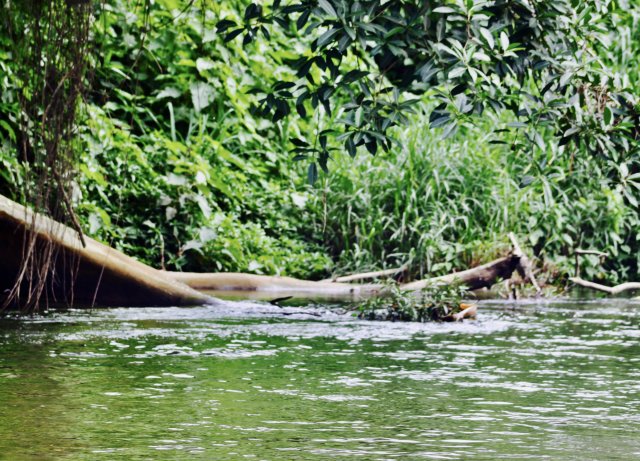
Below a river in Colombia.
1F3FEED3-51BB-4389-A05F-F3A6AAD6E334_1_201_a.jpeg
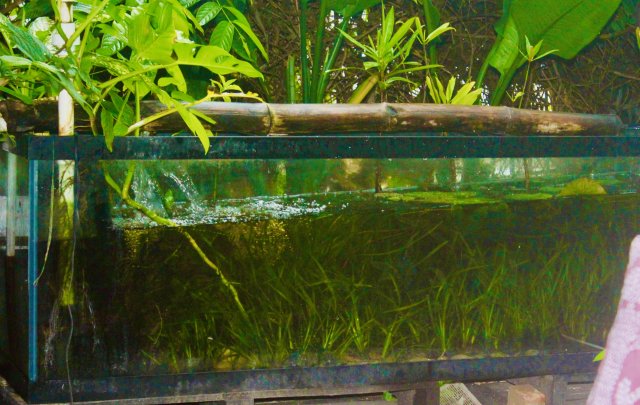
Below the 125 gal planted sump/refugium I use on my 180 gal Andinoacara tank.
8EF5A9B4-B4AE-4286-9C05-FC8F10B9412F_1_201_a.jpeg
 
ok, my understanding is that nitrates are part of the nitrogen cycle and are needed to complete the cycle? Too many water changes and you end up with an uncycled tank.
"nitrates... needed to complete the cycle" You could say this only in the sense that when you are initially cycling a new tank the appearance of nitrates indicates nitrite is now being processed into nitrates, telling you the second essential phase of nitrogen "cycling" is underway. This doesn't mean you need nitrates in the tank. Too many water changes in a new tank would inhibit cycling primarily if too much ammonia is removed, by not feeding the bacteria colony you're trying to establish. Opinions vary about healthy or acceptable nitrate levels, it can also vary by species, but lower is better.

If you try delving into the science, the subject of inhibited fish growth is complicated, with details of the biochemistry still being studied. That lends itself to various internet theories, some of them contradictory, dubious, or mistakenly extrapolating what may be true of only certain species to aquarium fish in general. Some things science doesn't fully explain yet (meaning some of our theories are just theories) but are still generally true-- except the cases where they're not. (example, many fish do not grow well when overcrowded while others are relatively unaffected as long as water quality is maintained, as proved by the aquaculture industry)

Essentially this means you have to accept the results you see, work backwards from there, but not go overboard speculating beyond the frontiers of what you or science actually knows as fact... Ignore that bit of philosophy if you like and what's fairly obvious is they were formerly too many in too small a tank. A possible explanation is they were stressed by the crowding (true of some species, others not as much) and stress hormones inhibited growth, a scientific biochemical possibility, though that doesn't prove the suggestion in this case or mean it's the only thing. It could be a combination of factors.

As far as growth rate, I frequently find comments that this or that species is slow growing contradicts my experience with them-- that said, for a number of reasons individual results can vary. If I was to put very general numbers to it, excepting some extra large or extra long lived cichlids, ime many grow roughly 70-75% of full adult size in roughly a year, something like another 20% their second year and a bit more after that. Species and individuals vary some. I'd put green terrors in a similar category, males 6, 7 inches their first year (some a bit more), inch or two more second year, inch or so more their third year. Adult males frequently end up 8-10 inches, occasionally larger.

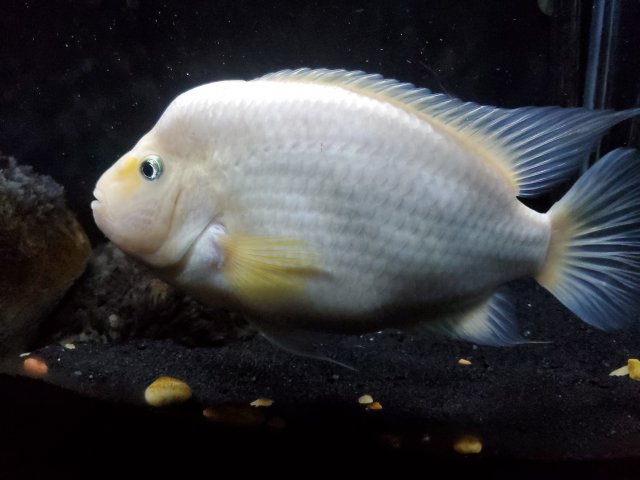
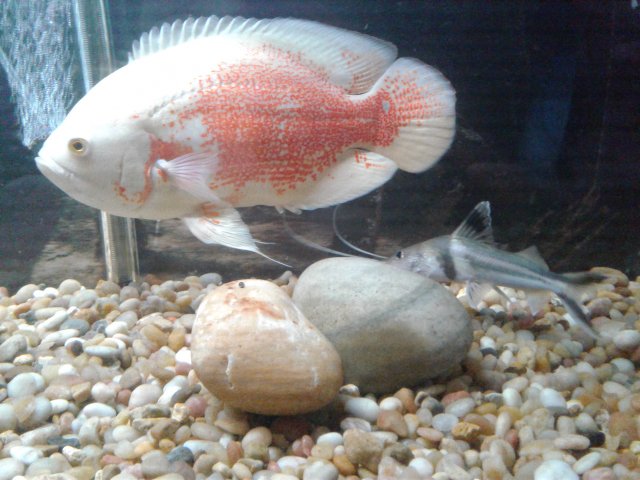
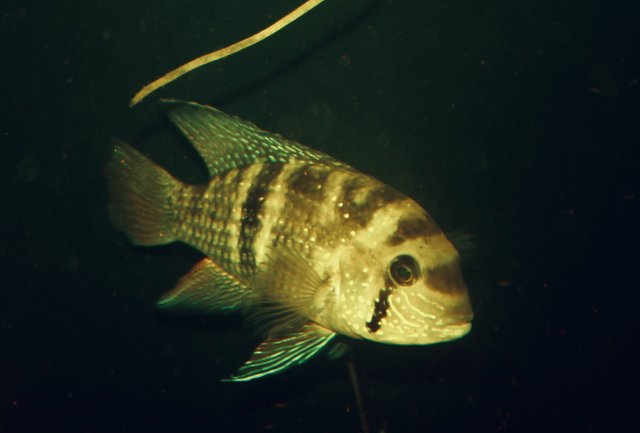
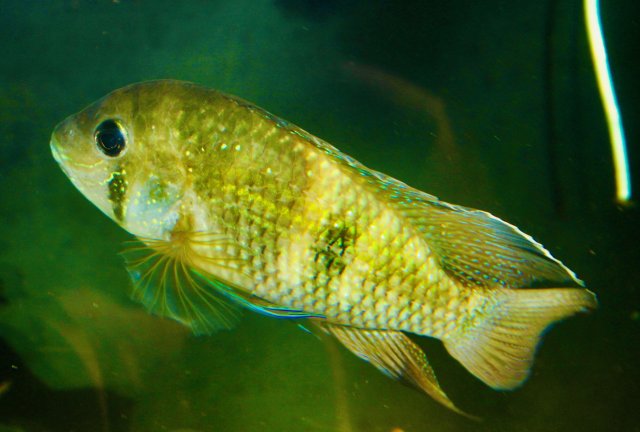
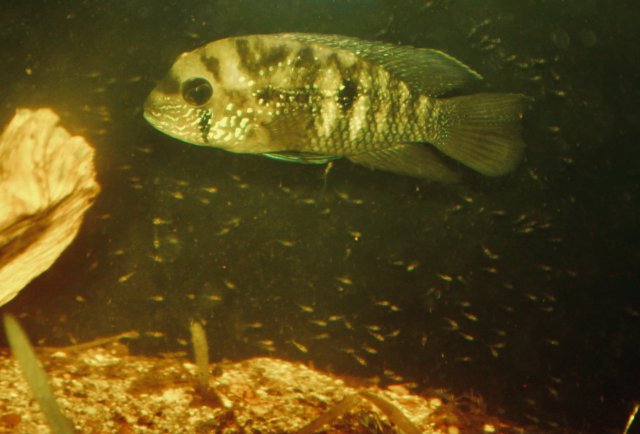
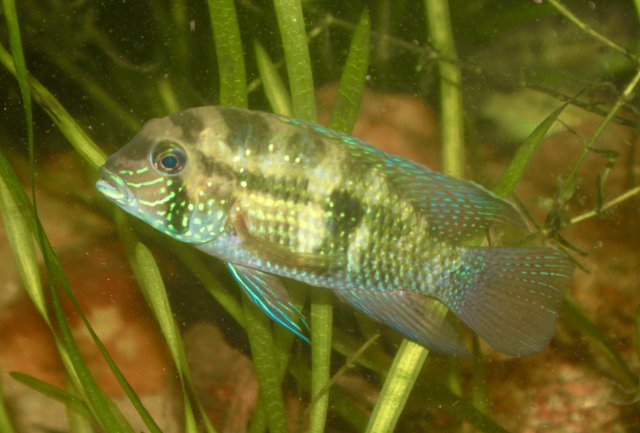
Guessing by your photos: top photo probably male, middle photo too small to tell-- possibly male, bottom photo too small to tell or needs some conditioning.

 
...From what I keep reading, often due to farming or other human factors, pristine, nitrate free water in in the field (in nature) is an ideal that doesn't always match reality. There's a LOT of literature on this, including some on the Amazon region.
 
Once the tank is cycled you can do water changes as you feel is needed.
When I have big fish I do "fin level" 75%or more every three days with no issues at all. Using this schedule I have grown both an Oscar and an Amphilophus Saggitae out to 12in in a year.
20210629_220538.jpg20180830_172221.jpg
 
...From what I keep reading, often due to farming or other human factors, pristine, nitrate free water in in the field (in nature) is an ideal that doesn't always match reality. There's a LOT of literature on this, including some on the Amazon region.
Sadly this is true and getting worse.
I have tested parameters in rivers in Panama and Colombia where banana and other heavily fertilized plantations created dead zones, where nitrate was high, and in those areas, no cichlids or other pristine condition requiring fish were found. But a mile or two downstream, as nutrients seemed to let up, tough fish started appearing again, depending n the extent of the farms. Although the outward health of fish closest to the farms was not as good as fish caught in less nutrient soup areas.
 
Sadly this is true and getting worse.
I have tested parameters in rivers in Panama and Colombia where banana and other heavily fertilized plantations created dead zones, where nitrate was high, and in those areas, no cichlids or other pristine condition requiring fish were found. But a mile or two downstream, as nutrients seemed to let up, tough fish started appearing again, depending n the extent of the farms. Although the outward health of fish closest to the farms was not as good as fish caught in less nutrient soup areas.
Undoubtedly not just nitrates, etc., but pesticides also. For example, banana plantations are a well documented menace to more than the aquatic life. Fertilizers, pesticides, erosion, economic exploitation, oppressive working conditions, pesticide related health issues.

The sad thing is it doesn't have to be that way: https://pulitzercenter.org/stories/deadly-side-americas-banana-obsession
 
Since I only have the capacity to test for nitrates, the pesticide problem is out of my realm, but it is obvious they contribute highly to the riverine dead zones.
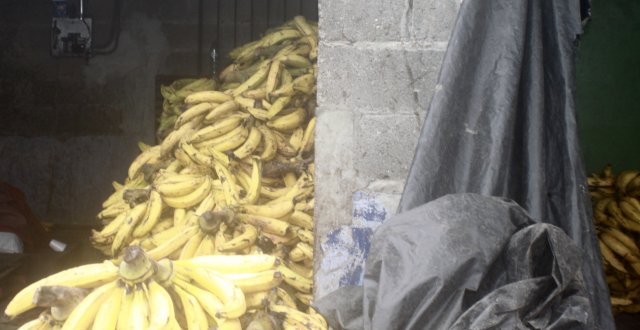
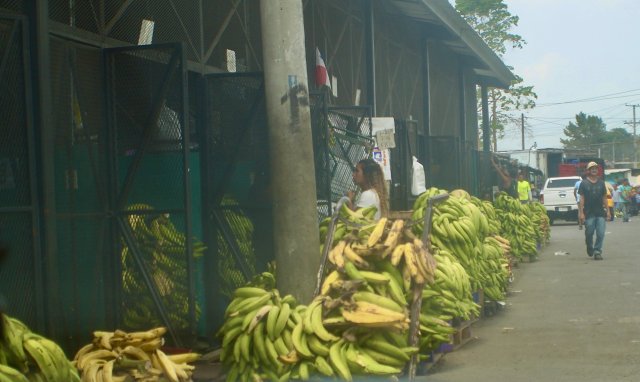
Here in Panama, bananas, (or some derivative of the fruit) are eaten at every meal, much like we Norte Americanos eat potatoes., (fries) so the markets are inundated. Here with burger the fries are Patacones (french fried Platanos.)
0FF1A261-2075-4E0F-A8B5-85C24D977C49_1_201_a.jpeg
E77E40D5-7EB8-4489-9436-994DFF49CEDE_1_201_a.jpeg
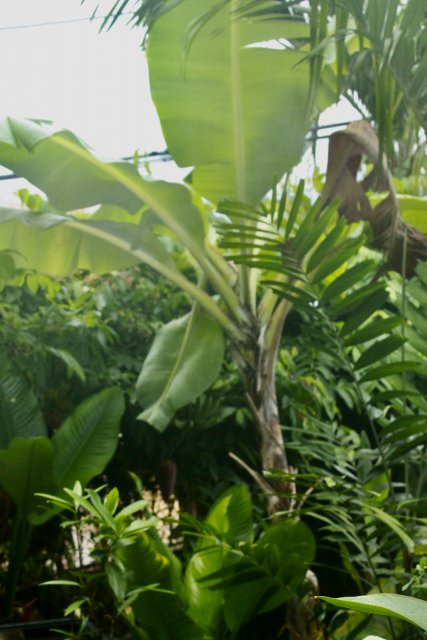
Here on the island most homes with yards have at least a few banana or platano trees (I even have a couple, but see no need for pesticides).
41A16FB1-197D-4CD9-9236-57D00AEC350D_1_201_a.jpeg
Beside the yearly hand of bananas, my tree is a great source of shade for my tank.
97D3CDD0-BD89-464F-BACB-4162CD5CCA20_1_201_a.jpeg
 
Last edited:
"nitrates... needed to complete the cycle" You could say this only in the sense that when you are initially cycling a new tank the appearance of nitrates indicates nitrite is now being processed into nitrates, telling you the second essential phase of nitrogen "cycling" is underway. This doesn't mean you need nitrates in the tank. Too many water changes in a new tank would inhibit cycling primarily if too much ammonia is removed, by not feeding the bacteria colony you're trying to establish. Opinions vary about healthy or acceptable nitrate levels, it can also vary by species, but lower is better.

If you try delving into the science, the subject of inhibited fish growth is complicated, with details of the biochemistry still being studied. That lends itself to various internet theories, some of them contradictory, dubious, or mistakenly extrapolating what may be true of only certain species to aquarium fish in general. Some things science doesn't fully explain yet (meaning some of our theories are just theories) but are still generally true-- except the cases where they're not. (example, many fish do not grow well when overcrowded while others are relatively unaffected as long as water quality is maintained, as proved by the aquaculture industry)

Essentially this means you have to accept the results you see, work backwards from there, but not go overboard speculating beyond the frontiers of what you or science actually knows as fact... Ignore that bit of philosophy if you like and what's fairly obvious is they were formerly too many in too small a tank. A possible explanation is they were stressed by the crowding (true of some species, others not as much) and stress hormones inhibited growth, a scientific biochemical possibility, though that doesn't prove the suggestion in this case or mean it's the only thing. It could be a combination of factors.

As far as growth rate, I frequently find comments that this or that species is slow growing contradicts my experience with them-- that said, for a number of reasons individual results can vary. If I was to put very general numbers to it, excepting some extra large or extra long lived cichlids, ime many grow roughly 70-75% of full adult size in roughly a year, something like another 20% their second year and a bit more after that. Species and individuals vary some. I'd put green terrors in a similar category, males 6, 7 inches their first year (some a bit more), inch or two more second year, inch or so more their third year. Adult males frequently end up 8-10 inches, occasionally larger.

Guessing by your photos: top photo probably male, middle photo too small to tell-- possibly male, bottom photo too small to tell or needs some conditioning.

I was assuming by finage they were both female.... I am getting a second larger canister to add to the tank this weekend. I guess ill just cool my jets in my search for a male and just focus on water quality. the water was holding up on its own for awhile but the fish have grown.
What factors are you looking at for sexing?
 
The 1st pic could be male, just not old/mature enough to present obvious gender traits.
Andinoacara males are a little more elongate, but present a steeper forehead profile, and the unpaired fins usually extend further into the caudal than the females.
8D43206E-6B5F-4D09-AAEF-22DD9A6A85E8_1_201_a.jpeg
Mature male above in spawning dress, same male below normal dress, note how far the fins extend, strong forehead but more elongate body

1AC65D79-9376-40AA-BBFC-6C42827C5D7C_1_201_a.jpeg
below a female in spawning dress
0466824E-FF9F-4252-B2CD-B15FC0F1041A_1_201_a.jpeg
female above, more boxy body, and note how the fins extend only about half way into the caudal.
Below female in non-spawning colors
Shorter unpaired fins, slightly more boxy body.
16A98B61-5851-4CD0-885D-D96145C3C398_1_201_a.jpeg
All fish above are mature, males bout 7", females 4".
Many of these gender differences are not obvious when young, and even when not in breeding season.
 
MonsterFishKeepers.com