Help! fungus ID in brain and skin of cichlid

  • We are currently upgrading MFK. thanks! -neo

zapatower

Plecostomus
MFK Member
Have you tested your water?
Yes
If yes, what is your ammonia?
0
If yes, what is your nitrite?
0
If yes, what is your nitrate?
0
If I did not test my water...
  1. ...I recognize that I will likely be asked to do a test, and that water tests are critical for solving freshwater health problems.
Do you do water changes?
Yes
What percentage of water do you change?
0-10%
How frequently do you change your water?
Every week
If I do not change my water...
  1. ...I recognize that I will likely be recommended to do a water change, and water changes are critical for preventing future freshwater health problems.
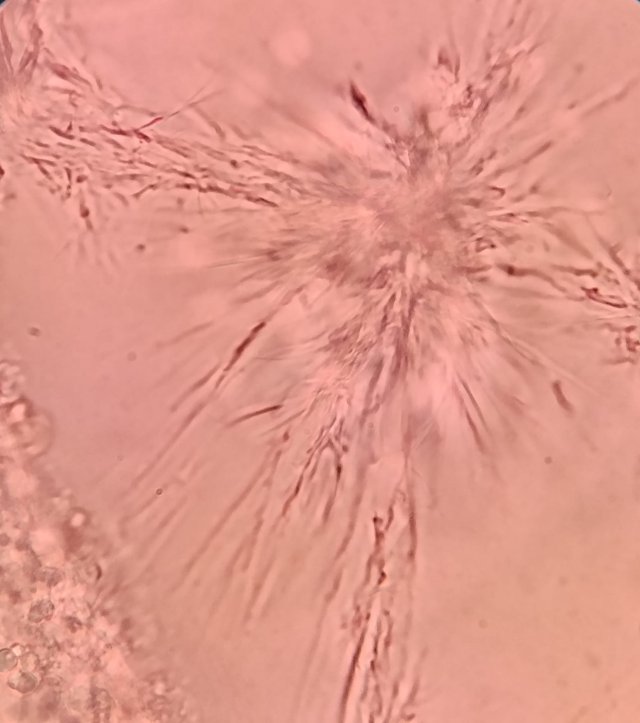
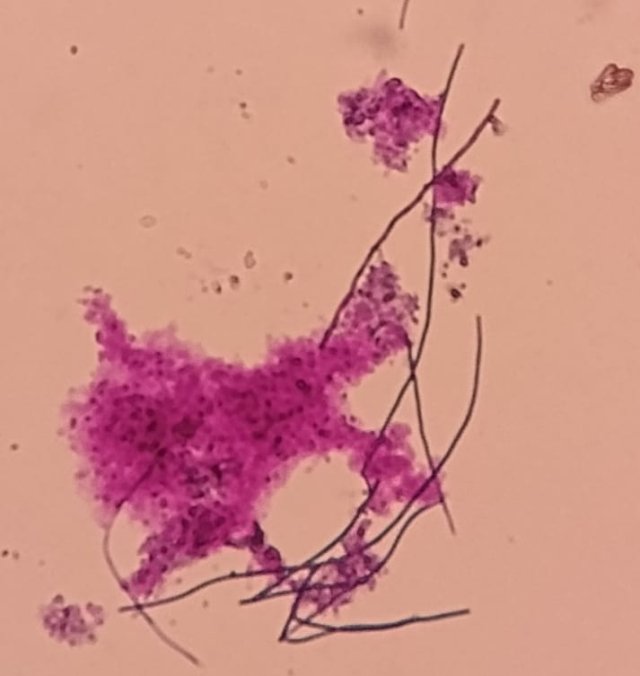
Dear MFK lovers; Please, could you identify these fungus? I am wondering if the second image are fungus hyphae or maybe celulose fibers, please help me! Both images are 100x, the first image looks like a spore burst where primary hyphae appear, but I don't know if it could also be an effect of the sample drying on the slide. Thank you!
branchyomyces en cerebro.jpegskin fungus.jpeg
 
Need to be more specific and even then I wouldn't be able to help with a 100% species ID without growing them.

Couple of clarifying questions:

1) What species of fish did these samples come from?

2) What were the physical condition of the organs when these samples were retrieved (e.g. cotton-like growth on skin, color of brain, etc)?

3) Was the fish alive or dead after when taking these samples? If the fish was dead, approximately how long after death?

4) What type of behavior(s) did the fish exhibit before death (e.g. spinning/wobbling, inability to stay upright, etc.)?

5) What did you use to stain the samples?

6) How were these samples collected?

Just from cursory glance the first image I have no idea what i'm looking at since it looks very "blurry". However, considering you are stating this sample was collected from the brain I have strong doubts it is a fungal infection as this is extremely rare. Typically I would rule out parasites that have spore stages like, Ichthyophonus spherules which is more common, long before I would consider true fungal infections to the brain/CNS.

The second image looks like environmental fibers caught up in mucus with bacteria floating inside of it. Nothing about it screams out fungal at all (tubes are too uniform, all tubes are are dark with no light showing through, etc.)
 
Need to be more specific and even then I wouldn't be able to help with a 100% species ID without growing them.

Couple of clarifying questions:

1) What species of fish did these samples come from? Red Tilapia

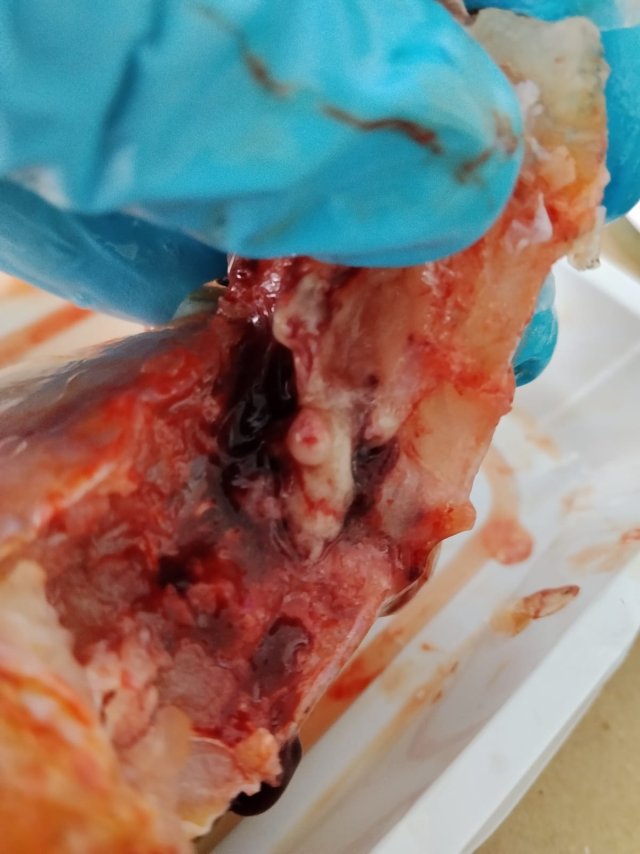
2) What were the physical condition of the organs when these samples were retrieved (e.g. cotton-like growth on skin, color of brain, etc)? grayish brainWhatsApp Image 2026-03-04 at 11.23.29 AM.jpeg

3) Was the fish alive or dead after when taking these samples? If the fish was dead, approximately how long after death? RECENTLY EUTHANASITED WITH EUGENOL. https://www.escuelapisciculturareproductiva.com/producto/clavo_eugenol/

4) What type of behavior(s) did the fish exhibit before death (e.g. spinning/wobbling, inability to stay upright, etc.)? low level of Whirling

5) What did you use to stain the samples? DIFF-QUIK PANOPTIC FAST DYE https://www.escuelapisciculturareproductiva.com/producto/tincion-rapida-diff-quik/

6) How were these samples collected? Fresh biopsy.

Just from cursory glance the first image I have no idea what i'm looking at since it looks very "blurry". However, considering you are stating this sample was collected from the brain I have strong doubts it is a fungal infection as this is extremely rare. Typically I would rule out parasites that have spore stages like, Ichthyophonus spherules which is more common, long before I would consider true fungal infections to the brain/CNS.

The second image looks like environmental fibers caught up in mucus with bacteria floating inside of it. Nothing about it screams out fungal at all (tubes are too uniform, all tubes are are dark with no light showing through, etc.)

Thank you so much

T thiswasgone

 
Based on what you've stated and shown my best guess is bacterial meningoencephalitis with the root cause a streptococcus spp. and if I were to pick a specific species it would be streptococcus agalactiae as the most likely culprit. Streptococcus iniae is also a possibility but streptococcus agalactiae is more common now. This is assuming you have a red tilapia farm in "hot" water (~78°F–80°F or ~26°C–27°C or higher).

My reason for this is I don't see any obvious signs of branching hyphae which is indicative of a fungal infection nor any obvious sporangia. However, your new image does show a bulging eye which is usually from a bacteria infection, slight discoloration of the brain which could indicate either inflamation and/or post-death/necrotic changes (which combined with the eyes leads me to believe it's more likely a bacterial infection), and a significant amount of blood indicating a brain hemorrhage typical with a bacterial infection to the brain/CNS.

Beyond the phyiscal, a whirling type swimming pattern is typical with bacterial brain infections but very atypical with any fungal infections even when they reach the brain/CNS.

Of course it could be another bacteria, viral, or even fungal infection but considering all of what I listed above I believe streptococcus agalactiae is the most likely culprit. However, the only way I could be 100% sure is if I were there to do a growth culture and send the sample to a lab for DNA analysis.

HTH
 
MonsterFishKeepers.com