Hi,
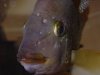
I've treated my fish with Metronidazole as he is developing lesions in his head. I've since finished treating with antibiotics as I ran the full course. However it appears to be getting worse around his nose hole - see pics.
What can I do now? I'm thinking of trying either promethyasul as I have some on hand, or formalin (have access to hospital supplies) as I have read that this can be good against protozoa. I assume that the culprit here is Spironucleus... he's not showing any other signs of HITH disease and behaviour is otherwise healthy.
Does anyone have any suggestions? Detailed/long winded story is below.
Thanks in advance, appreciate any replies..
 I just want him to be able to start healing. Do these lesions heal up or if I can manage to get this under control will he be forever deformed?
-------------------------------------------------------------------------------------
My Geo Braziliensis started getting lesions in the head approx 2.5 weeks ago. I first noticed 2 small pinhole sized holes and immediately put him in a hospital tank to allow me to salt the water and keep the water conditions high. The fish was and is not exhibiting any other signs of sickness but had been getting picked on a bit in its previous tank (stress).
Despite daily water changes the lesion got worse and more started forming, so after about a week I treated with Metronidazole (crushed tablet form) in the water (still maintaining salt levels) and food as he is still eating with gusto. I did treated each day for 10 days at approx 6mg/L with water changes every day. The holes seemed to slow in formation but still seemed to progress very slowly so I also put metro in his food, at an oral dosage of approximately 50mg/kg of body weight per day.
The 10 days of metro treatment finished up 2 days ago so I've just been trying to keep up my daily water changes, and have stopped replacing the salt. I've also taken to soaking his food in a liquid multivitamin rather than crushing up metronidazole with the food. I note that I did get some high vitamin feed for him about a week into the disease and have been feeding that ever since.
However today I notice that the lesions around his nose hole are spotted red and appear worse. I'm worried that the disease is still progressing. Should I try and treat with something else - if so what? I don't want to put him back on Metro due to resistance issues.
Tank stats:
2 foot tank, approx 60L
Ammonia: 0
Nitrite: 0
Nitrate: 0
pH: 7.6
temp: 27 C
inhabitants: 1 x braziliensis, approx 20cm (7yrs old).
fish behaviour: normal, eats normally, poo is normal & brown, stomach is not sunken.
water changes: approx 25% daily for the past 2.5 weeks
In the picture:
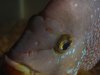
Scarring around the nostril was already present from a previous health issue, however its recently become spotted red and appears like it might start erroding again. Other holes have not been getting worse for the past week or so but I have recently stopped metro treatment so am hoping they don't get worse again.
I've treated my fish with Metronidazole as he is developing lesions in his head. I've since finished treating with antibiotics as I ran the full course. However it appears to be getting worse around his nose hole - see pics.
What can I do now? I'm thinking of trying either promethyasul as I have some on hand, or formalin (have access to hospital supplies) as I have read that this can be good against protozoa. I assume that the culprit here is Spironucleus... he's not showing any other signs of HITH disease and behaviour is otherwise healthy.
Does anyone have any suggestions? Detailed/long winded story is below.
Thanks in advance, appreciate any replies..
-------------------------------------------------------------------------------------
My Geo Braziliensis started getting lesions in the head approx 2.5 weeks ago. I first noticed 2 small pinhole sized holes and immediately put him in a hospital tank to allow me to salt the water and keep the water conditions high. The fish was and is not exhibiting any other signs of sickness but had been getting picked on a bit in its previous tank (stress).
Despite daily water changes the lesion got worse and more started forming, so after about a week I treated with Metronidazole (crushed tablet form) in the water (still maintaining salt levels) and food as he is still eating with gusto. I did treated each day for 10 days at approx 6mg/L with water changes every day. The holes seemed to slow in formation but still seemed to progress very slowly so I also put metro in his food, at an oral dosage of approximately 50mg/kg of body weight per day.
The 10 days of metro treatment finished up 2 days ago so I've just been trying to keep up my daily water changes, and have stopped replacing the salt. I've also taken to soaking his food in a liquid multivitamin rather than crushing up metronidazole with the food. I note that I did get some high vitamin feed for him about a week into the disease and have been feeding that ever since.
However today I notice that the lesions around his nose hole are spotted red and appear worse. I'm worried that the disease is still progressing. Should I try and treat with something else - if so what? I don't want to put him back on Metro due to resistance issues.
Tank stats:
2 foot tank, approx 60L
Ammonia: 0
Nitrite: 0
Nitrate: 0
pH: 7.6
temp: 27 C
inhabitants: 1 x braziliensis, approx 20cm (7yrs old).
fish behaviour: normal, eats normally, poo is normal & brown, stomach is not sunken.
water changes: approx 25% daily for the past 2.5 weeks
In the picture:
Scarring around the nostril was already present from a previous health issue, however its recently become spotted red and appears like it might start erroding again. Other holes have not been getting worse for the past week or so but I have recently stopped metro treatment so am hoping they don't get worse again.