Home made food and beefheart

  • We are currently upgrading MFK. thanks! -neo

Yoimbrian

Dovii
MFK Member
Feb 11, 2013
920
253
102
Twin cities
So I want to try making my own food. Mostly because my fingers hurt pushing frozen cubes out and I want a variety of frozen foods instead of a plain flat of frozen worms or something.

The main fish eating it would be discus, clown loaches, and maybe the plecos (bushy and leopard) - but I think they mostly eat the big stuff I put in for them.

So my question is with beef heart. Everyone says land animal fat is bad, except somehow beef heart isn’t. But then my question is - is it actually good, or just acceptable and cheap?

I’m not rich and I’m not going to say “money isn’t an issue”, but as of now my fish eat maybe 2 pounds per month, so I will say the money difference between cheap beef heart and shrimp or other fish is not an issue.
 
dovii study

http://www.scielo.sa.cr/scielo.php?script=sci_arttext&pid=S0034-77442000000200019


..... and more on the subject of feeding beef heart, to fish.

https://www.monsterfishkeepers.com/forums/threads/beefheart-question.487150/#post-5861488


HTH clear up any further confusion as to why feeding beef, to fish, is No Bueno.

Totally agree with Duane. The following is a repost of mine from a past discussion.....


Feeding mammal meat of any kind to a finfish is No Bueno in my books. Below is a link to a more recent scientific paper that I think every discus owner/breeder should read.


http://www.scielo.br/scielo.php?script=sci_arttext&pid=S1679-62252008000400008


"This species feeds predominantly on algal periphyton, fine organic detritus, plant matter, and small aquatic invertebrates."


"The alimentary canal of Symphysodon is characterized by a poorly defined stomach and an elongate intestine, some 300 mm long and 3 mm wide (in a 180 mm SL specimen). This intestinal morphology is typical of a cichlid with a dominantly vegetarian, detritivorous, or omnivorous diet."


Heiko Bleher wrote the following…………


What do Discus eat?


I have examined hundreds of specimens during many years and stomach and gut contents among wild Discus indicate an order of precedence: detritus, then plant material (flowers, fruits, seeds, leaves), algae and micro-algae, aquatic invertebrates and terrestrial and arboreal arthropods. The Amazon has adapted to nature for fishes during millennia of evolution. Plants of the tropical rainforest have little water and cannot flourish during the dry season so cannot waste energy. The same happens to most freshwater fishes.


During the dry period, with a much reduced water level and hardly any food source — except for predators — many fish starve or feed on the little available, usually detritus.


Discus and many other fishes eat what they can get, but have to be constantly aware of carnivorous predators. During the six to nine months of floods, almost all trees and bushes, flower and have fruits and seeds — which is the main nutrition of roughly 75% of all Amazonian fishes.


The adults, and babies which grow to adults in that period, can then fill their stomachs and guts.


The carnivorous predators starve as they cannot find their prey in the huge water masses.


How much nutrition?


I have found the following percentage of nutrition in each one of the three species:


Symphysodon discus during low water: 55% detritus; 15% plant material; 12% algae and micro-algae; 10% aquatic invertebrates; 8% terrestrial and arboreal arthropods. During high water: 28% detritus; 52% plant material; 5% algae and micro-algae; 3% aquatic invertebrates; 12% terrestrial and arboreal arthropods.


Symphysodon aequifasciatus low water: 52% detritus; 18% plant material; 15% algae and micro-algae; 13% aquatic invertebrates; 2% terrestrial and arboreal arthropods. High water: 8% detritus; 62% plant material; 8% algae and micro-algae; 5% aquatic invertebrates; 17% terrestrial and arboreal arthropods.


Symphysodon haraldi low water: 39% detritus; 9% plant material; 25% algae and micro-algae; 22% aquatic invertebrates; 5% terrestrial and arboreal arthropods. High water: 6% detritus; 44% Plant material; 12% algae and micro-algae; 16% aquatic invertebrates; 22% terrestrial and aboreal arthropods.


.............................................................


Not exactly a species of fish geared towards eating high protein foods such as mammal meat, and the fact that many discus owners still feed their fish foods such as beef heart doesn't equate to it being an ideal form of nutrition. According to the most recent science available, I would think far from it.


Several years ago Chong et al ran a 3 month feed trial on juvenile discus (fish approx. 4.5 grams in weight) and concluded that a diet consisting of 45-50% protein, and 8% fat was ideal for optimum growth for juveniles of this species. I have no argument with those stats, and again the same could be said for thousands of other ornamental species of fish, but somehow this data has been used by certain segments of Discus keepers to support their use of a high protein diet such as beef heart. I have never understood the logic in that.


Chong et al used fish meal as the source of protein (along with casein & gelatine as binding agents) in their study, NOT beef heart.


Even a lot of the old school discus keepers have moved away from foods such as beef heart over the past decade, for these exact reasons. It's a great food for breeders that simply want quick growth in their juvenile fish (so they can take them to market quicker) but in my opinion it is most certainly not an ideal long term diet due to the potential of fatty degeneration of the liver.


Jack Wattley stated several years ago that a good staple pellet or flake food is more ideal for optimum health. In the Dec 2006 edition of Tropical Fish Hobbyist magazine, Jack stated:


"I've moved in a new direction regarding the feeding of discus, and after many tests feel that a top quality flake or pellet food formulated especially for discus is perhaps the best direction to take.”


The late Dr. Schmidt-Focke was one of the first to realize health problems when feeding foods such as beef heart, and quit feeding his discus beef heart in favor of a seafood based diet. Dieter Untergasser has also demonstrated the harm beefheart can have on discus and other long lived cichlids. And there are studies that have taken place that demonstrated that when too much protein is fed to a juvenile discus it can have the opposite effect, as it requires energy to excrete the excess amino acids (protein), which is energy that could have been used for growth.


It is my opinion that the goal should be to closely match the amino acids, fatty acids, vitamins etc. as the fish would receive if eating in the wild. With today's commercial foods this is much easier to do than 30-40 yrs. ago, and with a nutrient dense commercial food a fish will generally always be consuming more nutrients on a daily basis than they typically would in the wild. This equates to steady healthy even growth in a fish. Perhaps one won't see the massive gains as they would when feeding mammal meat, but I personally don't see slower more even growth a negative.


Catfish Study
https://www.catfishstudygroup.org/pdf/journal/2010_1.pdf

Fats- this gets a bit complicated as there areseveral kinds of fat which serve different purposes. As regards broodstock, the kind of fat to be avoided at all costs is saturated fat, the kind found in land animals, so do not feed catfish on things like chicken or beef heart.

All fish have difficulty in dealing with saturated fat and it often gets laid down as store fat rather than being used a metabolicfuel so it tends to lead to rapid development ofexcess fat, just the same effect as excess calories. All fish need some of the polyunsaturated fats which are needed for essential cell functions such as maintaining cells membranes, nerve function and for the body to manufacture lots of complex compounds such as steroids. An important point to bear in mind is that the polyunsaturated fats required by fish are not the same as those which we require. Fish need long chain polyunsaturated fats of the kind which are found in marine fish oils.

...
 
Last edited:
  • Like
Reactions: RD.
But then my question is - is it actually good, or just acceptable and cheap?

The origin of beef heart, and discus, as well as other wild fish, is that it was readily available, relatively cheap, and it worked. Tubifex was fed almost exclusively with early imports (1930's) but being carriers of several pathogens most breeders stopped feeding them once beef heart was proven to be accepted by discus. Beef hearts popularity today lingers mostly out of tradition and cost effectiveness with the larger breeders and farms. In my opinion it is No Bueno!

For the vast majority of finfish, the optimum amino acid & fatty acid profiles will be found in seafood (fish, shrimp, krill, etc)
 
You could look into something like the various types of Repashy. Mine I make up a batch and mix it with grated fish, shrimp, zuchinni whatever I happen to have and then pour it into ice cube trays and freeze.
 
for discus food // makes them super bright red...

ground turkey + menhaden oil + gerber strained garden veggies + carophyll pink Astaxanthin + beef heart + distilled water // blend then freeze.

got this recipe from guy i get my frys from on aquabid, cool dude use to work at Wardley.

breeds his own so he's pro + all my fish loving it, just did 1 batch so far.IMG_0744.JPG
 
https://www.monsterfishkeepers.com/forums/threads/making-monster-food.699791/

Here is what I do. About 7 lbs of food for ~$25.

You will probably need to cut it up finer than I do. I recommend getting one of this slap chop cutters and going to town on it.

I am curious how many fish you have and how much you feed. I only feed my large fish every three days but I have three decent size fire eels, two large vulture catfish, a 9” endli, and a 7” peacock bass. However, I don’t use near 2 lbs per month. I’m just curious if you might be over feeding.
 
  • Like
Reactions: Bonytang
#NOMS!
good stuff looks like they're eating good!!
i only have 2 tanks now but everyone's eating the i call it "bobby flay"

tank 1
- shortbody ryukin
- shubunkin
- catlocarpio siamensis
- flagtail t.
- 3 x hypsibarbus w.
- tor d.
- t barb
- spinibarbus denticalus
tank 2
- zacco platypus
- discus frys
- baby blue ram got free w/the frys
- loach

i'm sure other fish i get would like it too, not so much for larger carnivores though it's too dense but maybe more beefheart could make it more like the frozen kind at petstore

have a little ice tray and just crush up like ice chunks.. goldie carp cyprinid tank eat it all day w/mix hikari sinking + tubifex freeze dried for crunchy texture!
 
Raised on pellets, no beefheart!


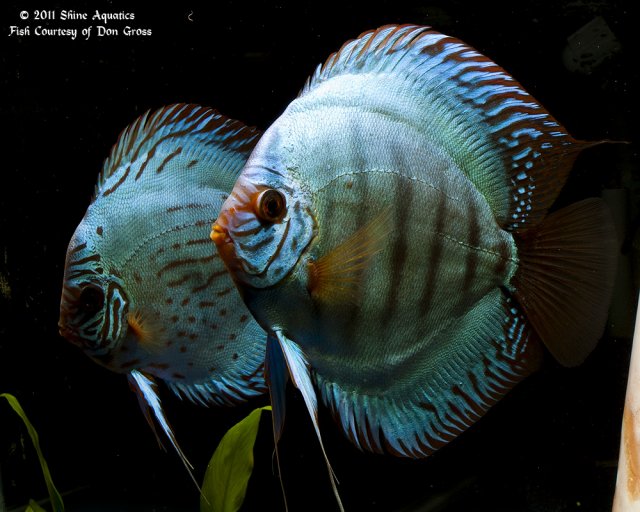
The owner of these discus was a local breeder (RIP amigo) and had been keeping discus for longer than most here have been alive. These were all young fish still growing out when the photos were taken several years ago.

bret15-jpg.1281906


And seeing as discus are now being discussed, allow me to be more specific to that species from a past post of mine here on MFK……..


Feeding mammal meat of any kind to a finfish is No Bueno in my books. Here's a link to a more recent scientific paper that I think every discus owner/breeder should read.


http://www.scielo.br/scielo.php?script=sci_arttext&pid=S1679-62252008000400008


"This species feeds predominantly on algal periphyton, fine organic detritus, plant matter, and small aquatic invertebrates."


"The alimentary canal of Symphysodon is characterized by a poorly defined stomach and an elongate intestine, some 300 mm long and 3 mm wide (in a 180 mm SL specimen). This intestinal morphology is typical of a cichlid with a dominantly vegetarian, detritivorous, or omnivorous diet."


Heiko Bleher wrote the following…………


What do Discus eat?


I have examined hundreds of specimens during many years and stomach and gut contents among wild Discus indicate an order of precedence: detritus, then plant material (flowers, fruits, seeds, leaves), algae and micro-algae, aquatic invertebrates and terrestrial and arboreal arthropods. The Amazon has adapted to nature for fishes during millennia of evolution. Plants of the tropical rainforest have little water and cannot flourish during the dry season so cannot waste energy. The same happens to most freshwater fishes.


During the dry period, with a much reduced water level and hardly any food source — except for predators — many fish starve or feed on the little available, usually detritus.


Discus and many other fishes eat what they can get, but have to be constantly aware of carnivorous predators. During the six to nine months of floods, almost all trees and bushes, flower and have fruits and seeds — which is the main nutrition of roughly 75% of all Amazonian fishes.


The adults, and babies which grow to adults in that period, can then fill their stomachs and guts.


The carnivorous predators starve as they cannot find their prey in the huge water masses.


How much nutrition?


I have found the following percentage of nutrition in each one of the three species:


Symphysodon discus during low water: 55% detritus; 15% plant material; 12% algae and micro-algae; 10% aquatic invertebrates; 8% terrestrial and arboreal arthropods. During high water: 28% detritus; 52% plant material; 5% algae and micro-algae; 3% aquatic invertebrates; 12% terrestrial and arboreal arthropods.


Symphysodon aequifasciatus low water: 52% detritus; 18% plant material; 15% algae and micro-algae; 13% aquatic invertebrates; 2% terrestrial and arboreal arthropods. High water: 8% detritus; 62% plant material; 8% algae and micro-algae; 5% aquatic invertebrates; 17% terrestrial and arboreal arthropods.


Symphysodon haraldi low water: 39% detritus; 9% plant material; 25% algae and micro-algae; 22% aquatic invertebrates; 5% terrestrial and arboreal arthropods. High water: 6% detritus; 44% Plant material; 12% algae and micro-algae; 16% aquatic invertebrates; 22% terrestrial and aboreal arthropods.


.............................................................


Not exactly a species of fish geared towards eating high protein foods such as mammal meat, and the fact that many discus owners still feed their fish foods such as beef heart doesn't equate to it being an ideal form of nutrition. According to the most recent science available, I would think far from it.


Several years ago Chong et al ran a 3 month feed trial on juvenile discus (fish approx. 4.5 grams in weight) and concluded that a diet consisting of 45-50% protein, and 8% fat was ideal for optimum growth for juveniles of this species. I have no argument with those stats, and again the same could be said for thousands of other ornamental species of fish in their fry/juvenile stage of life, but somehow this data has been used by certain segments of Discus keepers to support their use of a high protein diet such as beef heart. I have never understood the logic in that.


Chong et al used fish meal as the source of protein (along with casein & gelatine as binding agents) in their study, not beefheart.


Even a lot of the old school discus keepers have moved away from foods such as beef heart over the past decade, for these exact reasons. It's a great food for breeders that simply want quick growth in their juvenile fish (so they can take them to market quicker) but in my opinion it is most certainly not an ideal long term diet due to the potential of fatty degeneration of the liver.


Jack Wattley has recently stated that a good staple pellet or flake food is more ideal for optimum health. In the Dec 2006 edition of Tropical Fish Hobbyist magazine, Jack stated:


"I've moved in a new direction regarding the feeding of discus, and after many tests feel that a top quality flake or pellet food formulated especially for discus is perhaps the best direction to take.”


The late Dr. Schmidt-Focke was one of the first to realize health problems when feeding foods such as beef heart, and quit feeding his discus beef heart in favor of a seafood based diet. Dieter Untergasser has also demonstrated the harm beefheart can have on discus and other long lived cichlids. And there are studies that have taken place that demonstrated that when too much protein is fed to a juvenile discus it can have the opposite effect, as it requires energy to excrete the excess amino acids (protein), which is energy that could have been used for growth.


It is my opinion that the goal should be to closely match the amino acids, fatty acids, vitamins etc. as the fish would receive if eating in the wild. With today's commercial foods this is much easier to do than 30-40 yrs. ago, and with a nutrient dense commercial food a fish will generally always be consuming more nutrients on a daily basis than they typically would in the wild. This equates to steady healthy even growth in a fish. Perhaps one won't see the massive gains as they would when feeding mammal meat, but I personally don't view slower more even growth as a negative.
 
Beefheart is the general growth staple which will be substituted by other fats, animal fats, fatty acids, proteins, sugars, or other content in pellets, as a substitute for wild omnivorous feeding. Pellets are always the best for aquaria but even in amazon discus are scavengers and will dig on on piranha left overs when it comes around once in a while but like kelah mahseer that feed on nuts in the wild i rarely hear about ppl feeding tor nuts at home tanks.

As fish keepers, monster in their own ways, it's just fun to make something new here and there and see how fish react to it. would love to get these guys all on pellets for everyday but if i can get good red color which is top goal from new food mix too then sure. this way we're just the ones introducing the amounts of nutrients we want to give.

give fish steroids you might see your discus doing push-ups on the heater :)
 
Re-read my previous post, eventually it will sink in. In the wild, discus are not carnivores, not even close, and for those species of fish that are, beef heart is a piss poor source of protein. I don't care what some numb nuts on aquabid told you. The only thing that beef heart is good for is quick gains in growth, and if that's all one cares about then feed on!

As far as Carophyll Pink, I posted about this subject years back. There are numerous natural forms of astaxanthin, Carophyll is synthetic, derived from petroleum products, and is used by Asian breeders for the same reason that hormones are used. They can make a genetically so-so fish look very colorful.

https://www.monsterfishkeepers.com/forums/threads/my-red-discus-before-after-carophyll-pink.373701/


Good luck
 
Last edited:
  • Like
Reactions: Bonytang
MonsterFishKeepers.com