How do fish kill eachother?

  • We are currently upgrading MFK. thanks! -neo
Very good discussion everyone, went a little off topic from what I was looking for but would be good for newer aquarists asking the aforementioned recurring questions. Possible sticky?

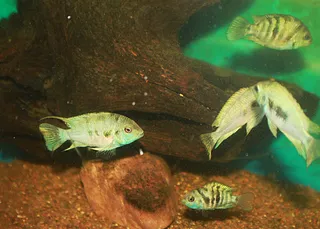
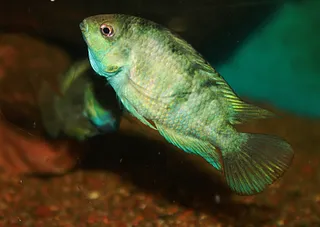
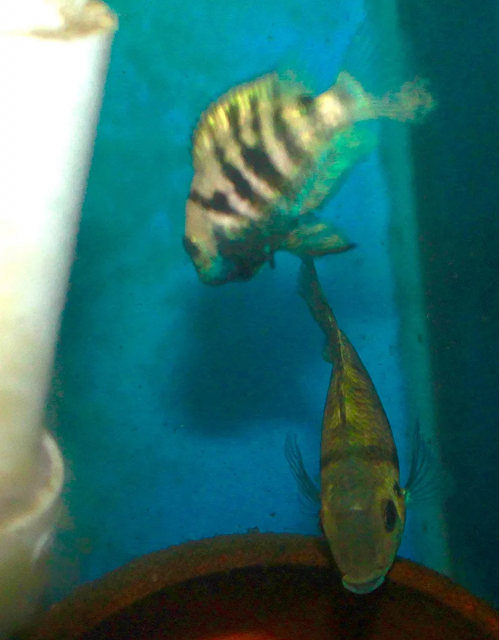
I was actually just looking for how two 1.5" Honduran red points can go into a tank and have one end up looking like it's about to go into a frying pan within a span of about 6-8 hours. Going off of what Backfromthedead Backfromthedead was saying though, I figure the actual action goes more along the lines of: fin nipping until there are no fins and or the stress of being bitten down to the bone immobilizes the fish, allowing the aggressor to start taking bites at the scales and eyes. I've heard that in the case of larger fish such as parachromis, they will ram to cause internal damage, or to be the substitute for the whole fin nipping bit.
 
Very good discussion everyone, went a little off topic from what I was looking for but would be good for newer aquarists asking the aforementioned recurring questions. Possible sticky?

I was actually just looking for how two 1.5" Honduran red points can go into a tank and have one end up looking like it's about to go into a frying pan within a span of about 6-8 hours. Going off of what Backfromthedead Backfromthedead was saying though, I figure the actual action goes more along the lines of: fin nipping until there are no fins and or the stress of being bitten down to the bone immobilizes the fish, allowing the aggressor to start taking bites at the scales and eyes. I've heard that in the case of larger fish such as parachromis, they will ram to cause internal damage, or to be the substitute for the whole fin nipping bit.

Very good point. I usually see the "crippling" tactic employed by a smaller very aggressive/territorial fish on a larger peaceful fish or even a larger predatory fish that's relatively sedentary. I've heard of parachromis and grammodes cichlids in particular being known for hitting above their weight on gars, wolffish, or big cats.
 
In reference to Honduran Red Points,, I have found I could only keep 1 pair to 50 gal tank, and if the female was not ready to spawn, she was in trouble in that space.
1669193330035.png
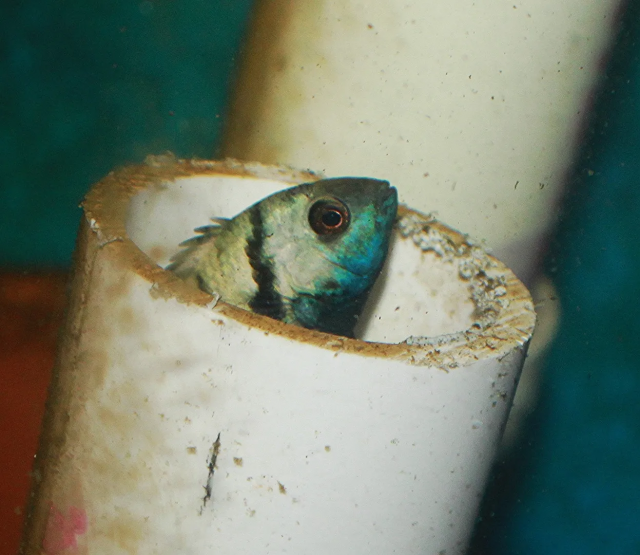
and just as a general rule, I like to place PVC pipe type safe spaces, she could get into, he couldn't.
1669193449103.png
And even though I could grow out a shoal together, it was temporary, once males hit maturity, I could only keep the 1 pair to that size tank.
1669193612281.png
1669193634608.png
 
  • Like
Reactions: tlindsey
In reference to Honduran Red Points,, I have found I could only keep 1 pair to 50 gal tank, and if the female was not ready to spawn, she was in trouble in that space.
View attachment 1507319
and just as a general rule, I like to place PVC pipe type safe spaces, she could get into, he couldn't.
View attachment 1507320
And even though I could grow out a shoal together, it was temporary, once males hit maturity, I could only keep the 1 pair to that size tank.
View attachment 1507321
View attachment 1507322
My colony is currently in a 30 long, I am so far noticing the dominant pair is maintaining superiority over the space, however with the sheer amount of hardscape, the smaller ones are able to get away. The pair does chase the other two males in the tank, but never causes any physical damage to anything. Their fry have started spilling out from their side of the tank and now shoal with some of the smaller, unrelated individuals. The tank's population currently consists of: 3 males, 5 females, 2 unconfirmed juveniles, and about 50 fry that are almost their size. Rusty Wessel's breeding colony at his house had multiple pairs in a tank of similar footprint, so I'm waiting to see if more pairs will form once the smaller males and females fully mature.

I was trying to pair my second largest male with a similarly sized female in a 10 gallon, which resulted in the aforementioned disaster. I acknowledged the possibility of it, but didn't think it would happen that fast at the very least, given the fact that the female in question looked very ready to spawn, and the fact that I had never really had HRPs kill eachother like that. I've spawned 7 different pairs of convicts in 10 gallons, one of which being a 4" pair of nicoya convicts that raised around 250 fry to about half an inch, so this kinda broke that trend.
 
MonsterFishKeepers.com