


ID my parachromis
- Thread starter Brandonclark88
- Start date
You are using an out of date browser. It may not display this or other websites correctly.
You should upgrade or use an alternative browser.
You should upgrade or use an alternative browser.
Unless a seller (LFS) uses the scientific name in tandem with a term like yellow jacket, or terror, or some other made up selling point name, to me it means, they really don't have any idea what the fish is (unless they are dumbing down for what they believe are unaware customers).
The term yellow jacket can be used interchangeably with at least 3 different species of Parachromis, (motaguense(yellow variant), frieidrichsthallii, loiselli), and/or any Parachromis hybrid with a little yellow color in it.
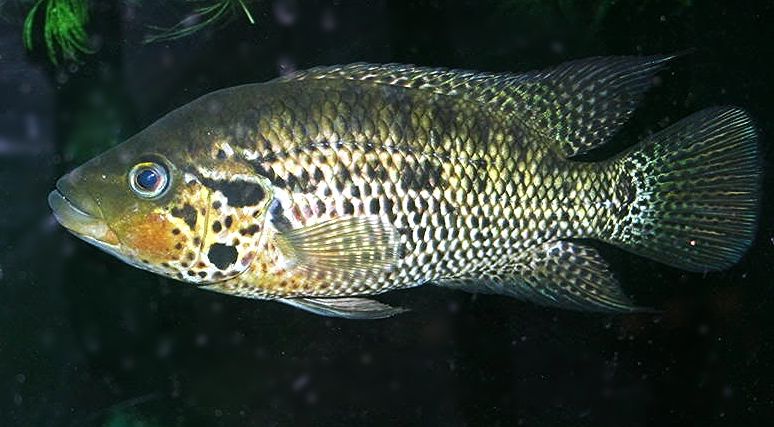
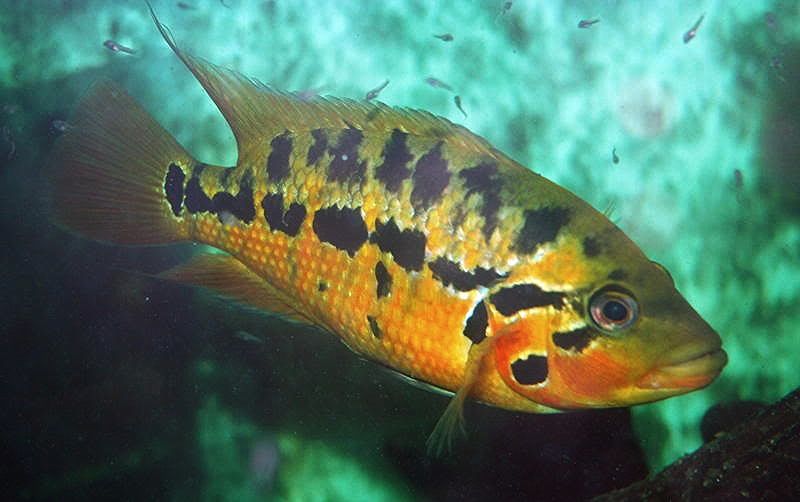
Here's a couple motaguense pics to compare.
male
female
The term yellow jacket can be used interchangeably with at least 3 different species of Parachromis, (motaguense(yellow variant), frieidrichsthallii, loiselli), and/or any Parachromis hybrid with a little yellow color in it.
Here's a couple motaguense pics to compare.
male

female


Mine is actually a friedrichsthalii
I was surprised how much the friedrichsthalii and loiselli look alike.
I'm aware of the red tigers here's my male and female


I was surprised how much the friedrichsthalii and loiselli look alike.
I'm aware of the red tigers here's my male and female

Mine is actually a friedrichsthalii
I was surprised how much the friedrichsthalii and loiselli look alike.
I'm aware of the red tigers here's my male and female
View attachment 1250818
View attachment 1250819
They do look very similar, but there are differences. Loisellei is a taller, and thicker bodied fish for starters.
Nice Freddy and RTM btw.
The thing about these Parachromis is they are such close cousins, and were in the distant past, probably all descended from one species, but separated by geographical barriers developed distinct, yet slight characteristics enough to fit their environment, and enough to evolve into separate species.
Maybe theoretically, all the descendants of Cichlasoma woodringii, from the friendrichthalli the most northerly endemic Parachromis in the Yucatan, to loisellii in the south, in Panama.
The video below was shot just south of Tulum (near Cancun) in the Yucatan.
Aktun Ha
Maybe theoretically, all the descendants of Cichlasoma woodringii, from the friendrichthalli the most northerly endemic Parachromis in the Yucatan, to loisellii in the south, in Panama.
The video below was shot just south of Tulum (near Cancun) in the Yucatan.
Aktun Ha

Yes woodringi is probably considered Nandopsis, but because Nandopsis arguably may be the most unchanged, primitive and basal new world genus, may be the type genus Parachromis evolved from.
Something about islands either oceananic like Hispaniola or water oasis islands in the desert (Cuatro Cienigas), that may allow a species to remain in an almost prehistoric state.
Or in the case of H minckleyi in Cuatro Cienigas, evolve in real time, almost before our eyes.
The cichlids of Madagascar, another almost prehistoric ancestral group of cichlids, with a primitive mode of hearing unlike all other cichlids except Etroplus suratensus.
Something about islands either oceananic like Hispaniola or water oasis islands in the desert (Cuatro Cienigas), that may allow a species to remain in an almost prehistoric state.
Or in the case of H minckleyi in Cuatro Cienigas, evolve in real time, almost before our eyes.
The cichlids of Madagascar, another almost prehistoric ancestral group of cichlids, with a primitive mode of hearing unlike all other cichlids except Etroplus suratensus.
Last edited:
