


I always put my overfows to the sump on one end of the tank, and pump returns on the opposite end. And in the sump, the pump opposite from where water from the tank enters, to provide enough contact time with media in between, heaters and such.
My cichlids have mostly been riverine, and I try to replicate that kind of linear flow type environment.
And although I try to have the drain pipes 1.5" (or there about), my returns from the sump are usually 1/2" or 3/4". I like the way the constriction adds pressure creating lots of turbulence, and will sometimes add venturi tubes to the returns for even more agitation.
Having the overflows on one end also make easy access for maintenance.
Here's an example of flow entering the tank on one end.
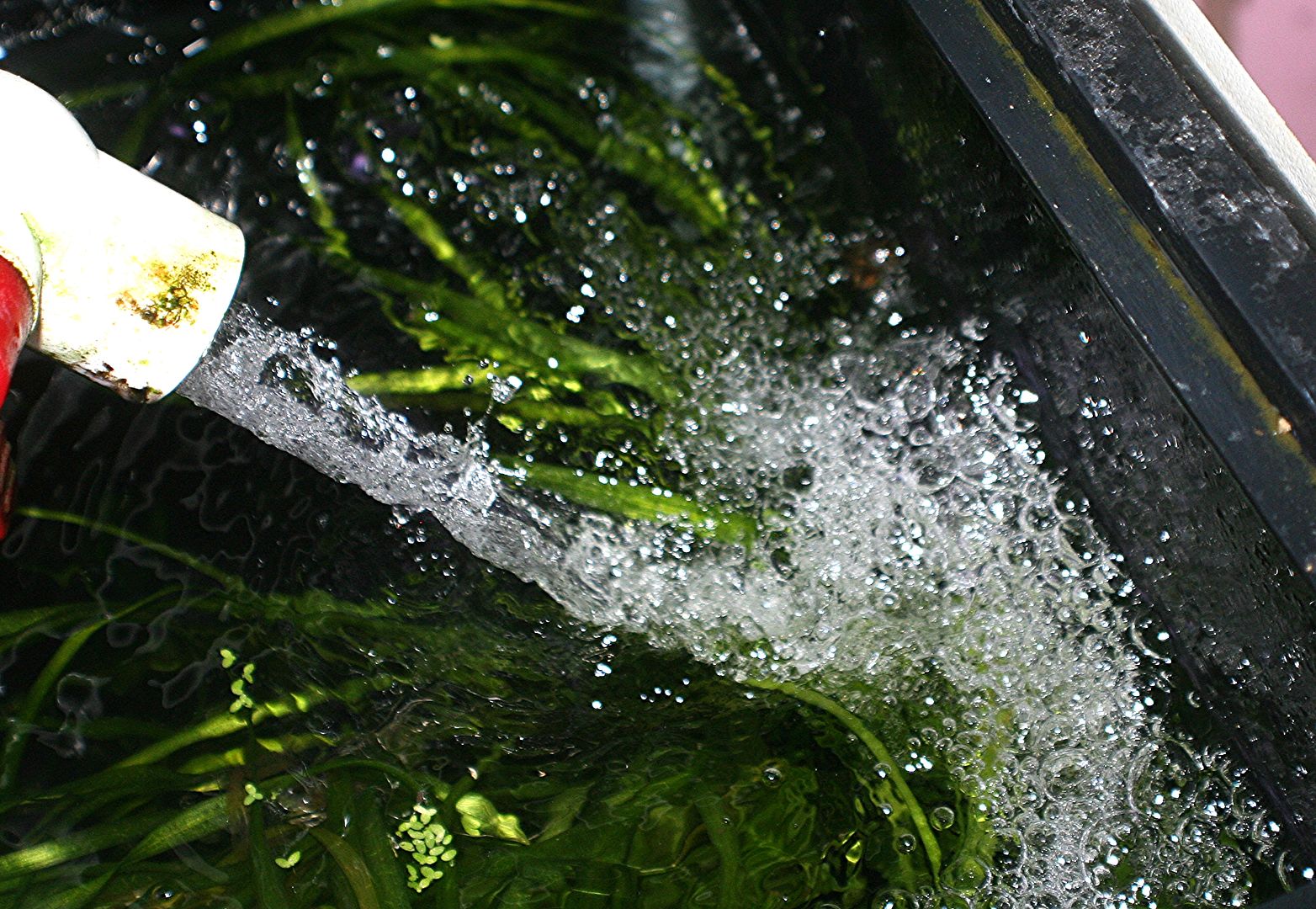
and the way the flow effects the entire tank, the overfows are on the right.
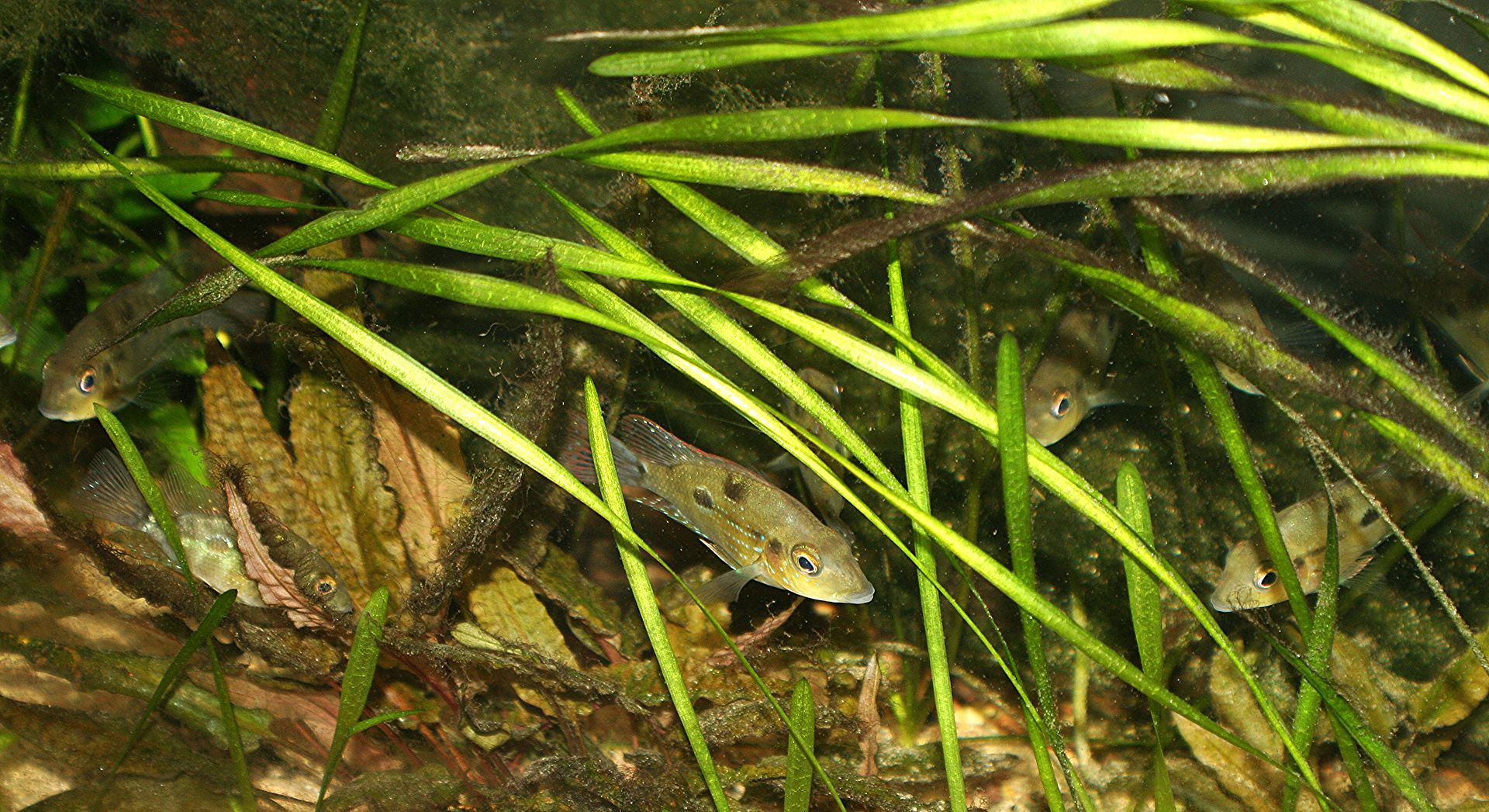
Here is another example of a 100 gal with venturi tube with flow entering one end, overflow opposite.
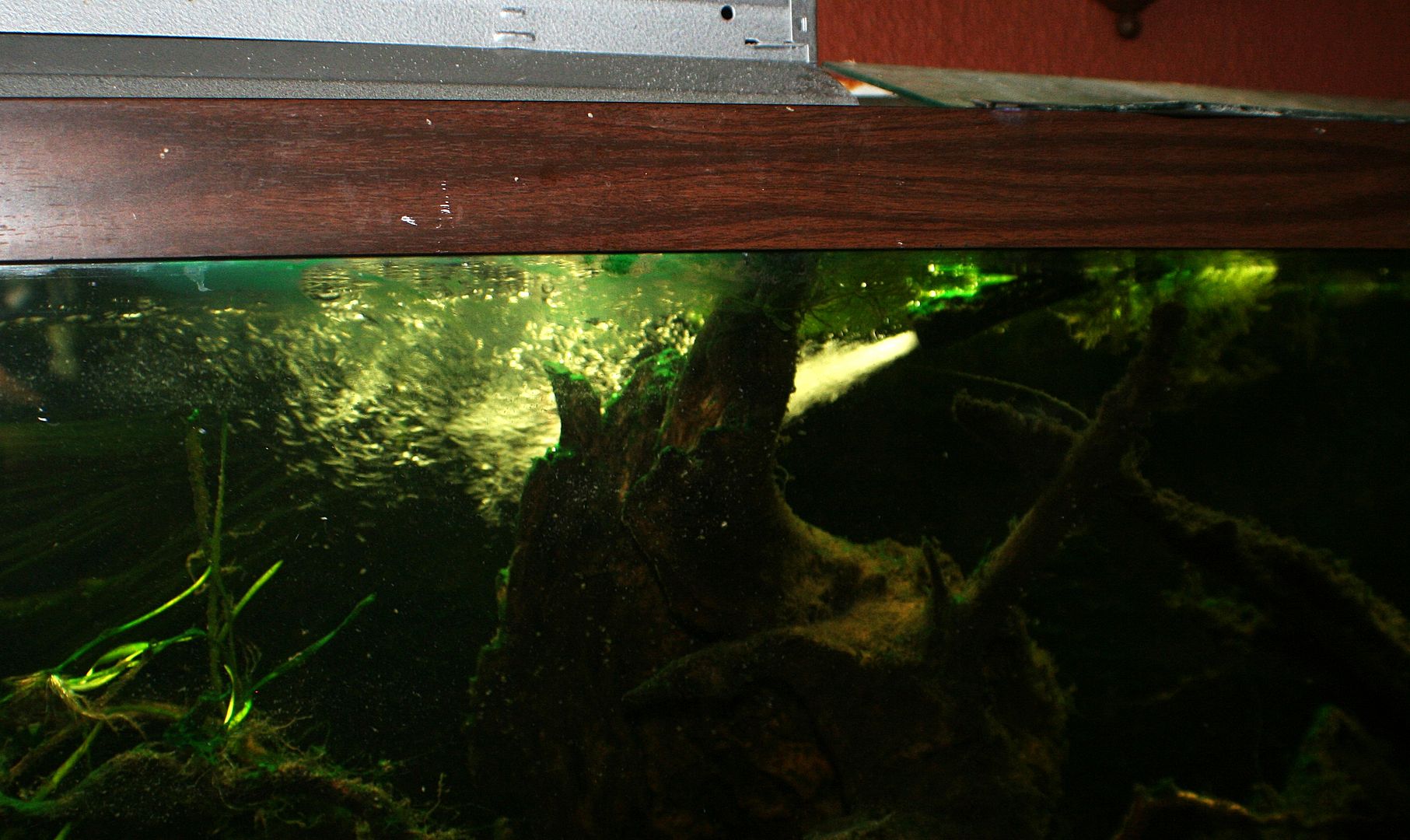
When using the tubes one must always be vigilant to keep any debris from plugging the aperture. I always keep an old coat hanger behind the tank, to regularly ream out the tube.
My cichlids have mostly been riverine, and I try to replicate that kind of linear flow type environment.
And although I try to have the drain pipes 1.5" (or there about), my returns from the sump are usually 1/2" or 3/4". I like the way the constriction adds pressure creating lots of turbulence, and will sometimes add venturi tubes to the returns for even more agitation.
Having the overflows on one end also make easy access for maintenance.
Here's an example of flow entering the tank on one end.

and the way the flow effects the entire tank, the overfows are on the right.

Here is another example of a 100 gal with venturi tube with flow entering one end, overflow opposite.

When using the tubes one must always be vigilant to keep any debris from plugging the aperture. I always keep an old coat hanger behind the tank, to regularly ream out the tube.


 Beanimal, man. Look into that.
