

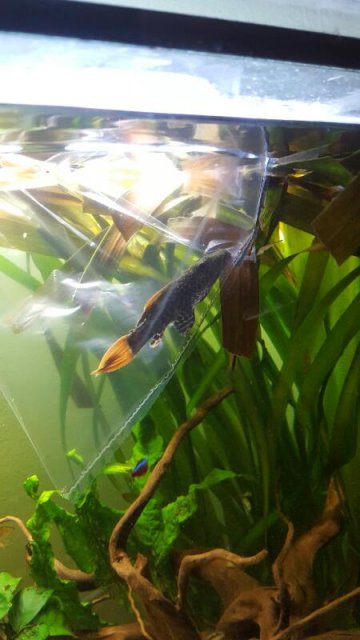
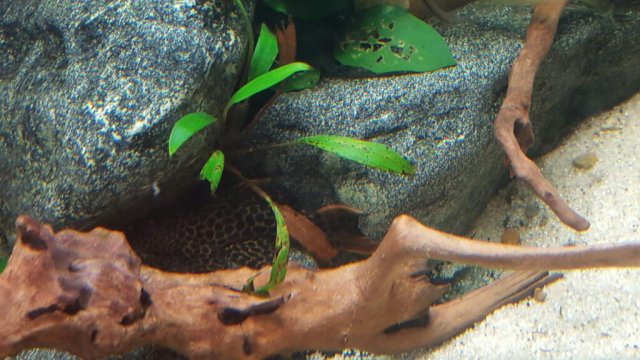
Hello, I would like to ask you about theese two plecos. L114 (pseudoacanthicus leopardus) I have bought 6-7 month ago and yesterday I bought LDA07, they look very similar. Are the the same species or two different ? Thank you for answer.
L114 / LDA07 ?
- Thread starter fan_tomas
- Start date
You are using an out of date browser. It may not display this or other websites correctly.
You should upgrade or use an alternative browser.
You should upgrade or use an alternative browser.


Nice looking tank with plenty of cover until they get bigger. I have an adult P. Leopardus (L600) that will come up close to the top of the tank and wait for me by sitting on a circulation pump. Or maybe it just feels good
A lot of people have asked the same question so I wanted to provide more information. I will keep the technical portion to a minimum. As you have probably already been told the L number system was created to be a place holder / temporary name until the pleco was properly identified. When one was formally named the L number was to be retired. Good plan but it didn't quite work out. L numbers have been used for so long that even when a scientific nam is provided the hobby still uses the L number because it is easier and ingrained into everyone's brain. Now to answer the question.
Currently there is only one formally described leopard cactus pleco
Pseudacanthicus Leopardus which is found in Guyana. In keeping with making things easier someone in the trade created the label 'L600'. Even though it is wrong it is easier to remember and write.
L114 and LDA07's each come from rivers other then P. leopardus are described as Pseudacanthicus cf. leopardus. The cf. does not mean 'color form' but is Latin meaning 'compare.' This means that they have not been formally declared the same but look very similar and might be the same species.
L427 is the fourth known leopard cactus pleco and is found in yet another river. There is still much to learn about this one as it has been reported that the adults in the wild turn black but has yet to be seen in an aquarium.
Based on my research the three are the same species but are different in appearance based on which river they are found. I have to work on the L427.
So in conclusion,
The one under the rock looks very much like a L114 and the one in the bag might be a LDA07 but better pictures are needed.
Hope this helps,
Jim
A lot of people have asked the same question so I wanted to provide more information. I will keep the technical portion to a minimum. As you have probably already been told the L number system was created to be a place holder / temporary name until the pleco was properly identified. When one was formally named the L number was to be retired. Good plan but it didn't quite work out. L numbers have been used for so long that even when a scientific nam is provided the hobby still uses the L number because it is easier and ingrained into everyone's brain. Now to answer the question.
Currently there is only one formally described leopard cactus pleco
Pseudacanthicus Leopardus which is found in Guyana. In keeping with making things easier someone in the trade created the label 'L600'. Even though it is wrong it is easier to remember and write.
L114 and LDA07's each come from rivers other then P. leopardus are described as Pseudacanthicus cf. leopardus. The cf. does not mean 'color form' but is Latin meaning 'compare.' This means that they have not been formally declared the same but look very similar and might be the same species.
L427 is the fourth known leopard cactus pleco and is found in yet another river. There is still much to learn about this one as it has been reported that the adults in the wild turn black but has yet to be seen in an aquarium.
Based on my research the three are the same species but are different in appearance based on which river they are found. I have to work on the L427.
So in conclusion,
The one under the rock looks very much like a L114 and the one in the bag might be a LDA07 but better pictures are needed.
Hope this helps,
Jim

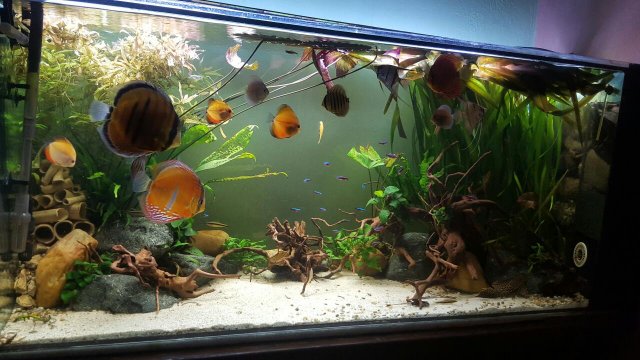
Hello Jim, thank you verry much for an extensive answer !  iIt helps me understand more about terminology of the plecos. I am glad, that they are not the same. I will make a better photo as soon as they come out from their caves. I check the L427 on the web, it also looks verry similar to L114 and LDA07, we will see when they grow up, what type they actually are. Here is photo of my tank, I was trying to make o lot of hiding places, because I have got a lot of plecos in.
iIt helps me understand more about terminology of the plecos. I am glad, that they are not the same. I will make a better photo as soon as they come out from their caves. I check the L427 on the web, it also looks verry similar to L114 and LDA07, we will see when they grow up, what type they actually are. Here is photo of my tank, I was trying to make o lot of hiding places, because I have got a lot of plecos in.Nice looking tank with plenty of cover until they get bigger. I have an adult P. Leopardus (L600) that will come up close to the top of the tank and wait for me by sitting on a circulation pump. Or maybe it just feels good
A lot of people have asked the same question so I wanted to provide more information. I will keep the technical portion to a minimum. As you have probably already been told the L number system was created to be a place holder / temporary name until the pleco was properly identified. When one was formally named the L number was to be retired. Good plan but it didn't quite work out. L numbers have been used for so long that even when a scientific nam is provided the hobby still uses the L number because it is easier and ingrained into everyone's brain. Now to answer the question.
Currently there is only one formally described leopard cactus pleco
Pseudacanthicus Leopardus which is found in Guyana. In keeping with making things easier someone in the trade created the label 'L600'. Even though it is wrong it is easier to remember and write.
L114 and LDA07's each come from rivers other then P. leopardus are described as Pseudacanthicus cf. leopardus. The cf. does not mean 'color form' but is Latin meaning 'compare.' This means that they have not been formally declared the same but look very similar and might be the same species.
L427 is the fourth known leopard cactus pleco and is found in yet another river. There is still much to learn about this one as it has been reported that the adults in the wild turn black but has yet to be seen in an aquarium.
Based on my research the three are the same species but are different in appearance based on which river they are found. I have to work on the L427.
So in conclusion,
The one under the rock looks very much like a L114 and the one in the bag might be a LDA07 but better pictures are needed.
Hope this helps,
Jim
So, are you saying that Planetcatfish is wrong to be labeling L114 and LDA07 as the same? (it wouldn't be the first time they have made errors)Nice looking tank with plenty of cover until they get bigger. I have an adult P. Leopardus (L600) that will come up close to the top of the tank and wait for me by sitting on a circulation pump. Or maybe it just feels good
A lot of people have asked the same question so I wanted to provide more information. I will keep the technical portion to a minimum. As you have probably already been told the L number system was created to be a place holder / temporary name until the pleco was properly identified. When one was formally named the L number was to be retired. Good plan but it didn't quite work out. L numbers have been used for so long that even when a scientific nam is provided the hobby still uses the L number because it is easier and ingrained into everyone's brain. Now to answer the question.
Currently there is only one formally described leopard cactus pleco
Pseudacanthicus Leopardus which is found in Guyana. In keeping with making things easier someone in the trade created the label 'L600'. Even though it is wrong it is easier to remember and write.
L114 and LDA07's each come from rivers other then P. leopardus are described as Pseudacanthicus cf. leopardus. The cf. does not mean 'color form' but is Latin meaning 'compare.' This means that they have not been formally declared the same but look very similar and might be the same species.
L427 is the fourth known leopard cactus pleco and is found in yet another river. There is still much to learn about this one as it has been reported that the adults in the wild turn black but has yet to be seen in an aquarium.
Based on my research the three are the same species but are different in appearance based on which river they are found. I have to work on the L427.
So in conclusion,
The one under the rock looks very much like a L114 and the one in the bag might be a LDA07 but better pictures are needed.
Hope this helps,
Jim
Until a peer review of my research is completed Planet Catfish is current. I have been in contact with Jools and others for the past years as my testing progressed. Jools has offered to let me submit a clean up of the genus Pseudacanthicus and ways to tell them apart. I'm a bit behind in that project but I wanted to start to clarify some of the easy stuff.
I debated about posting but the new guy asked a fair question.
Jim
I debated about posting but the new guy asked a fair question.
Jim

Until a peer review of my research is completed Planet Catfish is current. I have been in contact with Jools and others for the past years as my testing progressed. Jools has offered to let me submit a clean up of the genus Pseudacanthicus and ways to tell them apart. I'm a bit behind in that project but I wanted to start to clarify some of the easy stuff.
I debated about posting but the new guy asked a fair question.
Jim
You sir are "followed"...I am becoming more and more intrigued with these fish every day! Cactus plecos have eluded me thus far in every lfs I visit but I will continue the search.
Fan_tomas, you have a beautiful aquarium. ...much jealous.