While doing my microbiology studies, we had a unit on algae, and used an entire textbook filed with just the algal species endemic to the U.S. great lakes.
I can't remember for sure, but I believe there were over 1,000 species in those lakes alone .
The exam was brutal, but later the work came in handy when for my job, I had to do algae counts, and try to identify the species that entered the water plant on a daily basis.
Although the sq footage of the type bio media may be, or seem important.
It is really the fish stocking that accounts for actual population of beneficial bacteria.
That population will not over grow its food supply. That will ebb and flow with stocking.
In other words, just because you have 7,000 feet of media, if your fish do not produce enough ammonia to feed 7,000 ft bacteria on that surface area, you might just as well be sufficient with 4 ft of media.
And its not just the media that hold bacteria, all substrate, the glass panels inside the tank, and aquatic plants and terrestrial plant roots all have the ability to sustain populations of beneficial bacteria.
What is also important is the dissolved oxygen level in the tank.
Many species of benifial bacteria are facultative aerobes, that need oxygen to do their job.
This is one of the reasons why, if you overstock , and a pump fails, or during a power outage, certain species of high oxygen demand fish species can be lost, and a cycle may crash in as little as 24 hours.
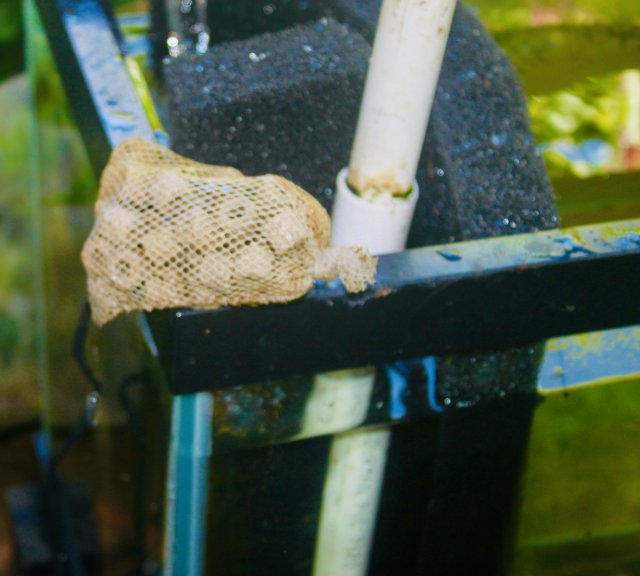
My 6 ft sump uses an @ 20"x 20" Porrett foam pad, and a few small bags of ceramic rings as bio-media.
A tiny fraction of the tank ,and sumps, 300 gallons.
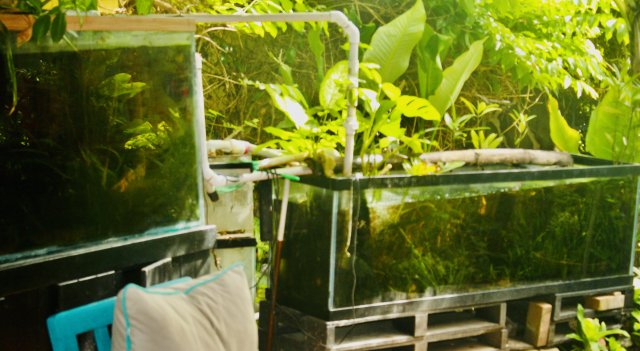
But the major portion of space is filled with aquatic, and terrestrial plants that also serve as surface area for benificials, but also use nitrate, and return oxygen during daylight hours.
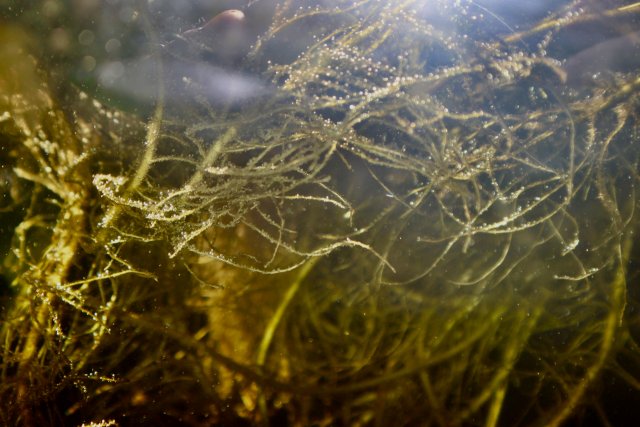
During certain intense light periods, micro oxygen bubbles exude from the plants.
Even during a 3 day outage not long ago, losses were minimal, 1 out of 16 fish, in 300 gallons.
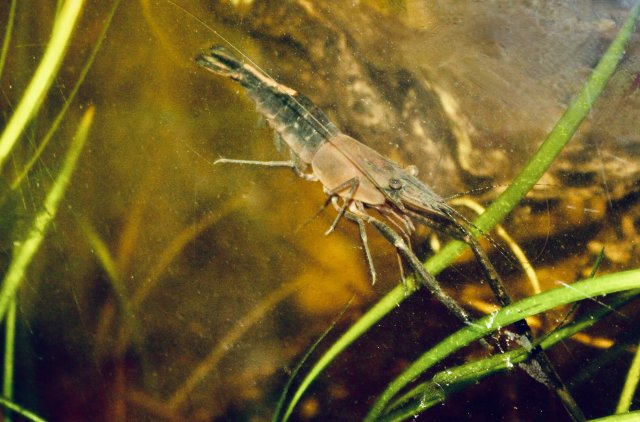
I also use small shrimp in the sump, to help breakdown detritus into more plant and benafial bacteria usable compounds.