Official Off Topic Discussion Thread #1

  • We are currently upgrading MFK. thanks! -neo

Hello; Here we go. Not a mauling, just an animal bite or few. I also put it high on my list of dumb moves of 2025. Brings up a question i will get to more later on about rescues.
Guy sees injured coon on road. Decides in what seems, to me, a convoluted logic train, to try to save it. Sticks the coon inside the coat he was wearing and starts driving it to be treated.
(Side note- brings up the potential lack of experience with wild animals. May be in PG movies or cartoons that the wild animal somehow knows you are trying to save it, but in reality, the animal does not get the message. A wild animal will scratch & bite a rescuer.)

Somewhere along the way the coon revives enough to bite the man's face and hands. He does not give up, however. He wraps the coon in a blanket and goes on. Gets to the destination where apparently it takes some effort to convince him to get rabies shots. Such are not fun. My brother had to have rabies shots after a dog attack by a family dog which did not have the shots. Painful & expensive.

Skip to the end. The coon was killed and did have rabies. Back to my rescue question. Which wild animals should we try to rescue? Which should we leave to their fate?
Side story- I used to be riding with a friend along the rural roads of TN, KY & VA. This guy would see a tortoise on the road. Would stop and pick up the tortoise. He would then drive along until he sees a place he felt would be nice for the animal and let it go. After a few such incidents I questioned the logic. For the tortoise the question was why not just put it across the road at the spot where it was already heading? The animal had some reason for going that way. Was it on the trail of a mate? Did it have an established territory/home area with good food? How does the animal look at the suitability of a spot vs how a human looks at the spot?
 
I was spoken to by a number of policemen and even one conservation officer when I lived in Ontario, because I would always stop when I saw a turtle, usually a snapping turtle, attempting to cross a road or highway. It occurred much less frequently with snakes as well. This was always in the spring and early summer, when the reptiles were travelling to breeding sites to lay their eggs; they were always large adult females, the future hope of the species. Sadly, it was common to see crushed specimens on the road, as though the turtle darted out into traffic so quickly that the driver couldn't react in time to avoid it. Nope...these were just a-holes who thought it was cool or fun to run over a turtle, or in some cases believed that they were saving the ducklings and game fish that they had "learned" would fall prey to the dastardly reptile if they didn't help out.

I actually needed to explain to a couple of other "turtle rescuers" that they needed to put the turtle on the side it was trying to reach, rather than back on the side it had left. "But the water is back there!" they would squeak indignantly. Idiots...heart's in the right place, brain is left disengaged.
 
  • Like
Reactions: deeda and skjl47
Which wild animals should we try to rescue?

As cold as it may sound....NONE! But it's to each their own really.

First scenario....

If you watch a lot of nature programmes as I do, mainly with Sir David Attenborough at the helm, you will soon learn that there is a policy that no animal in trouble, no matter how much it's plight may tug at the heartstrings, should be rescued by any of the team. Let nature take its course is the overwhelming policy. And I get that completely.

Second scenario....

Sir David Attenborough no where to be seen and you stumble upon a hapless, struggling animal. Do you help? You'd be sorely tempted, I know I would be. But the example in that report gives you two valid reasons why you should tread carefully....Disease, in this case rabies! Yikes! And also you just never know how the animal is going to react. They don't realise they're being helped, they just look on you as a potential threat on top of the problem they may already have.

I suppose it would depend on the animal too. If I came across a wild fox for example in trouble I'd think twice. If I came across a kitten in dire trouble I'd be there like a flash.
 
Unfortunately way too many did not have the childhood of those who raise food animals.

I was raised on a smallholding where my dad would occasionally kill ducks, rabbits and chickens for the table. As a child I had no problem with this at all.

This set me up nicely for the part time job I had in a local abattoir when I was in my early teens, and that was grim, certainly not for the faint hearted.

I read an article some time ago that said there was a startling disconnect between city raised kids and their rural brethren.

Some kids have never seen a farm animal close up, some have never camped out. I'm very grateful for my rural upbringing.
 
As cold as it may sound....NONE! But it's to each their own really.

First scenario....

If you watch a lot of nature programmes as I do, mainly with Sir David Attenborough at the helm, you will soon learn that there is a policy that no animal in trouble, no matter how much it's plight may tug at the heartstrings, should be rescued by any of the team. Let nature take its course is the overwhelming policy. And I get that completely.

Second scenario....

Sir David Attenborough no where to be seen and you stumble upon a hapless, struggling animal. Do you help? You'd be sorely tempted, I know I would be. But the example in that report gives you two valid reasons why you should tread carefully....Disease, in this case rabies! Yikes! And also you just never know how the animal is going to react. They don't realise they're being helped, they just look on you as a potential threat on top of the problem they may already have.

I suppose it would depend on the animal too. If I came across a wild fox for example in trouble I'd think twice. If I came across a kitten in dire trouble I'd be there like a flash.
Totally legitimate viewpoint ^ but I am a softie in many ways and I just don't follow that rule. If I come across a wild animal, of any description, that is obviously on its way out and looks as though it might be in for a prolonged period of suffering, I will put it down as quickly and humanely as possible.

In other circumstances, I have twice stopped my car in farm country and risked some physical injury to free deer that were trapped in a barbed-wire fence. Both animals were quite exhausted but seemed otherwise unhurt, and I like to think that they recovered after wobbling into the bush; no way to know for sure.

I've also had an experience a few years back where a small buck was spotted hobbling painfully across my front yard, close to the road. One leg was dangling loose and useless; I later found that the bone was completely broken. Despite the pain this must have caused him, the annual rut was in full swing and the poor guy was still pushing himself to find and breed does. He had no chance to survive, and I burned my single deer tag to take him out of commission quickly rather than allowing him to continue on for probably several torturous more days. While this was during hunting season and I was licenced to take him, I bent several game laws by shooting him too close to the road and towards the road (making certain that there was no traffic within sight). The wound on his leg was obviously several days old already, and thoroughly infected and smelly, so we were not even able to utilize the meat. He wound up in the corner of the pasture to feed eagles, vultures and coyotes.

That might have been a completely natural injury...or maybe he was hit by a car, no way to tell. The turtles were being run over by traffic, and in today's world it's likely safe to say that most injured animals that are found by most people were probably hurt by the actions of people, directly or indirectly. So I don't feel I am interfering with nature; either way, the animal will be recycled by other critters, I just edit out that part where it suffers for days, or is eaten alive...yes, that happens often...but the calories and nourishment in the carcass never goes to waste.

How about animals that have come to grief in an entirely natural manner, with no connection to human action? Sir Attenborough has been a hero of mine for much of my life and I know that he espouses the "no interference" rule, as do many naturalists, but I don't subscribe to that. The end result is the death of the animal; I simply won't tolerate unnecessary suffering, when there will be no difference to the natural system if reducing the pain is possible.

Yeah, I know, I know..."You say one thing...but you're a hunter and kill animals yourself!" Yes, I do, and there is no contradiction or paradox involved here; I love animals and nature, and while hunting my primary concern is that death is as quick and humane as possible. I'll guarantee that the vast majority of animals taken by ethical hunters suffer far less than they would while falling victim to almost any "natural" end.

 
Sir Attenborough has been a hero of mine for much of my life and I know that he espouses the "no interference" rule, as do many naturalists,

There was one notable exclusion to his no interference rule, you may have seen the programme I'm about to describe.

They were filming some flamingoes on this huge expanse of shallow salt lake. The birds feet would be in the water for most of the time and the salt crystals would build up on the feet, steadily increasing in size and, more alarmingly for the young birds, weight too.

When it was time to vacate the salt pools some of the young birds couldn't get airborne no matter how hard they tried. One particular young chick, left on its own, really got to the team. They captured it and chipped away the salt deposits on its feet so it could fly away.

That is the only time I have seen them interfere which I thought was fantastic.
 
  • Like
Reactions: jjohnwm
There was one notable exclusion to his no interference rule, you may have seen the programme I'm about to describe.

They were filming some flamingoes on this huge expanse of shallow salt lake. The birds feet would be in the water for most of the time and the salt crystals would build up on the feet, steadily increasing in size and, more alarmingly for the young birds, weight too.

When it was time to vacate the salt pools some of the young birds couldn't get airborne no matter how hard they tried. One particular young chick, left on its own, really got to the team. They captured it and chipped away the salt deposits on its feet so it could fly away.

That is the only time I have seen them interfere which I thought was fantastic.
...and yet that is an example of interfering with a perfectly natural, non-human-generated problem that happened entirely spontaneously.

Why did that particular bird develop such an extreme version of the problem? Was it genetically inferior, a smaller, weaker individual which could not handle that extra weight? Did some mutation result in skin on its feet that was more susceptible to mineral deposits to form? Did some aberrant behaviour, such as insufficient grooming, contribute to the issue? All possible explanations, and each of them would suggest that allowing that bird to die would be to the benefit of the species as a whole.

I hate to say it, but this particular softie would have done nothing, unless I were absolutely certain that the bird was doomed to die...in which case I would have expedited that process quickly and humanely.
 
  • Like
Reactions: skjl47
Hello; I do not like to see TV nature shows interfering with the circumstances of wild animals. Sadly, the more recent animal shows on PBS have begun to take an unacceptable direction. Not yet full interference but they will get there if the trends continue. So far what i see often is calling animal actions in terms of human emotions and similar cliches.

I help some wild animals sometimes. I was going into the local Krogers a few years ago. It was not a warm day. A small bird flew into the window glass and fell to the ground. I picked it up and held it in my hands and determined it was alive but knocked out. After a while it came to. I kept it warm and eventually it flew off a few feet apparently still groggy. Finally it got squared away and flew off.

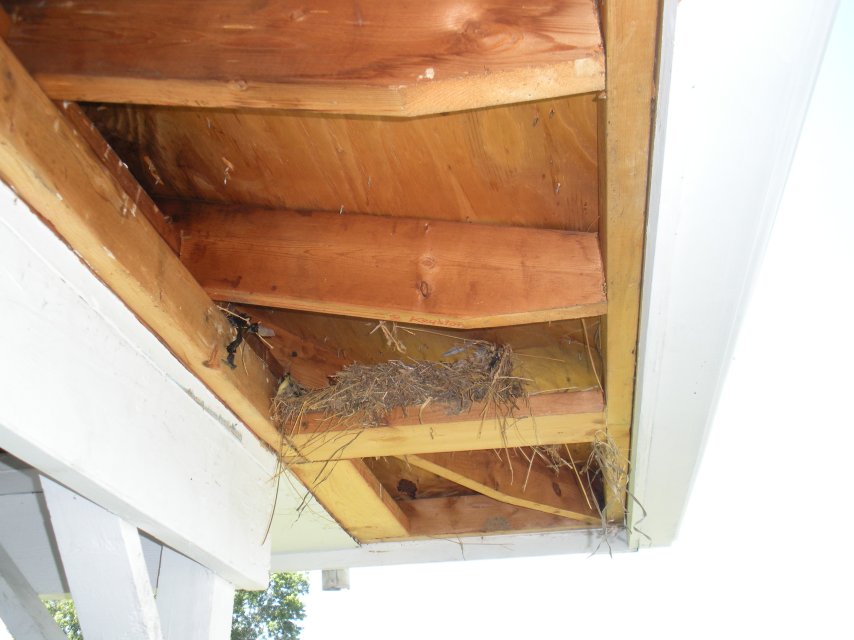
Every spring for years I would tear down the Robins nest in my carport during the spring nesting season. Two reasons. One because they would crap on my truck. The other because a neighbor hood cat was on to their nest. The cat would wait till the chicks were of size but still could not fly. The cat would climb on my truck to get at the rafters.
So, i kept knocking the nests as the robins were building them until they picked a safer place.
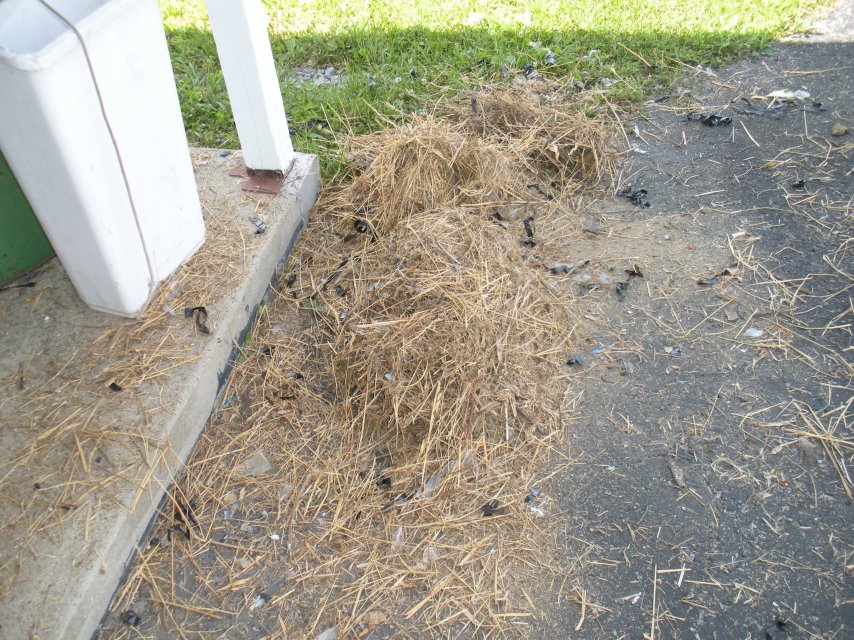
The issue was fixed three years ago. Squirrels had made a home in the soffits of my car port. Either the squirrels or mice attracted to the food had crawled into the engine compartment of my truck chewing the wires. Truck down three months. I tore off the soffit covers and removed the nesting materials. After that the birds started nesting in the newly exposed roof joists outside of where the cat can get at them. DSCN9095.JPGDSCN9096.JPG
 
MonsterFishKeepers.com