


Oscar and JD ph?
- Thread starter Kelly_Aquatics
- Start date
You are using an out of date browser. It may not display this or other websites correctly.
You should upgrade or use an alternative browser.
You should upgrade or use an alternative browser.


If captive bred then it should be ok in water with a high ph. Long term probably need to keep the ph around 7 due to potential for hith. Can do this with a RODI unit. Mix RODI water with tap and it’ll result in a lower ph and tds.
There is but it’s like chasing it tail to adjust the ph frequently. Ph swings aren’t good for fish. Stresses them out.kno4te Is their not a chemical that can lower ph? instead of buying a whole reverse osmosis system
I have a reverse osmosis system for drinking water can I tap into this system and how low should ph be?

Jack dempseys actually prefer higher pH and hardness, coming from central america. Oscars prefer lower pH and hardness. RODI is great to use for south americans like the oscars, but I wouldn't use it for the JD's unless you plan to add buffering agents to bring pH back up. RODI is the same as reverse osmosis for drinking water; except it adds another step, DI or deionization, which will bring the TDS of the water down to 0.
With all that said, both fish should be OK at 7.7pH, unless your oscars are wild caught or F1, etc. The oscars can be more susceptible to certain bacterias and diseases when kept in higher pH, but if the fish is adapted to it and you keep the water very clean, it shouldn't be a problem.
If you already have the RO and want to use it, I would say it's a good move for the oscar tank, but I would skip it for the dempsey's
With all that said, both fish should be OK at 7.7pH, unless your oscars are wild caught or F1, etc. The oscars can be more susceptible to certain bacterias and diseases when kept in higher pH, but if the fish is adapted to it and you keep the water very clean, it shouldn't be a problem.
If you already have the RO and want to use it, I would say it's a good move for the oscar tank, but I would skip it for the dempsey's
Ok good to know I would love to keep the ph lower for the oscars but not sure Im ready to spend hundreds of dollars

As Kno4te said a pH of 7.7 is a Little; high for oscars, but perfect for JDs.
And although pH is often an indicator, its not the end all.
The rivers where oscars, severums, and other riverine South Americans come from are usually around 0 grains hardness (10'dH), low conductiviy, and that low mineral content often determines long term chronic health.
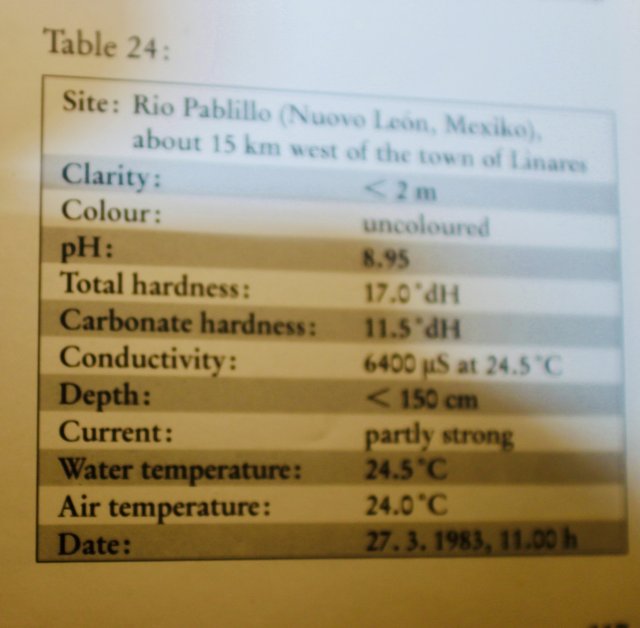
Here is are a couple catch location data findings, for rivers in S America.


Now compare parameters in Central America and Mexico where mineral content can be quite high, where species like JDs or Herichthys come from.

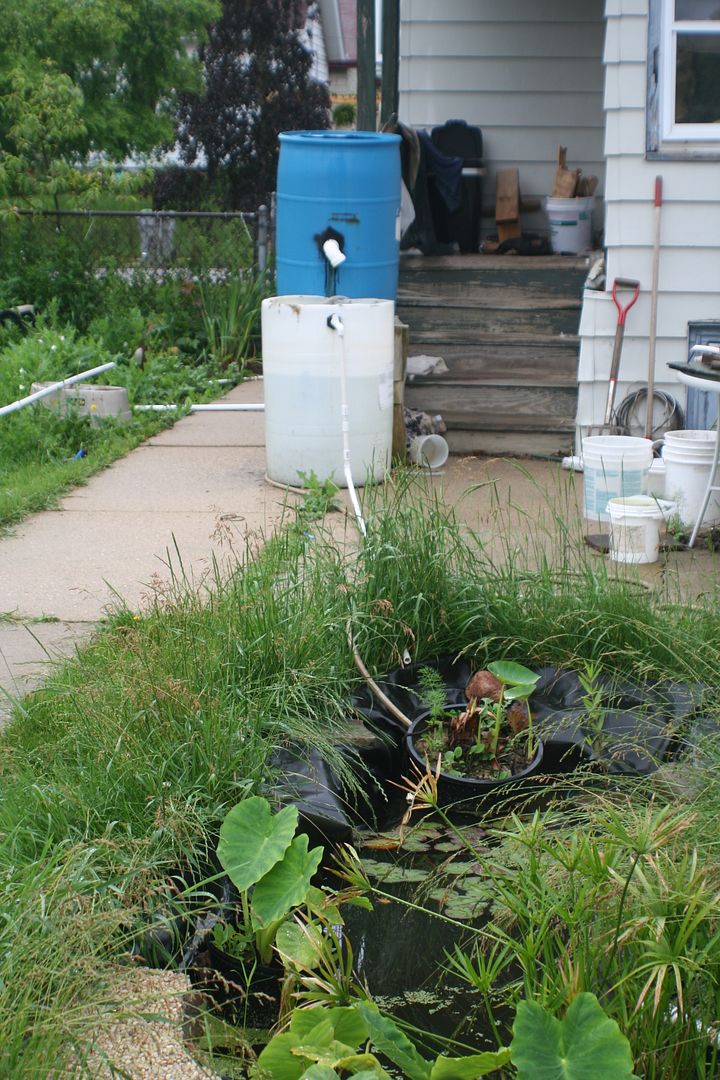
Rain water catchment can be one low cost way to dilute the mineral content of water change water, and as said, if you already have RO/DI this is a plus.
In the video below (where JDs are endemic) you can see the large, white, lime stone boulders (the topography of the area) that have collapsed into the Cenote, and that (as they dissolve) harden and buffer the mineral content of JDs natural waters
027 zps4b102ffd
And although pH is often an indicator, its not the end all.
The rivers where oscars, severums, and other riverine South Americans come from are usually around 0 grains hardness (10'dH), low conductiviy, and that low mineral content often determines long term chronic health.
Here is are a couple catch location data findings, for rivers in S America.
Now compare parameters in Central America and Mexico where mineral content can be quite high, where species like JDs or Herichthys come from.
Rain water catchment can be one low cost way to dilute the mineral content of water change water, and as said, if you already have RO/DI this is a plus.
In the video below (where JDs are endemic) you can see the large, white, lime stone boulders (the topography of the area) that have collapsed into the Cenote, and that (as they dissolve) harden and buffer the mineral content of JDs natural waters
027 zps4b102ffd
I have kept many Amazonian S American, and Central American cichlids, but have tried not to keep them in the same tanks because of different preferred water parameters. There are some S Americans, those from from west of the Andes, and south of the Amazon region where waters "are" more mineral rich.
Because my tap water was generally hard, I had a rain water collection systems, and mixed (diluted) my hard, mineral rich tap water with it for S American, where the Central Americans always seemed to do well in straight dechlorinated tap..

I would also soak pieces of wood in the rain water to add tannins, preferred by S American (and other soft water fish like killies)
for the natural bacterial inhibiter qualities.
Because my tap water was generally hard, I had a rain water collection systems, and mixed (diluted) my hard, mineral rich tap water with it for S American, where the Central Americans always seemed to do well in straight dechlorinated tap..


I would also soak pieces of wood in the rain water to add tannins, preferred by S American (and other soft water fish like killies)
for the natural bacterial inhibiter qualities.