

Pseudoplatystoma orinocoense pics. Rare TSN?
- Thread starter Comanswoodwork
- Start date
You are using an out of date browser. It may not display this or other websites correctly.
You should upgrade or use an alternative browser.
You should upgrade or use an alternative browser.


Great!
If you find it possible, please, continue posting about these fish here.
The deal started here http://www.monsterfishkeepers.com/forums/threads/help-me-locate-a-tsn-please.657662/
(Then went on a bit here http://www.monsterfishkeepers.com/forums/threads/picked-up-my-shovelnose-today.658055/#post-7413524 )
BTW, I have my doubts about its adult size. With so little known, it may simply be that big ones have not been caught and ID'ed as such yet.
If you find it possible, please, continue posting about these fish here.
The deal started here http://www.monsterfishkeepers.com/forums/threads/help-me-locate-a-tsn-please.657662/
(Then went on a bit here http://www.monsterfishkeepers.com/forums/threads/picked-up-my-shovelnose-today.658055/#post-7413524 )
BTW, I have my doubts about its adult size. With so little known, it may simply be that big ones have not been caught and ID'ed as such yet.

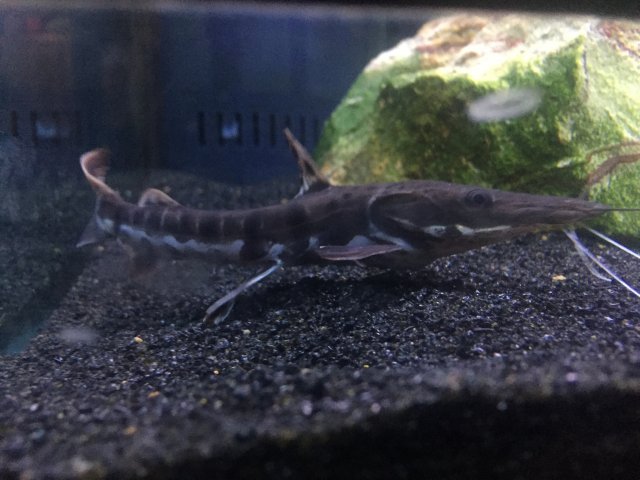
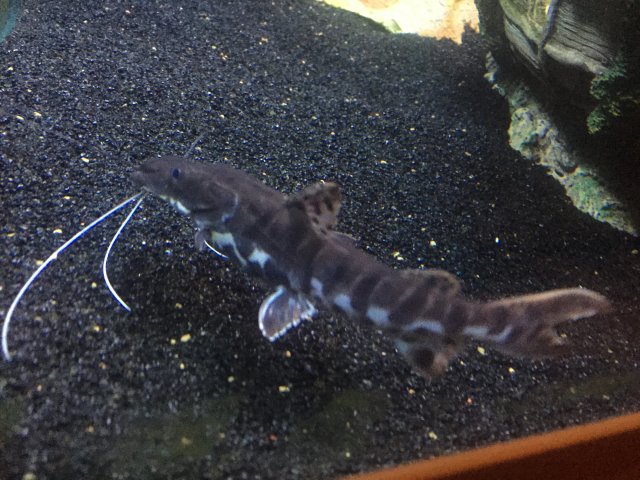


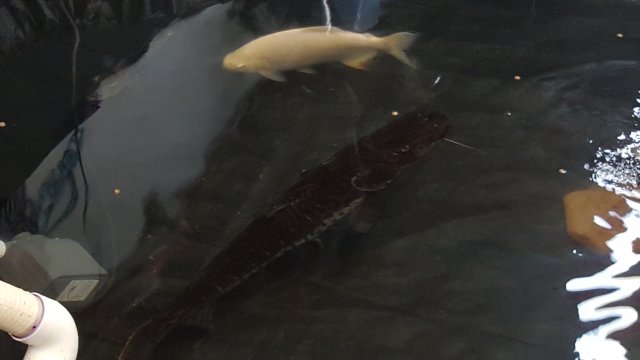
looking good

They def. resemble one of my guys the more pics u post... the odd belly spotting...head shape...finnage and head spots all match up. im 99.9% positive there the same... the .1% is unsure of what they are in general. my i.d. over the yrs has been p. reticulatum but they very well could be p. orino as im no scientist/biologist. I will say of the 3 species i own of tsn... this guy is the largest at 34-36" lol... still very rare in the hobby
, u dont see many of these pop up at all. Keep up the good work with them and i appreciate all the documentation! Not tryin 2 burst ur bubble or anything, its always interesting 2 learn more about collection points and have good pics of juvies. I will note that my guy hovered around 24" for a good 3 yrs and hit a growth spurt in a 1k gallon pool. I wouldnt worry much about size for a long while yet. Its hard to get any tsn over 18"-24" let alone 30". ill try and dig up some younger pics of my specimen to compare/share. was 18" back in 2010 and resembles urs even more so.I bought this guy as P. Corruscans but I think it's a hybrid? Thoughts?
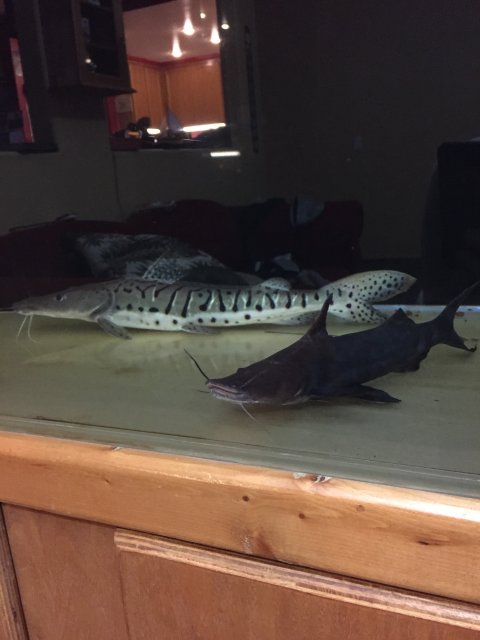
Def. an odd one Jay...I'd hold onto it lol... Possible hybrid...very plausible. What throws me off on urs is the light coloration, I've yet 2 own one like it. The tail and belly spotting are right for corruscans.. Should b more body spotting. On the flip side it does resemble Liam's old specimen.. But that guy blew up to 30" or so real quick lol...

I've seen a few P. Orinocoense caught by fishermen in Venezuela and they were more or less indistinguishable from P. tigrinum and were well over 20" in length.
That threw me for a loop or two. How rigorous is this statement, Wed? To ignorant me it sounds like "excessive political correctness". The coloration pattern alone on mature reticulatum and orinocoense from the revision article is drastically different and makes it impossible to confuse the two.... my i.d. over the yrs has been p. reticulatum but they very well could be p. orino as im no scientist/biologist. ...
Blackbullhead's statement is more perceptible to me - the first and easiest thing to see is the pattern, which appears similar on tigrinum and orinocoense. Skeleton and finnage differences would require a close juxtaposition of the specimen and inspection and perhaps knowing what to look for.
Jay's fish is interesting-looking but imho may be too young to say much. The light coloration might be due to the absence of substrate and light-colored bottom, bareness of the tank, and relatively bright lighting.
thebiggerthebetter
, i suppose i try and be overly nice or politacally correct these days as to not turn anyone away from the hobby...or from keeping big cats as ive seen a steady decline in what we do from "scare tactics" lol.. Sure adults are easier to tell apart but as you've said theres always chance pictures/info are not accurate in the first place. Look at the whole goonch sp. re identification. plenty of scientific papers leading people in the wrong direction very similiar 2 the tsn sp. so who is right lol? More i look at pictures from other sources and not my own fish it gets confusing. so i offer a bit of chance in any of my own opinions. All i know for certain is i have 3 distinctly different specimen/specie that ive watched change over the yrs. so i observe and report... its taken me yrs to i.d. them and whos 2 say there accurate with so many variables across the board... i.e. collections points, wild hybrids, new species, farm raised, man made hybrids, inter specie variation...and really no solid info 2 back anything up. i give up haha...
