

Red Jewels
- Thread starter Richie_ELP
- Start date
You are using an out of date browser. It may not display this or other websites correctly.
You should upgrade or use an alternative browser.
You should upgrade or use an alternative browser.
Maybe if they get along and were a bonded pair. Males can be very aggressive and they might be a bit cramped.could 2 work in a 30 gallon?
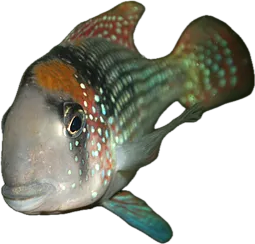
Have your heard of Turkana Jewel cichlids. They are less aggressive and stay smaller. You could get a small group of juveniles to grow out and once a pair forms, get rid of the others.

y
no, but im planning on keeping kribensis insteadMaybe if they get along and were a bonded pair. Males can be very aggressive and they might be a bit cramped.
Have your heard of Turkana Jewel cichlids. They are less aggressive and stay smaller. You could get a small group of juveniles to grow out and once a pair forms, get rid of the others.

I post a thread on Turkana Jewel, which became available only a few years ago. https://www.monsterfishkeepers.com/forums/threads/lake-turkana-jewel-cichlid.724808/Maybe if they get along and were a bonded pair. Males can be very aggressive and they might be a bit cramped.
Have your heard of Turkana Jewel cichlids. They are less aggressive and stay smaller. You could get a small group of juveniles to grow out and once a pair forms, get rid of the others.
Turkana is smaller and less aggressive than other Jewel species, and adults retain red color at all time regardless of pecking order. Other species of Jewel can be drab in color in subordinate status.

There at least 9 different species of Rubricatochromis (jewel cichlids) and another 4 that are yet undescribed.
Most are soft water species, but are able to adapt to various water parameter conditions.
R exsul from Lake Turkana are very adaptable, seeing as how Lake Turkana is considered the largest most alkaline lake in the Africa, with a brackish saliinity of 2.5 ppt, and a pH of 9 or above- it is a desert lake without an outlet, so mineral salts build up due to evaporation..
Most are soft water species, but are able to adapt to various water parameter conditions.
R exsul from Lake Turkana are very adaptable, seeing as how Lake Turkana is considered the largest most alkaline lake in the Africa, with a brackish saliinity of 2.5 ppt, and a pH of 9 or above- it is a desert lake without an outlet, so mineral salts build up due to evaporation..

I realize many aquarist mix countries, and continents ad nauseum, but being a biotope advocate, I find these combinations at best worrysome,
The random combination practice of (for example ), putting soft water west African jewel cichlids , with hard water , high pH Centra American cichlids like firemouths is ill advised, and frought with problems,
as Ghost hrimp mans post indicated, and found out the hard way.
And the idea the combining soft water Asian clowm loaches, and hard water high pH rift lake Africans (such as lemon yellows), with soft water west African riverine jewel cichlids, just as odd (even though they from the same gigantic continent.
I know some aquarists might have some temporary success with these odd lot combinations, when cichlids are young,
but differences in territortial and habitat references, or opposite water parameter preferences will come into play later.
Just a modicum of research should make it clear, that many of these extra and inter-continental combinations are mistakes just itching to be happen,, especially in a tiny glass box that is little more than a puddle compared to nature.
I consider any of these ¨care sheets´that don´t take geography into account totall BS, and not worth the paper or computor screen they are printed on.
The random combination practice of (for example ), putting soft water west African jewel cichlids , with hard water , high pH Centra American cichlids like firemouths is ill advised, and frought with problems,
as Ghost hrimp mans post indicated, and found out the hard way.
And the idea the combining soft water Asian clowm loaches, and hard water high pH rift lake Africans (such as lemon yellows), with soft water west African riverine jewel cichlids, just as odd (even though they from the same gigantic continent.
I know some aquarists might have some temporary success with these odd lot combinations, when cichlids are young,
but differences in territortial and habitat references, or opposite water parameter preferences will come into play later.
Just a modicum of research should make it clear, that many of these extra and inter-continental combinations are mistakes just itching to be happen,, especially in a tiny glass box that is little more than a puddle compared to nature.
I consider any of these ¨care sheets´that don´t take geography into account totall BS, and not worth the paper or computor screen they are printed on.
Just a little continuation of my rant
I don´t believe tropical cichlids from northern countries in S America (like Venezuela, and the Guianas), should be kept in a tank with temperate zone cichlids from southern Countries in S America such as Uruguay, and Argentina, because those cichlids climates are quite different, and require cool downs.
Just as I don´t believe cichlids from the alkakine waters west of the Andes, (such as Green Terrors, and Mesoheros),
should be housed in in the same tank as soft water low pH cichlid east of the Andes.
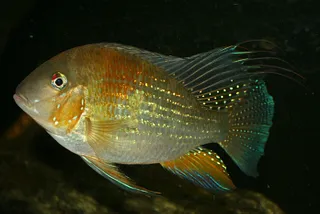
Below left Gymnogeophagus from Uruguay, right Acaricthys from Guyana
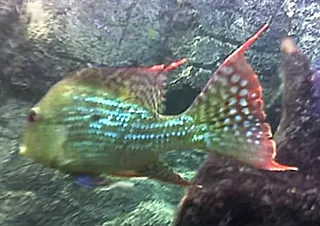
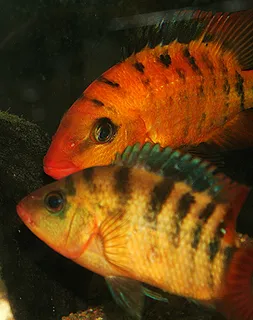
Geophagus altifrons(below left) from Brazil east of the Andes, Mesoheros festae (right) from Ecuador west of the Andes.
Just as I believe cichlids from temperate areas of Mexico, should not be kept in the same tank, with tropical cichlids from Panama.
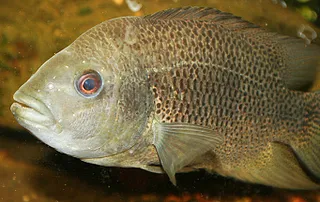
Above Mayaheros beanii from the northern Pacific coast of Mexico near Mazatlan,
Below , Isthmoheros tuyrensis from Lake Bayano,
The distance between the 2 species is over 2000 miles (over 4000 kms) south
I don´t believe tropical cichlids from northern countries in S America (like Venezuela, and the Guianas), should be kept in a tank with temperate zone cichlids from southern Countries in S America such as Uruguay, and Argentina, because those cichlids climates are quite different, and require cool downs.
Just as I don´t believe cichlids from the alkakine waters west of the Andes, (such as Green Terrors, and Mesoheros),
should be housed in in the same tank as soft water low pH cichlid east of the Andes.
Below left Gymnogeophagus from Uruguay, right Acaricthys from Guyana
Geophagus altifrons(below left) from Brazil east of the Andes, Mesoheros festae (right) from Ecuador west of the Andes.
Just as I believe cichlids from temperate areas of Mexico, should not be kept in the same tank, with tropical cichlids from Panama.
Above Mayaheros beanii from the northern Pacific coast of Mexico near Mazatlan,
Below , Isthmoheros tuyrensis from Lake Bayano,
The distance between the 2 species is over 2000 miles (over 4000 kms) south
And the idea the combining soft water Asian clowm loaches, and hard water high pH rift lake Africans (such as lemon yellows), with soft water west African riverine jewel cichlids, just as odd (even though they from the same gigantic continent.
I know some aquarists might have some temporary success with these odd lot combinations, when cichlids are young,
but differences in territortial and habitat references, or opposite water parameter preferences will come into play later.
What you said is generally true. It's not good to mix soft water with hard water fish. I have no luck keeping black water Amazonian fish to live long in my alkaline African cichlid tanks. However, clown loaches of SE Asia apparently are not strictly soft water fish and often kept with and do well with African cichlid. Old timer jewel cichlid (Hemichromis bimaculatum), despite of west African riverine origin, have been domesticated for decades, are extremely hardy and adaptable to any water. On the other hand, Lake Turkana Jewel, the only African rift lake jewel, have been sensitive in my African cichlid tank and I lost a few to bloat.And the idea the combining soft water Asian clowm loaches, and hard water high pH rift lake Africans (such as lemon yellows), with soft water west African riverine jewel cichlids, just as odd (even though they from the same gigantic continent.
I know some aquarists might have some temporary success with these odd lot combinations, when cichlids are young,
but differences in territortial and habitat references, or opposite water parameter preferences will come into play later.
