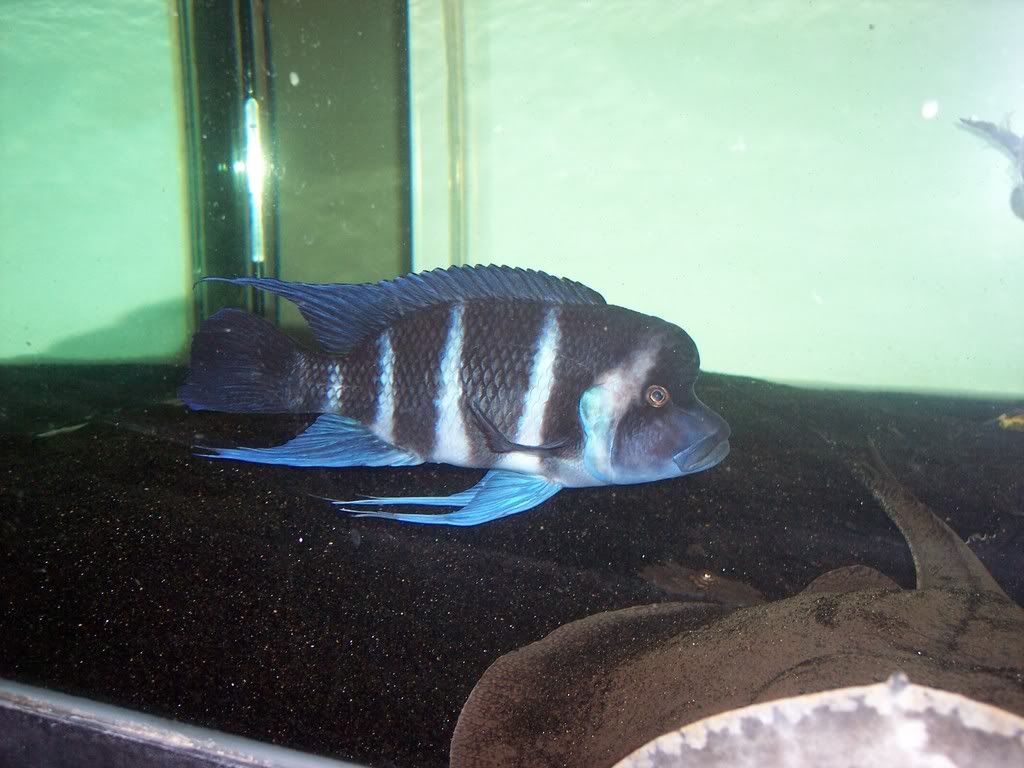
Basically Alex has it right.
Retics can be found in almost any fish store, even wal-mart.
Where often little or no information is available about their care.
Many shops that sell retics do not have live blackworms available.
While ghost/glass shrimp are usually easy to obtain, they quickly become costly.
Having access to LIVE blackworms , sometimes called live bloodworms, can truly be a lifesaver for young retics. Though they are also expensive, they are the most enticing and fattening food available. Although the fish may be 3-4 inches in diameter it's mouth is relatively small. Some do have luck getting their young retic to eat finely chopped red or earthworms,frozen bloodworns, and even cut shrimp. And that is really a preferred diet. But many young retics will refuse almost anything. So this is when it pays to have the Live blackworms available.
Other issues too common are poor shipping, where the rays are in the "bag" too long ,or perhaps fasted too long. Either way it is hard for the small rays to recover, and often they don't.
Another, too common problem for these rays are they are displayed and put on the wrong substrate , when we got our first ray we got what the fish store suggested , pink figi crushed coral. We soon figured our this was not good, as it abraded the underside of the ray.
There was a way we measured our success with our first ray. The first was to see it was eating, then it was keeping it alive and healthy for a month, then six months, and a year. I think this helped us keep us dilligent in our waterchange schedule.
Careful selection, ( get a ray that is eating in the store) and research go a long way to keeping these rays happy and healthy.
AJ
Retics can be found in almost any fish store, even wal-mart.
Where often little or no information is available about their care.
Many shops that sell retics do not have live blackworms available.
While ghost/glass shrimp are usually easy to obtain, they quickly become costly.
Having access to LIVE blackworms , sometimes called live bloodworms, can truly be a lifesaver for young retics. Though they are also expensive, they are the most enticing and fattening food available. Although the fish may be 3-4 inches in diameter it's mouth is relatively small. Some do have luck getting their young retic to eat finely chopped red or earthworms,frozen bloodworns, and even cut shrimp. And that is really a preferred diet. But many young retics will refuse almost anything. So this is when it pays to have the Live blackworms available.
Other issues too common are poor shipping, where the rays are in the "bag" too long ,or perhaps fasted too long. Either way it is hard for the small rays to recover, and often they don't.
Another, too common problem for these rays are they are displayed and put on the wrong substrate , when we got our first ray we got what the fish store suggested , pink figi crushed coral. We soon figured our this was not good, as it abraded the underside of the ray.
There was a way we measured our success with our first ray. The first was to see it was eating, then it was keeping it alive and healthy for a month, then six months, and a year. I think this helped us keep us dilligent in our waterchange schedule.
Careful selection, ( get a ray that is eating in the store) and research go a long way to keeping these rays happy and healthy.
AJ