


Scored a new acrylic tank - couple questions
- Thread starter johnnytaboo
- Start date
You are using an out of date browser. It may not display this or other websites correctly.
You should upgrade or use an alternative browser.
You should upgrade or use an alternative browser.

When I refinished my 240 8×2×2 I pored weldon 40 into the corners and then buffed it all out I used a palm sander and went from I think 600 grit to 2000 and then used the acrylic buffing compound. it took me a few weeks to do it and my girlfriend had an allergic reaction to the weldon 40 vapors but it looks a lot better and I feel better about the tank. I had the same bubbles and one where you could tell the 2 prices had separated.
Sent from my SPH-L720T using MonsterAquariaNetwork App
Sent from my SPH-L720T using MonsterAquariaNetwork App

Thanks guys. I have been cleaning sections of the tank each night after work, and every night is a new little surprise. At first they were nice surprises, like how with very little effort my meguairs d/a buffer and some ultimate compound really cleaned up the look of the tank. Not perfect, but god enough that I wouldn't feel compelled to wet sand.
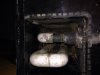
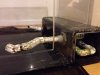
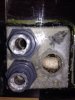
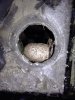
Then I noticed spider cracks surrounding what looks like a self-drilled hole in the bottom of the tank. I haven't measured, but it appears that this tank was set-up with (1) 1.5" drain & (2) 1" returns on each side - for a total of 6 holes in the bottom. One return goes to the top of the water column, and another to the lower section of the tank. The larger diameter holes also appear to have silicone around them. I'm hoping because the previous owner used hard plumbing, and the silicone was necessary.
An issue I noticed is that with this set-up there is virtually no room for the quieter durso standpipe set-up I use in my other drilled tank. In fact, it looks like the water may have just went straight to the hole in the bottom of the tank. I haven't had much experience with drilled tanks, but wouldn't this be really loud?
I'll post pics tonight of the issues I've mentioned. I'm starting to worry that I may have gotten in over my head here.
Then I noticed spider cracks surrounding what looks like a self-drilled hole in the bottom of the tank. I haven't measured, but it appears that this tank was set-up with (1) 1.5" drain & (2) 1" returns on each side - for a total of 6 holes in the bottom. One return goes to the top of the water column, and another to the lower section of the tank. The larger diameter holes also appear to have silicone around them. I'm hoping because the previous owner used hard plumbing, and the silicone was necessary.
An issue I noticed is that with this set-up there is virtually no room for the quieter durso standpipe set-up I use in my other drilled tank. In fact, it looks like the water may have just went straight to the hole in the bottom of the tank. I haven't had much experience with drilled tanks, but wouldn't this be really loud?
I'll post pics tonight of the issues I've mentioned. I'm starting to worry that I may have gotten in over my head here.
Pics as promised. Any input is appreciated.
Thanks again.
Sent from my iPhone using MonsterAquariaNetwork app
Thanks again.
Sent from my iPhone using MonsterAquariaNetwork app
Would it be better if I posted this over in filtration?
Sent from my iPhone using MonsterAquariaNetwork app
Sent from my iPhone using MonsterAquariaNetwork app
Imo it looks like it's sort of shot from the cracks in the overflow. unless you can cut a new piece of acrylic to that shape and size and weldon it in over and re drill the holes.
Sent from my SPH-L720T using MonsterAquariaNetwork App
Sent from my SPH-L720T using MonsterAquariaNetwork App
Why there is silicone, no clue previous owner didn't know what the heck he was doing lol. Maybe he was trying to make it extra safe? Kinda defeats the purpose as the bulk head uses force to keep a water tight seal, by the picture there's enough silicone to result in less force on the actual o ring.
I would peel the silicone off and then order some new bulk heads or get replacement o rings if there damaged and the bulk heads are fine. O rings are mere cents at lowes or homedepo so you'll save a lot if you can reuse the bulk heads and just new o rings.
The spider cracks you mentioned, I wouldn't worry to much about it. And the noise shouldn't be bad at all, on my 220 I have a 2 inch fully submerged that takes most of the flow then have three 1.75 drains to take the remaining. Having the pipe fully submerged and then another (or others depending on your set up) taking a minimal amount will silence it tremendously.
Here's some videos I think you will learn a lot from. Surly helped me when setting my first overflow/sump system. But the most helpful is actually setting everything up and seeing it work as you mess with it.
At 7:25 here are the gph measurements of dimensions of pipe so you can hopefully get a correct pump if you don't have one already.
https://www.youtube.com/watch?v=7DFk4bnIxEg
At 2:30 he talks about a single pipe taking most of the flow and then another to take the remaining which is the quietest imo.
https://www.youtube.com/watch?v=u7kayU6-NGY
At 18:00ish you were talking about the stand pipe correct? That honestly is the easiest and one of the most efficient ways to have a quieter overflow system. Can be noisy at times but you just have to experiment and possibly even drill bigger holes or add holes depending on how much gph you want through the system.
https://www.youtube.com/watch?v=sH5mq3P3tEY
On my 220 I'm roughly pushing around 3600gph with accounting head loss just through the sump. For most its a bit much but my jardini likes it lol.
I would peel the silicone off and then order some new bulk heads or get replacement o rings if there damaged and the bulk heads are fine. O rings are mere cents at lowes or homedepo so you'll save a lot if you can reuse the bulk heads and just new o rings.
The spider cracks you mentioned, I wouldn't worry to much about it. And the noise shouldn't be bad at all, on my 220 I have a 2 inch fully submerged that takes most of the flow then have three 1.75 drains to take the remaining. Having the pipe fully submerged and then another (or others depending on your set up) taking a minimal amount will silence it tremendously.
Here's some videos I think you will learn a lot from. Surly helped me when setting my first overflow/sump system. But the most helpful is actually setting everything up and seeing it work as you mess with it.
At 7:25 here are the gph measurements of dimensions of pipe so you can hopefully get a correct pump if you don't have one already.
https://www.youtube.com/watch?v=7DFk4bnIxEg
At 2:30 he talks about a single pipe taking most of the flow and then another to take the remaining which is the quietest imo.
https://www.youtube.com/watch?v=u7kayU6-NGY
At 18:00ish you were talking about the stand pipe correct? That honestly is the easiest and one of the most efficient ways to have a quieter overflow system. Can be noisy at times but you just have to experiment and possibly even drill bigger holes or add holes depending on how much gph you want through the system.
https://www.youtube.com/watch?v=sH5mq3P3tEY
On my 220 I'm roughly pushing around 3600gph with accounting head loss just through the sump. For most its a bit much but my jardini likes it lol.

