

Struggling with skinny disease, and finrot.

  • We are currently upgrading MFK. thanks! -neo

David R

Blue Tier VIP
MFK Member
Apr 26, 2005
5,048
250
346
44
New Zealand
Not sure what brought it on, but about a week before I transferred all my fish from the 2000L tank to the new 800L one that has replaced it, I noticed two of my loaches had the dreaded "skinny disease". Rightly or wrongly, I decided to delay treatment until after the move to cut down on the volume of medication required. Since then I've goven them four doses of liquid Prazi and Levamisole (both dosed to 2mg/L) with large water changes in between. I also tried soaking food in a 3mg/L magnesium solution for a few days but I'm unsure how much the clowns were eating at the time as they were still settling after the move. I'm starting that again this week now they're more settled and active.

Any other suggestions as to what I can do? The worst of them appears to have what looks like bad finrot on the tail, dorsal and pelvic fins, though my water is damn near perfect because of the large regular changes I've been doing (low hardness, pH~6.8ish, Nitrate 5-10ppm max).
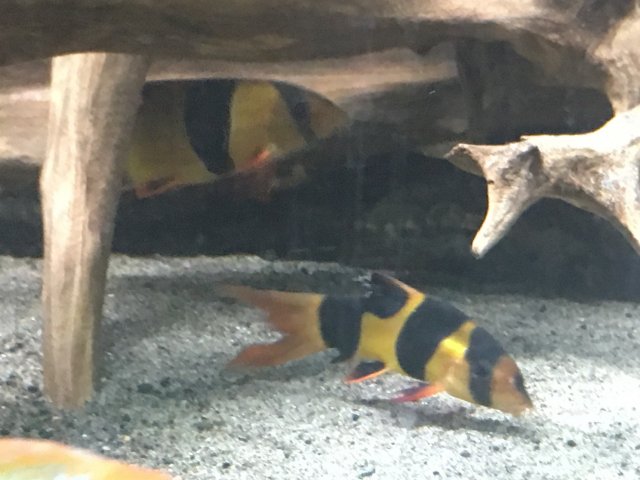
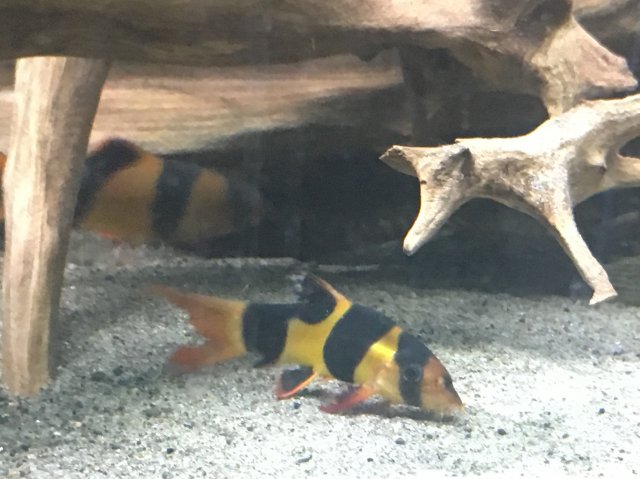
loach1.JPG loach2.JPG
 
  • Like
Reactions: Matteus
It could be Cryptobia for which you would need dimetridazole or something prescription from a vet.

When my loaches had fin rot it was due to high levels of organics. I found an extremely thick layer of biofilm had built up in an area of the tank I had overlooked--the overflow itself.
 
Interesting. When I emptied the big tank there was a big accumulation of sawdust from the royals in the bottom of the overflow, so maybe that's something. I've been adding a bit of salt with the water changes, might stop at the lfs on the way home and get something like malafix to help it.
 
  • Like
Reactions: Matteus
Interesting. When I emptied the big tank there was a big accumulation of sawdust from the royals in the bottom of the overflow, so maybe that's something. I've been adding a bit of salt with the water changes, might stop at the lfs on the way home and get something like malafix to help it.

I would skip the Melafix. Most people report it does nothing. Some that it killed their fish or put them in respiratory distress. Fewer yet report that it helped.

What city do you live in? I may be able to find you an aquatic vet.
 
Hey David, if you can get your hands on some NLS Hex-Shield I would feed that twice a day for several days. It has worked well for me on a number of species, including some clown loaches that I had given to me a few years back where I suspected at least one had Spironucleus vortens. It contains metronidazole, magnesium sulphate, and a mega dose of garlic. If this is a case of a Cryptobia iubilans infestation it will be more difficult to eradicate, and as squint suggested dimetridazole would be required.

I have never experienced fin rot in a clown loach but clean water should resolve that. I would also skip the Melafix for the same reasons squint mentioned. Good luck.
 
  • Like
Reactions: Matteus
No Aquatic vets in small town New Zealand unfortunately, but we have a good relationship with our regular vet if I need prescription meds (that possibly sounds a lot more dodgy than it really is!).

You'd be surprised how many vets there are that treat fish.

I have a clown loach that wasn't growing and then stopped eating for several weeks. He's slightly skinny. Before taking him to the vet, I tried the 3-day dimetridazole bath described in the paper by Yanong, and he started eating again.

I suspect Cryptobia might be the cause (or one cause) of skinny disease in loaches. One clue was that he was hyperventilating frequently. Water was fine and vets didn't find anything with a gill biopsy.

So...anemia? I went through the differential diagnosis for anemia and stopped at parasites. Some species of Cryptobia are hemoflagellates (blood parasites) while others invade the gut.
 
Skinny disease isn't a disease, it's a symptom, much like bloat in cichlids. Both can be caused by any number of things. The sticky in this section seemed to have initially focussed only on nematodes, which I feel is a huge mistake. I resurrected the skinny disease sticky 5 yrs ago to suggest that one should never rule out the potential for parasites such as Spironucleus as being the cause of a skinny loach. Cryptobia is definitely another parasite that one should consider.
 
Thanks, I'm on the hunt for the NLS Hex Shield, my local supplier doesn't list it and kensfish.com only have the 2mm pellets. I'm well aware that "skinny disease" is a misnomer, but hey that's what we all know the "condition" as so that's what I used to describe it. Your post on treating hex (as directed from the sticky on "skinny disease" is where I found out about feeding the pellets soaked in the epsom salts, I think it's helped, but hard to tell as the clowns are still quite skittish after the move and maybe not eating as much as they would usually. I was thinking of mixing up some Repashy with the 3% solution instead of water if I cant find the HexShield, however a couple of them are breathing quiet heavily (I lost the worst looking one in the picture above too) so maybe it could be Cryptobia? I have to take the dog to the vet tomorrow so I'll talk to him about dimetridazole. I doubt they deal with fish very often, but I've known him for years and in the past he's been willing to trust my diagnosis and prescribe the meds.
 
Here's the article on Cryptobia that mentions dimetridazole. And another that talks about isometamidium chloride. I could not find isometamidium OTC in the US but it's used for cattle. It has to be injected and I think one of the papers mentioned it was kind of risky. But it can provide a full cure vs. just controlling the infection.

Dimetridazole is used by pigeon keepers. I actually bought some for my bird earlier this year and only used a little bit. The amount to dose a 10 gal tank was huge compared to the amount I add to food. But since the fish wasn't eating, I had no choice. I'm going to give him dimetridazole in gel food periodically. If he doesn't start growing I may take him to the vet in the future. However, he's eating now so it's no longer an emergency.
 
  • Like
Reactions: David R
MonsterFishKeepers.com
