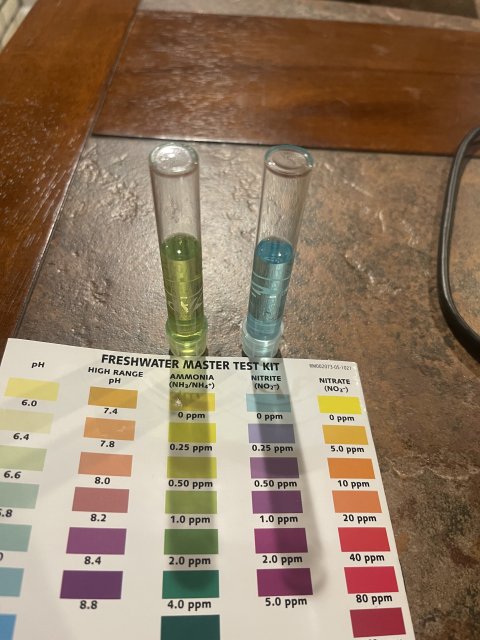
Tank cycle question

  • We are currently upgrading MFK. thanks! -neo
Just a few things.

1. There is evidence to suggest Prime does not detoxify ammonia/nitrite. However, the evidence is tentative and not definitive, so I am hesitant to say with absolute certainty that Prime does or does not work to detoxify ammonia/nitrite.
2. It is common for the API ammonia test kit to yield a 0.25ppm false positive ammonia reading. Not always, but does happen. So just keep that in mind.
3. Ammonia toxicity is dependent on pH and temperature, have a read of this. Generally 0.25ppm total ammonia is not dangerous, even 0.5ppm in a lot of aquarium setups.
4. You can try a good bottled bac product to cycle your tank faster and then you can get your shipment earlier. I recommend FritzZyme TurboStart 700.
 
I just cycled my 90 with Dr Tims in 3 weeks. I had 6 giant danios and 6 yoyo loaches and didn't lose any. Used the api master test kit every 2 to 3 days and it went very smoothly. Or you could use more media from your other tank if you have it to spare. But either way with only 6 neons in a 75 gallon tank it'll be a show cycle.
 
  • Like
Reactions: tlindsey
Bear in mind that when your tank, with 6 Neons, finishes cycling...it is still only cycled for the bioload of 6 Neons, i.e. almost nothing. It doesn't matter that it holds 75 gallons; it will have a bacterial colony that can be supported by the waste produced by 6 neons. When your two cichlids are added, depending upon their size, you will have multiplied the bioload several times at least, and you will see a spike in ammonia for a couple days until the bacteria multiply to catch up to the new bioload.

The amount of fish you add at any one time should ideally be as small a percentage of your existing bioload as possible. Two cichlids added to a tank that already has a dozen other cichlids won't even be a blip; the same two added to a tank with 6 Neons is a massive bioload bump. The relatively large water volume will minimize the abruptness of the parameter shifts, but be prepared.
 
One thing to be aware of in Wiscansin (Milwaukee, and a few other large cites) is many water plants there use Chloramine as a disinfectant for surface water sources (Lake Michigan, etc)
The use of Chloramine will often give a trace ammonia detect on the API test, because Chloramine is created by combining @ 5 parts Chlorine with 1 part ammonia.
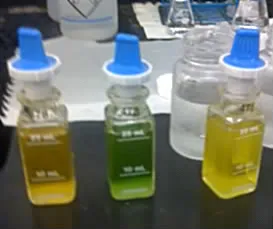
After doing large water changes when living in Milwaukee, I would often get ammonia 0.02 ppm "noise" on tests.
1665762769009.png
When I tested tank water in the lab, I would always run a DI water blank (far right), with a 2 ppm ammonia Standard (middle) compared with tank water (left),
 
  • Like
Reactions: deeda and tlindsey
Bear in mind that when your tank, with 6 Neons, finishes cycling...it is still only cycled for the bioload of 6 Neons, i.e. almost nothing. It doesn't matter that it holds 75 gallons; it will have a bacterial colony that can be supported by the waste produced by 6 neons. When your two cichlids are added, depending upon their size, you will have multiplied the bioload several times at least, and you will see a spike in ammonia for a couple days until the bacteria multiply to catch up to the new bioload.

The amount of fish you add at any one time should ideally be as small a percentage of your existing bioload as possible. Two cichlids added to a tank that already has a dozen other cichlids won't even be a blip; the same two added to a tank with 6 Neons is a massive bioload bump. The relatively large water volume will minimize the abruptness of the parameter shifts, but be prepared.

I forgot to mention other night after the store said it was good I grabbed 6 more small Odessa barbs. So I have 12 fish total. Figured even if it wasn’t good at least I’ll be able to produce ammonia at a higher level to get it rolling.
 
One thing to be aware of in Wiscansin (Milwaukee, and a few other large cites) is many water plants there use Chloramine as a disinfectant for surface water sources (Lake Michigan, etc)
The use of Chloramine will often give a trace ammonia detect on the API test, because Chloramine is created by combining @ 5 parts Chlorine with 1 part ammonia.
After doing large water changes when living in Milwaukee, I would often get ammonia 0.02 ppm "noise" on tests.
View attachment 1504924
When I tested tank water in the lab, I would always run a DI water blank (far right), with a 2 ppm ammonia Standard (middle) compared with tank water (left),

Didn’t know that about Milwaukee water. That’s good to know
 
I think your in good shape, the Odessa barbs are hardy and will help with the ammonia cycle. Just be patient, use the bottled bacteria exactly as directed. And don't do any water changes or mess with the filter until your cycle completes. Once your cycled and get your cichlids then keep an eye on your api tests and if ammonia creeps too high you can do a 50% water change. By then your colonies are established just adapting to size so water changes aren'ta big deal. And once you have your cichlids your neons may disappear one by one anyway ?
 
I think your in good shape, the Odessa barbs are hardy and will help with the ammonia cycle. Just be patient, use the bottled bacteria exactly as directed. And don't do any water changes or mess with the filter until your cycle completes. Once your cycled and get your cichlids then keep an eye on your api tests and if ammonia creeps too high you can do a 50% water change. By then your colonies are established just adapting to size so water changes aren'ta big deal. And once you have your cichlids your neons may disappear one by one anyway ?

Hm... I feel like you may be misunderstanding something here. Why do you say not to do water changes until the cycle completes?
 
MonsterFishKeepers.com