THIS IS YOUR MYTH BUSTERS GEM!!!!

  • We are currently upgrading MFK. thanks! -neo
koop171;1704172; said:
ok so i did a little search on this and here is what i found

http://www.usatoday.com/tech/columnist/aprilholladay/2006-01-09-shrimp_x.htm

http://blueboard.com/mantis/sighting/report1.htm
this one seems to be missing the pics but still more reading to back up the fact that they CAN break aquarium glass

I have a problem with both these sources. One, while Roy Caldwell is a very respected member of the bioogy community on these creatures, his best and only quote doesn't confirm anything other than the fact that it's possible.

"There are a half dozen species CAPABLE of breaking a standard glass aquarium,"

The second source is a third hand report of an aquarium shop who obviously had a lot to gain by the publicity on such an event so can we really take that report seriously?
 
smpage;1704330; said:
so with links and video we can pretty much call this myth busted. It would be cool to see how thick of glass it could break through though.

wouldnt you mean myth confirmed?

I think we should do this our selves, I have never seen them before but I have a crappy 10gal that I was gonna throw out, I can donate that to the cause...
 
according to this site, it is just one specific species of californian mantis shrimp that is so powerful. some life to the myth afterall?
http://www.blueboard.com/mantis/
 
Well I know a Prof in my department studied/studies them. When he first kept them they broke his tank, so now he keeps them in acrylic...
 
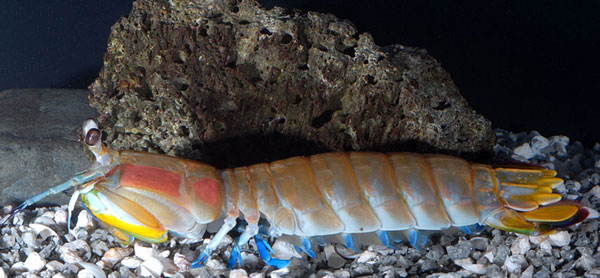
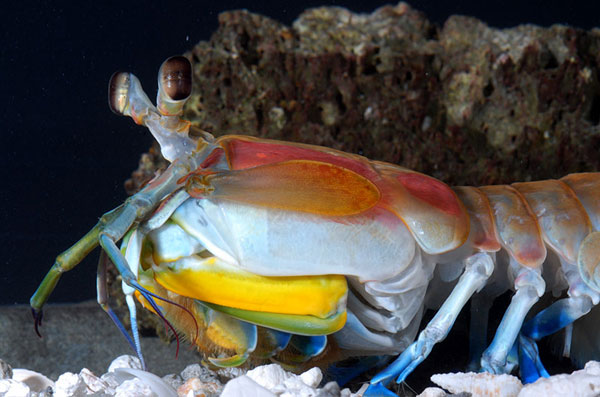
If any can, this is the one (smasher that gets up to 32cm):

Species: Hemisquilla californiensis

Next
species
next.gif
dot_clear.gif


Click on any image to see an enlargement. All photos © 2005 Roy Caldwell.

Common name: None
Functional type: Primitive smasher
Range: Santa Barbara, California to the Bay of Panama
Habitat: Muddy bottoms
Depth: 10–50 m; usually 15–30 m
Home: Blind burrow several body lengths long
Diet: Generalist; annelids, gastropods, bivalves, crustaceans
Size: 3.5–32 cm; the largest of all smashers
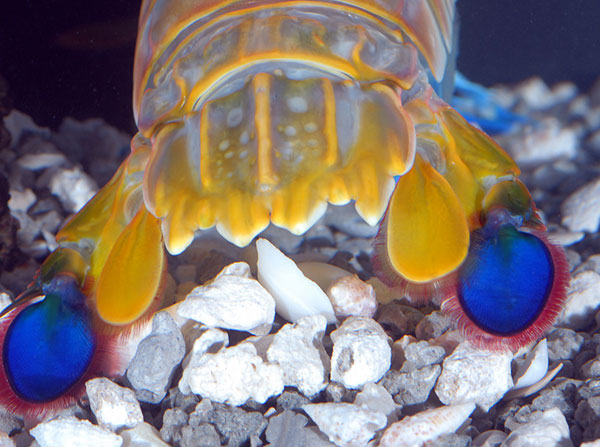
Color: Brown with blue walking legs and antennules, yellow raptorial appendages and blue uropods with red setae; adult males have red patches on carapace
Distinguishing Characters: Upright, forward looking eyes; yellow raptorial appendage
Activity: Active early morning and late afternoon, closes burrow at night and mid-day
Aquarium Requirements: Temperature: 16–18° C
Salinity: 33–35 PSU
Cohabitants: Could eat most crustacean, mollusks, echinoderms
Aquarium size (adult): 200 l
Aquarium substrate: Sand or muddy sand
Suitability for Aquarium: Poor; requires burrow, prone to shell disease, not interactive
Availability: In spring, occasionally taken by trawlers and sold commercially for food
 
VLDesign;1705025; said:
That's one good looking mantis.

I didn't know anything about mantis shrimp until I started doing alittle research for this thread. they are pretty amazing creatures. wonder what one goes for? seem like a pretty cool (and inexpensive) way to introduce one's self to marine aquaria.

just looked it up, you can get a mantis shrimp for around $30. in a 29g, with some deep sand for it to burrow, would be a nice way to get introduced to marine.
 
MonsterFishKeepers.com