

Water test
- Thread starter JohnTr
- Start date
You are using an out of date browser. It may not display this or other websites correctly.
You should upgrade or use an alternative browser.
You should upgrade or use an alternative browser.





I agree with Ishnshalk,
and found to maintain a nitrate level of between 2-5ppm nitrate in my established tanks, a regime of at least 3 x 30% water changes per week, with lots of plants. Either as terrestrial plants, ie pothos (Epipremnum sp) hanging in the tanks, semi aquatic plants like Papyrus in the tanks or sumps, or aquatic plants in tank, and sumps such as vallisneia, Cryptocoryne, and Anubias.
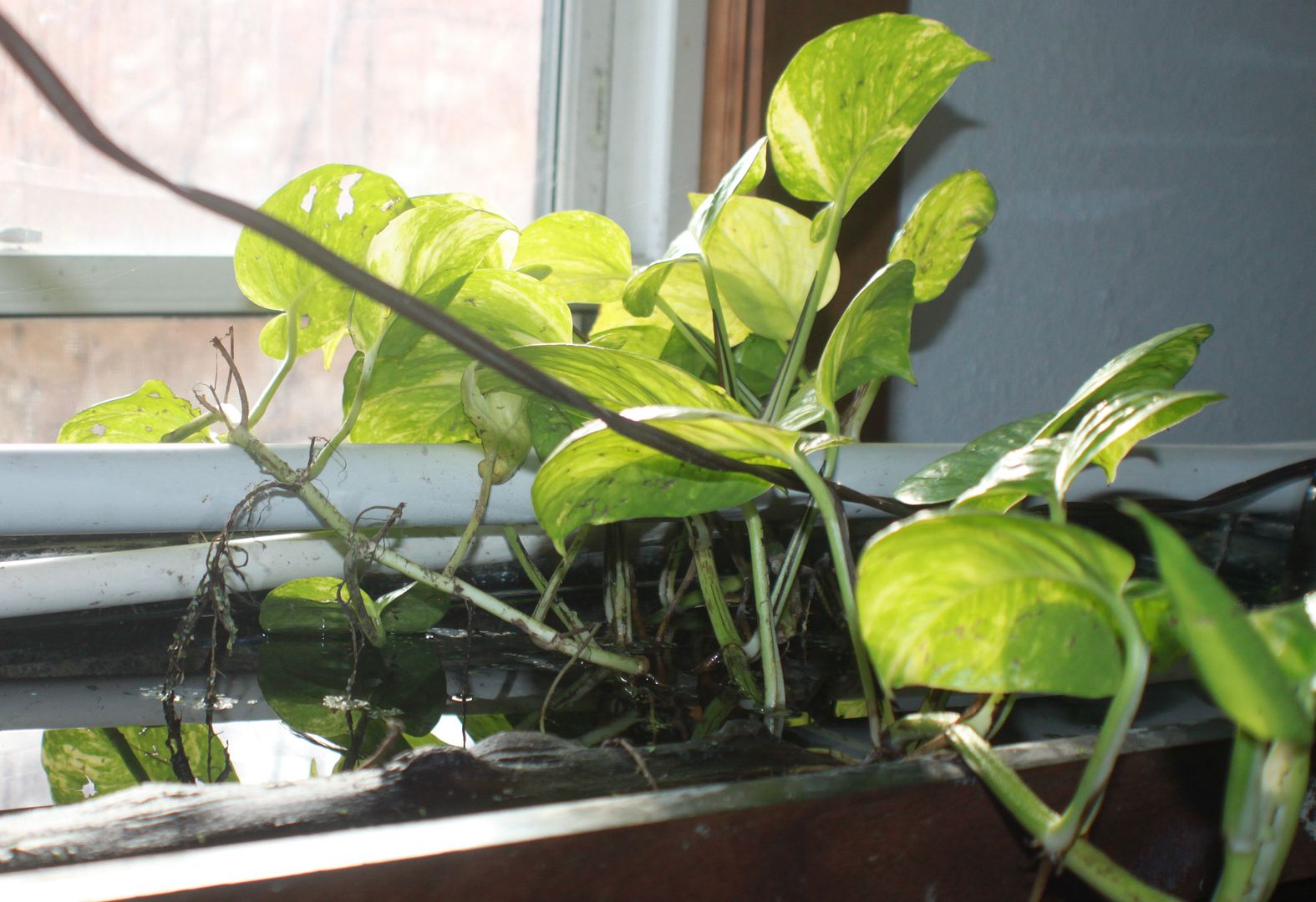

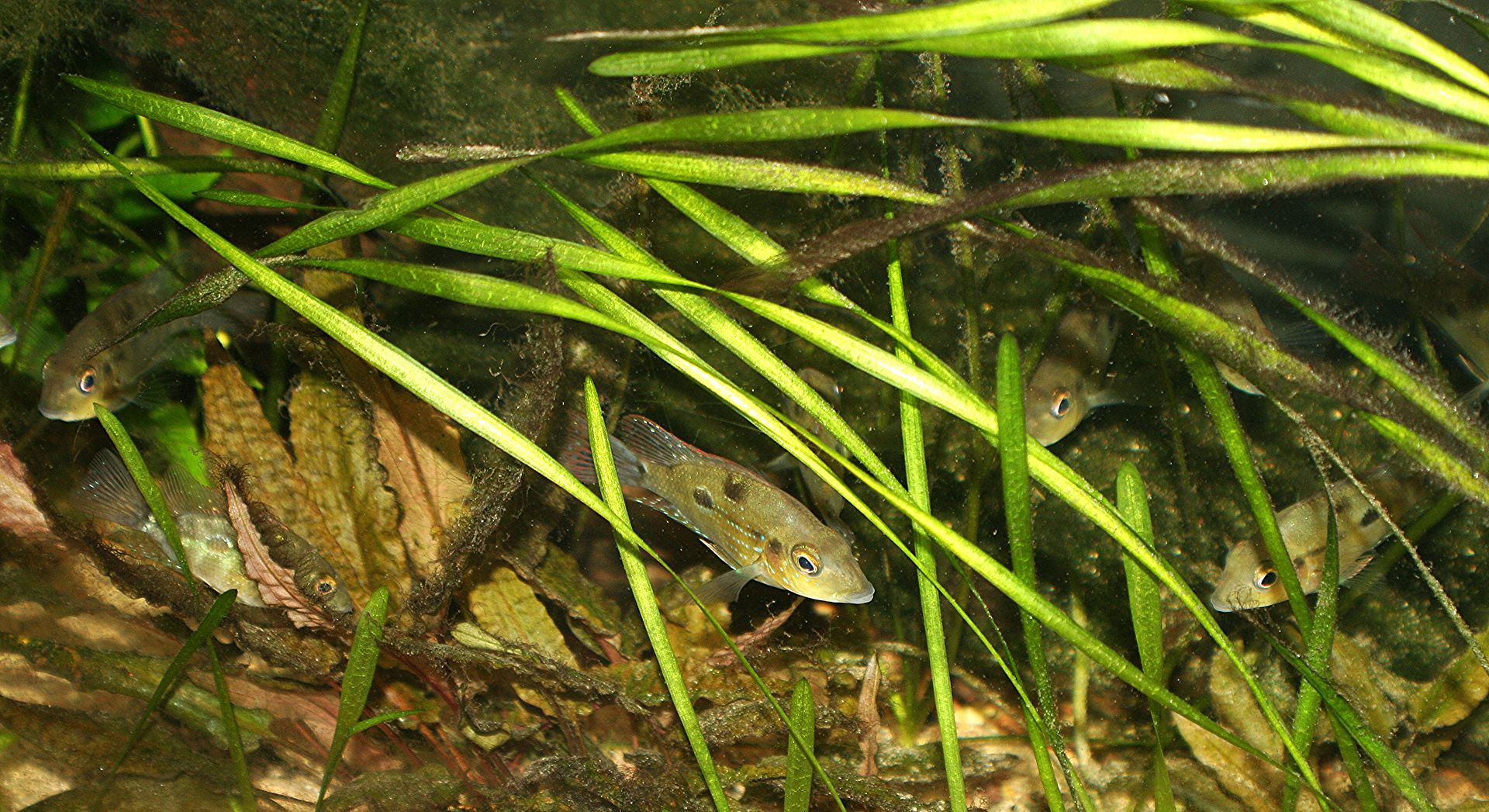
and found to maintain a nitrate level of between 2-5ppm nitrate in my established tanks, a regime of at least 3 x 30% water changes per week, with lots of plants. Either as terrestrial plants, ie pothos (Epipremnum sp) hanging in the tanks, semi aquatic plants like Papyrus in the tanks or sumps, or aquatic plants in tank, and sumps such as vallisneia, Cryptocoryne, and Anubias.


The NO2 will be converted into NO3 once your tank is cycled. Then the NO3 is usually removed through water changes (at least in freshwater tanks because water is cheap). You could also look into using deep substrate or denitrification reactors if you want to reduce it and save some time changing water. Plants can help too but I can guarantee that people on this site overestimate their capacity to do so. They certainly won't hurt though! I recently saw a dissertation presentation that found mangroves absorbed very little nitrate, but their roots provided a good home for denitrifying bacteria, which removed most of the nitrate in the system as nitrogen gas.
Your 5ppm nitrite will convert into 5ppm nitrate, so you will be looking at around 15-25ppm nitrate once you're cycled. Water changes will reduce this by the percent you are changing, so if your tank is empty you could do a large water change (maybe 90%) to knock the nitrate down to the single digits.
Your 5ppm nitrite will convert into 5ppm nitrate, so you will be looking at around 15-25ppm nitrate once you're cycled. Water changes will reduce this by the percent you are changing, so if your tank is empty you could do a large water change (maybe 90%) to knock the nitrate down to the single digits.


Your 5ppm nitrite will convert into 5ppm nitrate, so you will be looking at around 15-25ppm nitrate once you're cycled..
I'm not a chemist, but I believe that this is incorrect. There is not a 1:1 relationship between nitrite ppm and nitrate ppm.
To quote the article:
1 ppm of ammonia can lead to almost 3 ppm of nitrite because one Nitrogen atom in a molecule of ammonia (molecular weight of 17) forms one Nitrogen atom in a molecule of nitrite (molecular weight of 46), so 17 ppm of ammonia would lead to 46 ppm of nitrite. In other words, the ratio of the molecular weights (46/17) can potentially multiply the ammonia levels by 2.7 times.
Nitrite has a mass of 46; nitrate a mass of 62.
Recall, the atoms of nitrogen are the same (1:1) in each molecule, but the molar masses are not the same. Ammonia, nitrite and nitrate are different molecules and thus have different masses. PPM is a measure of mass, not molecules.
So 1 ppm of ammonia leads to 2.7 ppm of nitrite and 3.65 ppm of nitrate (62/17)
And 1 ppm of nitrite leads to 1.35 ppm of nitrate (62/46)
NH3 (ammonia)- 17.031 g/mol
NO2 (nitrite) - 46.01 g/mol
N03 (nitrate) - 62.00 g/mol
http://www.coloradokoi.com/nitrific.htm
http://www.fishforums.net/index.php?/topic/233093-ammonia-to-nitrate/
Last edited:

Tank is in mid-cycle.
If there is fish, you should monitor conditions closely with frequent large water changes. IE: 50% every day or two, until conditions improve. More or less ass needed depending on stock, ect.
If there is no fish, you should continue to add ammonia for the cycles to complete. You must add a source of ammonia though, or else you will starve out the bacteria and the cycle will break.
Regardless, continue to test every day. Generally, when you are coming up with 0 ammonia and high nitrites, you are close to a full cycle, so it shouldn't be too long for it to finish.
If there is fish, you should monitor conditions closely with frequent large water changes. IE: 50% every day or two, until conditions improve. More or less ass needed depending on stock, ect.
If there is no fish, you should continue to add ammonia for the cycles to complete. You must add a source of ammonia though, or else you will starve out the bacteria and the cycle will break.
Regardless, continue to test every day. Generally, when you are coming up with 0 ammonia and high nitrites, you are close to a full cycle, so it shouldn't be too long for it to finish.