It all depends on the grade of strips, and tests available.
I used to work in a drinking water quality lab, and the strips required, had to be accurate to EPA standards, and those strips worked very well, and when A/B'd with liquid tests like Hach, were remarkably accurate.
For liquid tests to be accurate, A-septic technique needs to used.
Glassware, or tubes, need to be thoroughly rinsed with DI water between each test to clean out residue.
Because you are dealing with parts per million, and extrapolating results from a tiny sample, a tiny spec of nitrate, or any other left over chemical residue can easily skew the results one way or the other.
In the lab we rinsed tubes 3 times with DI water between each test, and the tubes were set upside down on absorbent paper between uses.
All reagents need to be up to date, and used before they expire.
If you don't have the patience to use accurate technique, or clean tubes properly, good quality strips may be a better option.
The ones we used, came from companies like Fischer Scientific, or HACH .
Although I have found some strips used by swimming pool companies to be very close.
Like exoluscius said, after you have learned the nature of your tank, and it is up and running testing may be less needed.
Whenever i set up a new tank, or changed stock, I used testing to help determine the frequency of water changes needed. If pH dropped, or nitrates increased, or alkalinity dropped, a water change was required, and gave me an idea of how they should normally be done. Once things were running smoothly, frequency of testing was less needed.
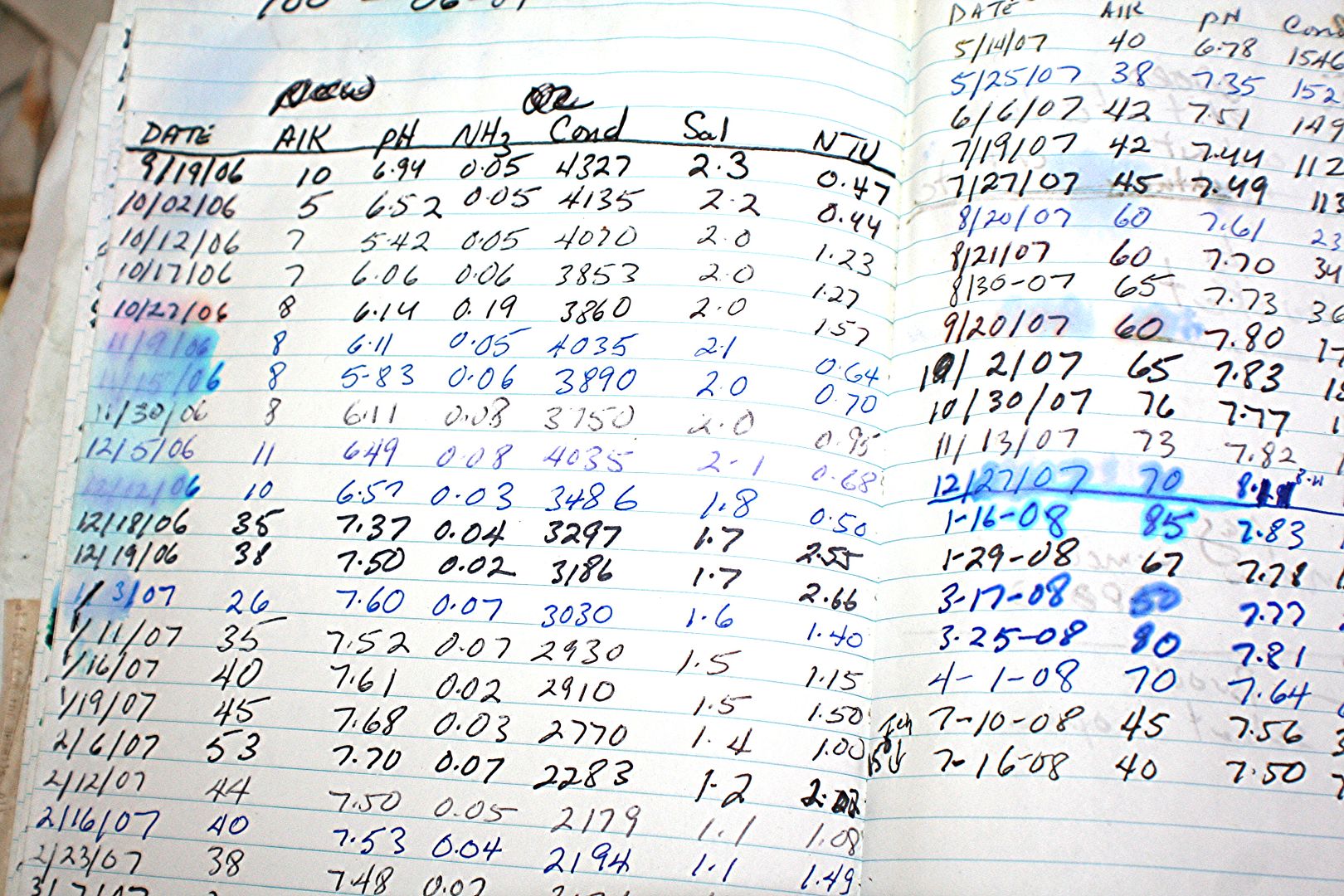
Before that though, I'd keep a log of water parameters to determine the cyclical nature of the tank. Growth spurts may also be cause for testing, as any fish grows, its waste output always seems to show up on tests, as a need for more and larger water changes.