What is the largest tank you would put in an upstairs room?

  • We are currently upgrading MFK. thanks! -neo
Most houses can support tank up to 125 gal without reinforcement. For larger tank, you can reinforce support by installing building support column if there is a basement or crawl space below the tank.


The concern for upstairs big tank is not just foundation support, but how to safeguard against flooding risks.
 
  • Like
Reactions: tlindsey
Most houses can support tank up to 125 gal without reinforcement. For larger tank, you can reinforce support by installing building support column if there is a basement or crawl space below the tank.


The concern for upstairs big tank is not just foundation support, but how to safeguard against flooding risks.
Hello; I am not sure if in fact most houses can support a 125 gallon tank without bracing. Such may be true but does not seem correct without some sort of documentation. But for the sake of this discussion only let us go with such being correct. Even if most can support a 125 that means some cannot. The point, for me, so far has been I have not actually seen the OP's place so I have no idea what condition his building is.

Let me use a personal example. I have a house with floor joists on 16 inch centers. I placed a 55 gallon tank on the floor above the basement. Thinking 55 gallons would not affect the floor. To be sure the 55 was running parallel with the joists which is not ideal. I began to notice the water sloshing in that tank each time i walked by. That with a 55 gallon. I was able to place a simple brace in the basement which stopped the sloshing. Not a tale which proves much, but one I have witnessed myself.

I am not saying the OP's floor cannot hold the weight. I just do not know. I am somewhat experienced in these things but not an expert. I would be comfortable taking a chance on my own place after having a look see at the structure, but not giving advice from a distance. Even an experienced contractor ought to be able to look at the structure and make a decent guess.

I do agree that flood damage from water is a real concern. I did have a 55 gallon let go on a wood floor. It caused some damage in that the floor was discolored.
 
  • Like
Reactions: mattybecks
This thread makes me appreciate not having to deal with wooden houses/construction. Something I guess I have always taken for granted in past.
A water leak/accidental tank overfill sounds like it could lead to some real problems.
 
In any decently built house I wouldn't worry about anything under 125 gallons falling through the floor. Of course it is a completely case-by-case basis and I can't tell you how your house is built. I would only place the tank on an exterior wall. I've had 125 gallons on second floor of a modern house, and 160ish gallons on the third floor of a 100 year old house. Now, leaks or spills are another story. 160 gallons of water spilling on an upper floor is going to cause some serious water damage.
 
  • Like
Reactions: Jexnell
I own a top(2nd) floor condo built in the 1960s...I have a double stand with 2x75G tanks and am replacing them with a 180 gallon...no concerns tanks are not on exterior walls. Should I go larger than a 180G I would probably look to place it on an exterior wall but not worried. When I bought my condo the contractor reported it was overbuilt for the time which I assume is pretty much standard build for modern homes.

If you are worried stick to a longer wider aquarium to spread the weight out over more joists.
 
I own a top(2nd) floor condo built in the 1960s...I have a double stand with 2x75G tanks and am replacing them with a 180 gallon...no concerns tanks are not on exterior walls. Should I go larger than a 180G I would probably look to place it on an exterior wall but not worried. When I bought my condo the contractor reported it was overbuilt for the time which I assume is pretty much standard build for modern homes.

If you are worried stick to a longer wider aquarium to spread the weight out over more joists.
Hello; I fear you are mistaken in the assumption modern buildings are all built to some high standard or code. Some will be but also some will be built to a minimum code. There also is the grade of materials used and the skill of the builder. Again I suggest having a look at some of the home improvement shows. Way too many have serious structural flaws. This includes modern houses less than ten years old when they had to be worked on because of structural issues.
That you are giving out flawed information is at least a possibility.

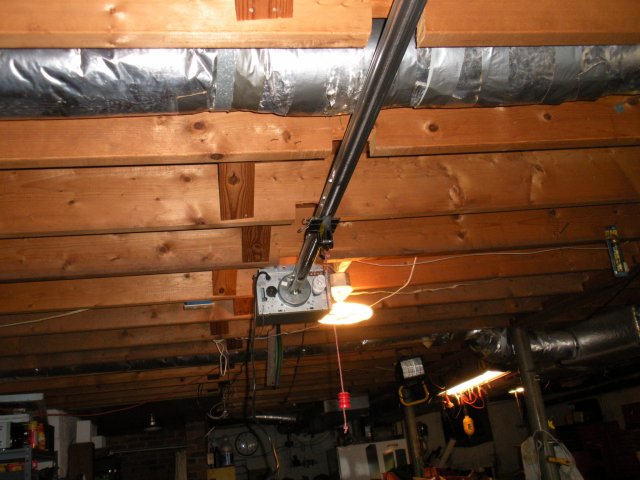
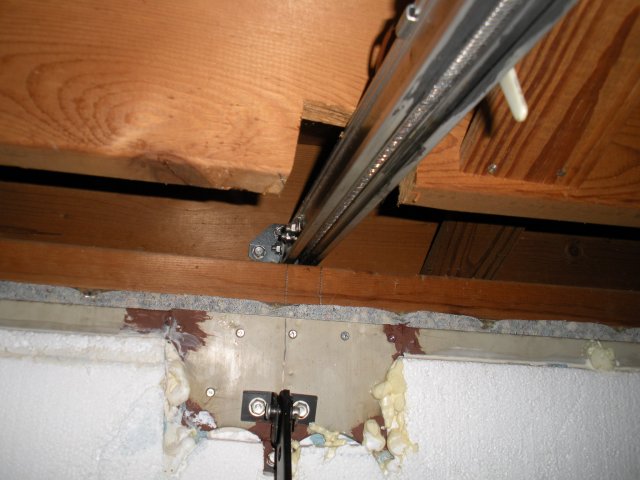
On top of the basic structure possibly not having been built for the static loads from the start, there is the damage done to what starts out as sound structure. Contractors cut and notch joists to run pipes, electric wires, duct work, drain pipes and in the case of my current home to install a garage opener. To get the garage door opener to fit they notched several of the floor joists. This was done long after the house was built. I made repairs myself.
I saw the issue when I inspected the house. I knew how to make the repair and did so after I bought it.

I figure tanks run around ten to twelve pounds per gallon with the stand, substrate and other equipment we can add. As the tanks get larger the stands and substrate numbers can go even higher. The glass is thicker. At a 10 pound per gallon rate the two 75 gallon tanks can be 1500 pounds. perhaps more.

I hope readers will take your comments as a personal example and not a universal endorsement for their particular building structure.
 
Nobody should take another stranger's opinion and experience as law for their individual building structure...it is an opinion coming from anyone not certified to inspect that building. All I was offering is information given to me by the individual I hired to inspect my home prior to purchase. He explained differences in code for build on today vs the 60s when my condo was built. He indicated that for my particular residence it was "overbuilt" for the time which is probably due to it being a condo building and they wanted to ensure no issues. Certainly there are some crappy built modern homes...probably more than not; so of course nobody can say for sure what the OPs floor can hold. If the OP is that concerned they should hire a contractor to examine their home.

There is however less risk to purchasing a large aquarium which offers a bigger footprint and spreading its weight over more joists...less risk doesn't mean no risk of course if the structure cant hold it. For myself having the 2x75G on a 4ft area at around 1500-1600lbs Im pretty confident in an acrylic 180 spread over 6ft being around 2000lbs. It is less weight per square inch. Also keeping in mind my double stand is iron so all of that weight is on 4 legs not evenly distributed where a 180 acrylic with this particular cabinet does evenly distribute the weight. Many factors to be considered...glass tanks put weight on the frame as do glass tanks stand so you are not getting even distribution. Acrylic shaves a few hundred lbs off and distributes weight consistently.
 
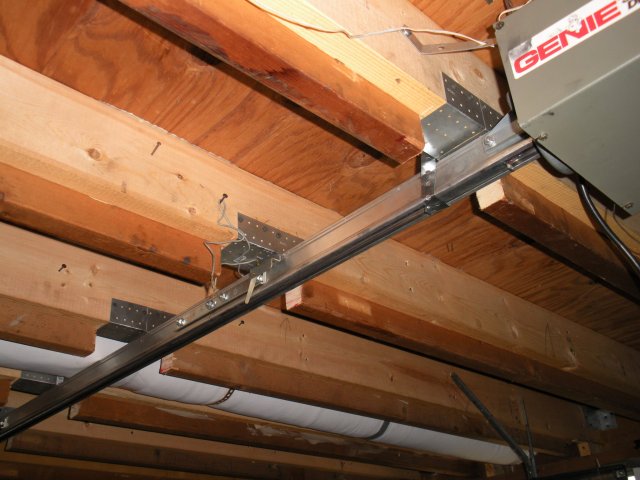
Hello; here are some before and after pictures of my floor joists. Two images before the repair and one after I sistered in new joists. I glued and screwed new 2x6 joists in place. I cleaned up the notches and added plates in the notches. I was lucky in that the cut joists had not split. This took a few weeks doing the work by myself. I had to remove the garage door mechanism on both sides of a two car basement garage. This was under a room where I do not intend to keep tanks. It has been eight years or so since the repair and has held up well. I figure it is the equivalent of a 2x12 joist now.


hwy 63 floor joists before 011.JPGhwy 63 floor joists before 014.JPGhwy 63 after floor joists 003.JPG
 
A 55, 75 and 125 would all have about the same psi being applied to the floor. This is because they are all the same height, the only thing being increased is the area. In practice the 55 and 125 would likely be the most stable because the increase in width with the 75 wouldnt necessarily increase the amount of support beams the weight is distributed across. For the record i have never once heard of anyone having a problem keeping a 75 gallon on a higher floor. Also im not an engineer, i just did some math.
 
MonsterFishKeepers.com