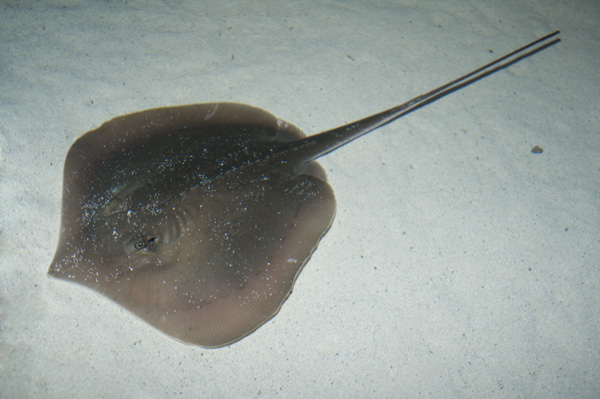
What kind of stingray

  • We are currently upgrading MFK. thanks! -neo
Antenna ray? Seriously?

This is an Antenna Ray (Plesiotrygon iwamae)

mini-P1010092.JPG


Plesiotrygon-iwamae0095a.jpg

This is a Florida Stingray/Atlantic Stingray (Dasyatis sabina)

Floriday_Ray1.jpg


Atlantic%20Stingray%20100.jpg


They are nothing alike.

They should not be kept in freshwater they increase their urine output 10 * to be able to live in freshwater. That means if you have 100 gallon tank for a normal freshwater ray. You need a 1000 gallon tank to even think about keeping it in freshwater.

Is this based on personal experience? This is a complex issue and I don't think your info or tank size extrapolation are necessarily accurate. For more info please see my reply in this thread:

http://www.monsterfishkeepers.com/forums/showthread.php?505058-FW-Florida-Stingrays-(1-Viewing)

Plesiotrygon-iwamae0095a.jpg
 
That was a long reply in that other thread

It's normally best to stay away from rays a lot of people know nothing about keeping them in a tank

There must be good reason why people have not kept them in the past probably due to importers not being able to keep them alive long enough to see that many in LFS

If they are that cheap and easy to keep you would expect them to before sale and more popular than motoro


Sent from my iPhone using MonsterAquariaNetwork app
 
i went back today, they said it was an Atlantic ray. he wasn't for sale nor was i looking to buy, id just never seen one before
 
That was a long reply in that other thread

It's normally best to stay away from rays a lot of people know nothing about keeping them in a tank

There must be good reason why people have not kept them in the past probably due to importers not being able to keep them alive long enough to see that many in LFS

If they are that cheap and easy to keep you would expect them to before sale and more popular than motoro

I actually completely agree with this. I just get frustrated when people authoritatively present information that isn't actually backed up by evidence. I do agree that there are probably factors that have limited the successful housing of these rays, which is why we don't often see them in the hobby. But I'm just not convinced that high waste production, which is what people often seem to blame, is really the issue. It would be really great if we had more first-hand info about these rays to help improve their husbandry, especially considering that these rays are legal in a number of states where potamotrygon are not.

Also, a lot of ray keepers seem to be quite interested in the science and biology of their fish, and the osmoregulation of euryhaline rays is really quite interesting, so I just wanted to provide some info to try to clarify some of the confusion about this topic.
 
MonsterFishKeepers.com