What's the most common cause of fish death?

  • We are currently upgrading MFK. thanks! -neo

What's The Most Common Reason Your Fish Died?

  • Aggression by other fish

    Votes: 0 0.0%
  • Personal injury

    Votes: 0 0.0%

  • Total voters
    43
  • Poll closed .
Status
Not open for further replies.
All these topics are interrelated.
A fish keeper mistake, might be putting too many larger fish in too small a tank (such as 2 oscars in a 75 gal, which causes stress, the stress causes disease, and too a small tank causes bad water quality quicker, and/or aggression becomes an issue because the 2 fish are so cramped.
I believe anytime there is aggression, which sometimes causes death and disease, its because the tank is too small, be it an oscar in a 75, or a dovii in a 200 gal.
It doesn't matter what the human perceives is large enough tank, its what the fish instinctually perceives as too small.

And the term fish keeper mistakes are relative, what was thought to be a mistake 50 years ago (ex. large water changes) is considered standard practice today.
And there are probably fish keeping recommendations common today, that will be debunked 10 years from now, as aquarists become more and more enlightened.
50 years ago a 50-75 gal tank was thought to be adequate for a couple oscars, I believe today something over 100 gallons may be more acceptable, but 10 years from now, a 300 gal might be considered minimal as a concerns over proper space will be believed to be more humane.
 
Really, everything would boil down to a fish keeper mistake. I’ve only ever had two fish die on me that I couldn’t guess at the cause of death.
 
  • Like
Reactions: jjohnwm
I think we're all giving ourselves a hard time here really. We're painting a rather bleak picture of our fishkeeping skills. That's one of the reasons why, in my earlier post, i tried to even the "blame" out a bit by suggesting a few alternative causes to fish deaths/other problems that were beyond our control.

Let me add something else in our favour. What about the occasions when we raise fish to a ripe old age and they simply die of old age. Those instances warrant a pat on the back, simply due to the fact that we all know how damn hard that is to do.

We musn't lose sight of the fact that this hobby is, and i'll stick my neck out here, possibly the most complex hobby anyone can get into. Even seasoned pros such as duanes duanes , and I know he'll agree with me here, are still learning, and make the odd mistake.

That fact alone puts it into perspective of just how difficult it can be for us other mere mortals.
 
Perhaps we should be using the term "responsibility" rather than the harsher-sounding "fault" or "blame"...but otherwise i stand by the notion that everything is our "responsibility".

Poor water out of the tap? Then testing it, remedying it, and/or perhaps not insisting on keeping species of fish unsuited to that particular water would be realistic ways to lessen or remove that risk factor.

Tanks suffering catastrophic failure? Most times this results from poor handling, poor support (i.e. floors that sag, stands that don't provide perfect level support, etc.), or poor quality cheap initial construction. In all of these cases, these problems result from choices we have made. If you don't accept "good enough" but insist on "as close to perfect as humanly possible" most of these things go away.

Malfunctioning heaters? Redundancy is your friend here. Multiple heaters to mitigate extreme temperature drops and separate thermostats with safety cut-offs to prevent cooking fish if heaters fail in the "on" position.

Power outages? UPS (Uninterrupted Power Supply) systems, battery-powered air pumps, and stocking levels that aren't always within a hair's-breadth of disaster at the best of times make these much less dire.

Over-feeding? Insufficient water changes? Underfiltration? The solutions are obvious...but they all start with admitting that the problem could have been avoided in the first place with proper forethought. In other words...we are responsible, either for doing the wrong thing, or for not doing the right thing. Sure, many of the solutions to these issues are difficult or expensive or otherwise impractical, but if you avoid doing them because of these reasons then at least admit that you are making that choice.

I've certainly made all these mistakes and more besides. I make fewer now...if my track record were not improving then something would be severely amiss. Learn from your mistakes; try not to duplicate them; and accept responsibility.

At risk of using the same kind of pretentious office-speak that I despise so much when I hear it on the job from motivational a-holes: Take ownership of the problem.

Oh, almost forgot: fish dying of old age. This is the goal, the dream, perfection. When a fish dies of old age, there is no blame or respondibility to assign. Death is the natural culmination of life, and a fish dying of old age is an indication that you have done everything right and have no apologies or regrets. Realistically, I would bet that perhaps no more than 0.001% of aquarium fish deaths are due to old age.
 
We musn't lose sight of the fact that this hobby is, and i'll stick my neck out here, possibly the most complex hobby anyone can get into. Even seasoned pros such as duanes duanes , and I know he'll agree with me here, are still learning, and make the odd mistake.
That fact alone puts it into perspective of just how difficult it can be for us other mere mortals.
I do agree, i am constantly learning and re-evaluating my beliefs about fish keeping, as we all do.
An example.
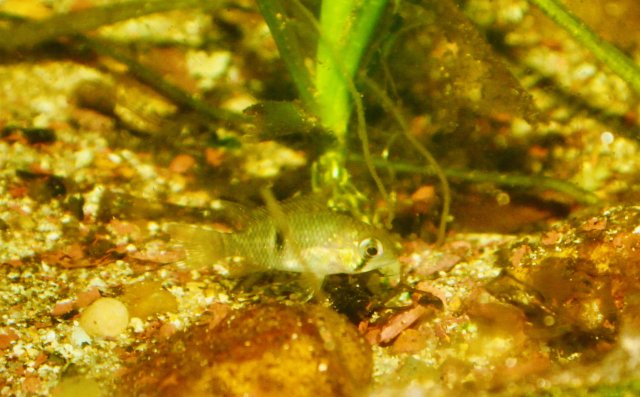
About 2 years ago, i picked up a180 gal, and received about 15 wild caught Panamanian Andinoacara (about 3"), a couple tetras, a Pleco, and figured the 180 would be sufficient, as max size for males cichlids is only about 7".
Within that 2 year period time, 2 alpha males eliminated all other males (5) and a few unreceptive females.
The two (now 6-7")remaining males have divided the 6 ft tank in half, and allow 5 females, and some fry free rein.
Not that I thought a 180 was a big tank, but that 12 of the 7" could make do with that space.
Turns out, I was overly optimistic.
00B41BED-05F6-4B27-8E6A-E8A044A4A8FF_1_201_a.jpeg
72DF2A4B-192B-41BE-A4FB-C8AF4E460B49_1_201_a.jpeg
1EBE4933-B27E-47ED-A89A-7A6B006851F3_1_201_a.jpeg
 
I agree that operator error is most common but once you get a grip on your own capabilities things fall into place, I have my 20 year old catfish and several teenage fish to back up that assertion because I came to realize that I am simply not able to maintain my hobby at the level some of you can . Know your limits!
 
Basically 99% of problems can be traced to fishkeeper error or lack of knowledge. My first fish were 6 cardinal tetras. Perfectly cycled tank, but I did not realize the ordeal the fish go through, and placing them in one more tank was enough to give them what looked like NTD but maybe was a fungus. Learned 2 lessons after I took the time to re-examine.

#1- Know your fishkeeping limits. I did a TON of research and was actually planning on a tank with GBRs as the center piece, with rummy noses and cardinals. All sensitive species. None suitable for a beginner, but I thought I could swing it since I wasn't going in blind. Heck, I didn't know what I didn't know tho. Went back and got some zebra danios. Very hardy, underappreciated fish btw. Super common, but a delight to watch and very beautiful. Watching them, noticing things like the tiny barbels, the gold tint males take on. Man I wish I started with them first.

#2 Fish health is all about lowering stress levels. A fish's diet, water parameters, tank mates, decor/lack of decor, and a thousand other factors all contribute to fish stress levels, either raising or lowering it. All environments carry pathogens. Bacteria, fungus, etc. There is no getting around that. If a fish is in optimal environment, and not stressed it can fight whatever is present. If not, fish immune system will be fighting on its back foot and may succumb to what a healthy fish can fight off. This doesn't include parasites however, however I've had ich in a fish show up six weeks after getting him, so maybe even parasites can be kept at bay in a healthy fish. Those cardinals were definitely stressed tho, my new tank was the nail in the coffin.

Just recently I lost 3 zebra loaches. Literally lost em. Gorgeous fish, hit me hard. Nitrates were creeping up despite maintenance, so I decided to pull apart the tank to get to some dead leaves and poop I had a hard time removing. I'm pretty sure they were wedged in my driftwood that I took out to gravel vac the tank. Stupidly I placed the wood in a shallow tub, they may have jumped out. Haven't seen em since. :-/

 
Status
Not open for further replies.
MonsterFishKeepers.com