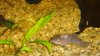
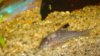
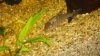
I think the photo will be really helpful. If you have any problems getting it to post, you can PM me. I'm not really great with computers, but I've posted quite a few photos on MFK, so I could be of some help.
Also, please provide the actual numbers on your ammonia, nitrite, and nitrate readings. If you don't own tests, your LFS will probably test them for you. Most do it for free. However, be sure and ask them for exact numbers so you can relay them here. Don't let them say, "It's good" or "Nitrite is a little high," because those are subjective descriptions, and we want objective data.
The reason I ask for this is that if your fish got a bump or a scratch, in good water quality, he should have healed fairly quickly. Fish are incredibly resilient. However, you've added a lot of fish, so we want to make sure that the biological filter has been keeping up with bioload -- converting ammonia to nitrite, and then to nitrate, and that your water changes are frequent and large enough to reduce nitrate to a safe level. So, these numbers are very important.
If you don't test now, I would highly advise that you begin. Clear water can be deceiving, and most of the "illnesses" that fish experience are due to water quality. So, if you're testing, and you know paramaters are optimal, you're decreasing the chance for a whole lot of fish illness.
Also, please provide the actual numbers on your ammonia, nitrite, and nitrate readings. If you don't own tests, your LFS will probably test them for you. Most do it for free. However, be sure and ask them for exact numbers so you can relay them here. Don't let them say, "It's good" or "Nitrite is a little high," because those are subjective descriptions, and we want objective data.
The reason I ask for this is that if your fish got a bump or a scratch, in good water quality, he should have healed fairly quickly. Fish are incredibly resilient. However, you've added a lot of fish, so we want to make sure that the biological filter has been keeping up with bioload -- converting ammonia to nitrite, and then to nitrate, and that your water changes are frequent and large enough to reduce nitrate to a safe level. So, these numbers are very important.
If you don't test now, I would highly advise that you begin. Clear water can be deceiving, and most of the "illnesses" that fish experience are due to water quality. So, if you're testing, and you know paramaters are optimal, you're decreasing the chance for a whole lot of fish illness.