


I finally found myself the owner of "Dovii". Currently, I have 8 juveniles about 1.5 months old, about 1.5"-2". I am going to build an aquarium (9' x 2.5' x 2.5' viewing glass of 15mm), as I am well aware this fish has the potential to mature to 30" and 15lbs.
When I obtained them, in my excitement, I later learned my Dovii are the result of a Costa Rican Blue Dovii parent x Red Dovii parent breeding...at no fault of the fella I got them from. I'm still proud of my purchase, and I'll drive 7hr round trip to him again to purchase Black Nasty fry when they arrive.
The reason of my post?
What is the reason of creating a hybrid? Is it to create popularity with the result, ultimately taking "strain" off the pure species (of any species) to allow itbto rebound in wild? Or does it make any difference at all? I have a background breeding dogs, and this creates confusion for me as in dogs we aim to preserve natural classification, traits and characteristics. Anyhow...
Can anyone explain to me how hybrid breeding works? I'm not looking to breed, but I do plan to keep 2 (male and female), possibly 3. Why 2? Because I don't want a gigantic tank with only 1 fish. Why keep 3? Because one appears to be "fading"...possibly going to show more of the red. In that, I'm sure fry are bound to happen. And I want to do right by my fish as well as accountability and responsibility of what may leave my tank in the event of fry.
Can someone walk me thru a breeding from start to finish (if there is an end)? Explain what all this F1, F2, etc etc is?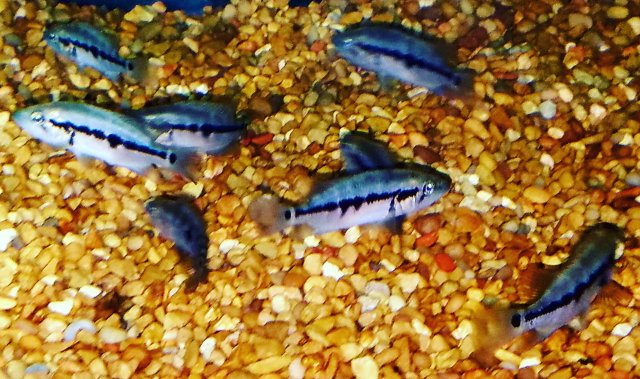
When I obtained them, in my excitement, I later learned my Dovii are the result of a Costa Rican Blue Dovii parent x Red Dovii parent breeding...at no fault of the fella I got them from. I'm still proud of my purchase, and I'll drive 7hr round trip to him again to purchase Black Nasty fry when they arrive.
The reason of my post?
What is the reason of creating a hybrid? Is it to create popularity with the result, ultimately taking "strain" off the pure species (of any species) to allow itbto rebound in wild? Or does it make any difference at all? I have a background breeding dogs, and this creates confusion for me as in dogs we aim to preserve natural classification, traits and characteristics. Anyhow...
Can anyone explain to me how hybrid breeding works? I'm not looking to breed, but I do plan to keep 2 (male and female), possibly 3. Why 2? Because I don't want a gigantic tank with only 1 fish. Why keep 3? Because one appears to be "fading"...possibly going to show more of the red. In that, I'm sure fry are bound to happen. And I want to do right by my fish as well as accountability and responsibility of what may leave my tank in the event of fry.
Can someone walk me thru a breeding from start to finish (if there is an end)? Explain what all this F1, F2, etc etc is?



