


I used to have multiple 90-100g tanks and totes with drips I used as quarantine tanks and fed as needed. I think it cost me between 2-300$ every shipment. But it lasted quite a whileWow,what's your set up for keeping that many feeders on hand?
Wild caught minnows for feeders instead of lfs?
- Thread starter PredatorPiqued
- Start date
You are using an out of date browser. It may not display this or other websites correctly.
You should upgrade or use an alternative browser.
You should upgrade or use an alternative browser.
What we're you feeding? If I knew before I sure don't remember now lol.I used to have multiple 90-100g tanks and totes with drips I used as quarantine tanks and fed as needed. I think it cost me between 2-300$ every shipment. But it lasted quite a while

Used to feed them hex shield, massivore ,bio gold, sinking gold ,spirulina flakes, regular flakes (all pellets were soaked in metro and seachem focus for 2 weeks) then I gave them prazi baths for 2 additional weeksWhat we're you feeding? If I knew before I sure don't remember now lol.
Sorry I meant which pet fish were you feeding them to?Used to feed them hex shield, massivore ,bio gold, sinking gold ,spirulina flakes, regular flakes (all pellets were soaked in metro and seachem focus for 2 weeks) then I gave them prazi baths for 2 additional weeks

In nature a minnow or any fish almost always has one or two parasites, external and/or internal, but in nature those few parasites are probably a simple irritant, and if they become more, that minnow will eventually be dead.
And in nature a single parasite usually doesn't get out of control because in millions of gallons, there are a multitude of hosts to latch onto, but its spread around among the many.
If you put a fish in a tank, or even an average pond, there are a limited number of hosts, in a limited number of recirculating gallons.
This is why in a tank, ick can become a devastating disease in a short time, as its progeny keep on reinfecting the same fish over and over, becoming epidemic, while in a lake, its not more than an irritant. Each ick spot can produce hundreds of new ick, with no other fish to latch onto except the same ones over and over.
I have wild caught fish at the moment, the first day I got them, I noticed one or two, had a single ick parasite, one or two had a few lernaea parasites.
If I wouldn't have treated, it may have only been a few weeks and every fish in the tank would have been infected.
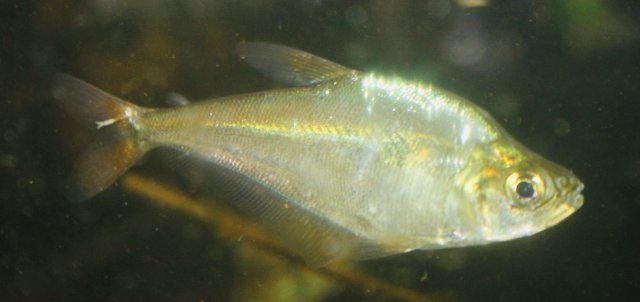
With the Lernaea on this wild caught tetra above, it was pretty easy to see the parasite hanging on the caudal area, but beside treating the tank for juvie Lernaea, I had to physically remove the adult vectors.
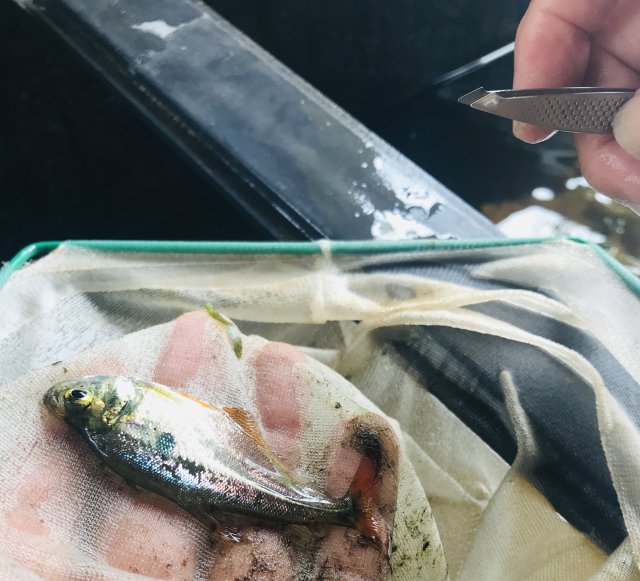
Many other parasites are not easily seen, the internal or gill parasites are often invisible and get out of control before being noticed, as would be one or 2 ick spots, that eventually flood the tank with hundreds of progeny.
And in nature a single parasite usually doesn't get out of control because in millions of gallons, there are a multitude of hosts to latch onto, but its spread around among the many.
If you put a fish in a tank, or even an average pond, there are a limited number of hosts, in a limited number of recirculating gallons.
This is why in a tank, ick can become a devastating disease in a short time, as its progeny keep on reinfecting the same fish over and over, becoming epidemic, while in a lake, its not more than an irritant. Each ick spot can produce hundreds of new ick, with no other fish to latch onto except the same ones over and over.
I have wild caught fish at the moment, the first day I got them, I noticed one or two, had a single ick parasite, one or two had a few lernaea parasites.
If I wouldn't have treated, it may have only been a few weeks and every fish in the tank would have been infected.
With the Lernaea on this wild caught tetra above, it was pretty easy to see the parasite hanging on the caudal area, but beside treating the tank for juvie Lernaea, I had to physically remove the adult vectors.
Many other parasites are not easily seen, the internal or gill parasites are often invisible and get out of control before being noticed, as would be one or 2 ick spots, that eventually flood the tank with hundreds of progeny.

The above posts are the main reasons why I would suggest purchased feeders; not because they are less parasite-ridden (which they probably are not) or because they are healthier (after weeks or months of abuse and neglect, they almost certainly are not), but because they are likely a species that you can maintain in quarantine for several weeks in an effort to clean them up before using them. Wild caught "minnows' is a pretty broad category; some of them can be kept alive easily for pre-treatment; others, not so much.
Ahhh the bass group I had at the time. Was experimenting to see which food produced faster growth color and all around health. Just got too burnt out on medicating and feeding all the feeders month after month. I used to cast net and seine net chubs and small bluegill as well before I found Anderson minnows but it didn’t last long enough and was too time consuming. All and all I prefer the ease and simplicity of just feeding pellets now and frozen prepared foods soaked in vitachem. But if you want thousands of minnows that are inspected by field and game for parasites and infection ( atleast that’s what they say on their site) for wholesale prices they’re definitely the way to go.Sorry I meant which pet fish were you feeding them to?
Same here for the most part.I used to catch minnows and other small fish down at the creek but the whole thing got to be more trouble than it was worth.Ahhh the bass group I had at the time. Was experimenting to see which food produced faster growth color and all around health. Just got too burnt out on medicating and feeding all the feeders month after month. I used to cast net and seine net chubs and small bluegill as well before I found Anderson minnows but it didn’t last long enough and was too time consuming. All and all I prefer the ease and simplicity of just feeding pellets now and frozen prepared foods soaked in vitachem. But if you want thousands of minnows that are inspected by field and game for parasites and infection ( atleast that’s what they say on their site) for wholesale prices they’re definitely the way to go.
? It’s a lot of workSame here for the most part.I used to catch minnows and other small fish down at the creek but the whole thing got to be more trouble than it was worth.
