

- Have you tested your water?
- Yes
- If yes, what is your ammonia?
- 4.0ppm when he started having issues, 0ppm now
- If yes, what is your nitrite?
- 0ppm when he had issues, 0 ppm now
- If yes, what is your nitrate?
- 80-160 ppm consistently
- If I did not test my water...
- ...I recognize that I will likely be asked to do a test, and that water tests are critical for solving freshwater health problems.
- Do you do water changes?
- Yes
- What percentage of water do you change?
- 21-30%
- How frequently do you change your water?
- Every month
- If I do not change my water...
- ...I recognize that I will likely be recommended to do a water change, and water changes are critical for preventing future freshwater health problems.
TLDR: My oscar is struggling to breathe and I don't know why.
My Oscar has been in an established tank for almost 2 and a half years, and has thrived with a variety of tankmates. He is very active and interested in what is going on outside of the tank, constantly coming up to the glass. For the past couple of months, him and a chocolate cichlid were the only fish besides the variety of catfish. i decided to add some convicts from a local fish store, a female and male pair. The female settled in immediately, and was very active and interested just like the oscar. The male however, died within a couple of days, and he looked lethargic the entire time. Shortly after, my chocolate cichlid began to act in the same way, even laying in the same position the convict male would. This freaked me out, and even though the chocolate cichlid was 4x the size of the female convict, I figured she may have been stressing him, so I removed her and placed her in a separate tank. The chocolate cichlid seemed to improve in her absence, and we tried our best to treat him but he passed in the following days. He had signs of ammonia burn, but no other fish in the tank was struggling. The ammonia levels were at 2.0ppm. The nitrates were also high and the pH was low. I was able to fix the ammonia and ph Levels pretty easily, but the nitrate levels were still high. This was about the time my 6 month maintenance schedule had come around, so i replaced the filter media, leaving some of the biomedia to preserve beneficial bacteria. At this point, I was on high alert and worried the convicts had brought an infection into the tank. It was after this process that I noticed my oscar really gasping for air. His mouth would be open 24/7, and his gills were working overdrive to try and get air. He was also laying around the tank and a lot less energetic than usual, but he would still come up to eat and when I would walk up to the tank. I decided to remove him from the 125 and place him in a large bin with an air stone and begin treating for gill flukes and other parasites. I used API general cure, which contains 250mg metronidazole and 75mg praziquantel per pack, dosing 2 packs every 48 hours, and changing 2-% of the water every 3 days. He seemed to improve, but now he is gasping the same way as before. The pump I was using in the quarantine tank was off for an unknown time period, so this could be the cause, but I am afraid the medicine I'm giving him isn't working. I would appreciate any suggestions, the fish stores around me aren't much help at all. I also attached pictures of him and his gills, he also has this weird stutter or cough which you can see in the video.
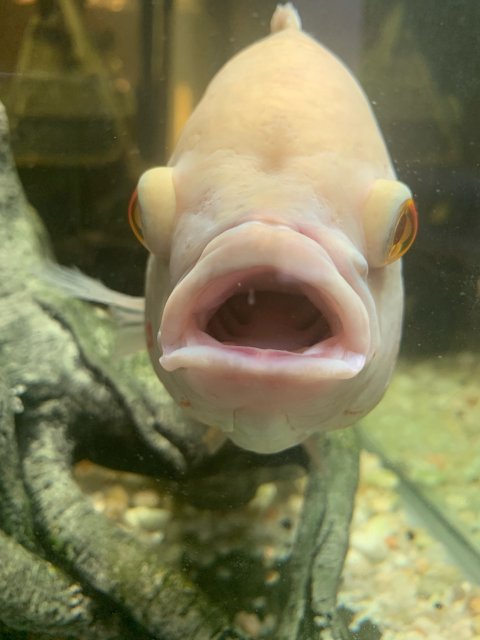
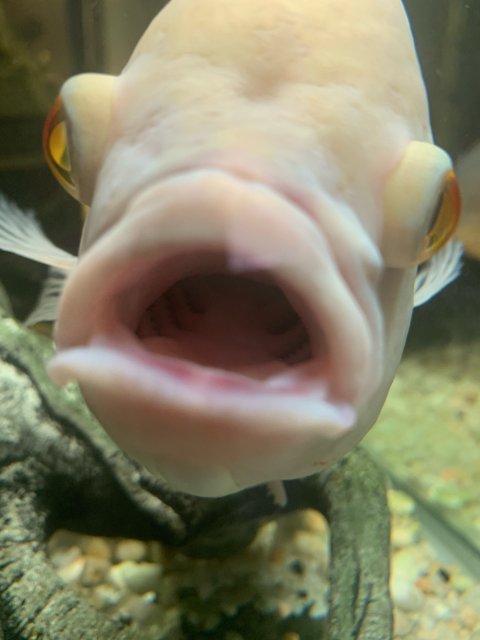
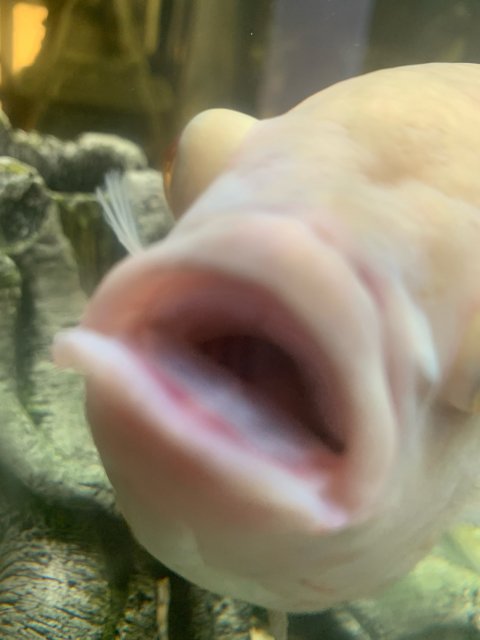
My Oscar has been in an established tank for almost 2 and a half years, and has thrived with a variety of tankmates. He is very active and interested in what is going on outside of the tank, constantly coming up to the glass. For the past couple of months, him and a chocolate cichlid were the only fish besides the variety of catfish. i decided to add some convicts from a local fish store, a female and male pair. The female settled in immediately, and was very active and interested just like the oscar. The male however, died within a couple of days, and he looked lethargic the entire time. Shortly after, my chocolate cichlid began to act in the same way, even laying in the same position the convict male would. This freaked me out, and even though the chocolate cichlid was 4x the size of the female convict, I figured she may have been stressing him, so I removed her and placed her in a separate tank. The chocolate cichlid seemed to improve in her absence, and we tried our best to treat him but he passed in the following days. He had signs of ammonia burn, but no other fish in the tank was struggling. The ammonia levels were at 2.0ppm. The nitrates were also high and the pH was low. I was able to fix the ammonia and ph Levels pretty easily, but the nitrate levels were still high. This was about the time my 6 month maintenance schedule had come around, so i replaced the filter media, leaving some of the biomedia to preserve beneficial bacteria. At this point, I was on high alert and worried the convicts had brought an infection into the tank. It was after this process that I noticed my oscar really gasping for air. His mouth would be open 24/7, and his gills were working overdrive to try and get air. He was also laying around the tank and a lot less energetic than usual, but he would still come up to eat and when I would walk up to the tank. I decided to remove him from the 125 and place him in a large bin with an air stone and begin treating for gill flukes and other parasites. I used API general cure, which contains 250mg metronidazole and 75mg praziquantel per pack, dosing 2 packs every 48 hours, and changing 2-% of the water every 3 days. He seemed to improve, but now he is gasping the same way as before. The pump I was using in the quarantine tank was off for an unknown time period, so this could be the cause, but I am afraid the medicine I'm giving him isn't working. I would appreciate any suggestions, the fish stores around me aren't much help at all. I also attached pictures of him and his gills, he also has this weird stutter or cough which you can see in the video.



