Green terror hole in the head?

  • We are currently upgrading MFK. thanks! -neo
I
I have metroplex and general cure, I see that they both have the same amount of metronidazole in them, is one better than the other? How long does hole in the head typically take to heal?
It can take a long time. Big thing is the medicine works better when ingested. The meds in the water are designed to get a little better and when it is then feed oral antibiotics. So even with meds in the water may not have immediate results.
 
  • Like
Reactions: Deadeye and RD.
Put metro in some gel food, infused with blood worms. That should get it where it needs to be. Good luck
 
  • Like
Reactions: Deadeye and kno4te
In marine tanks, I’ve read that HITH in tangs has been connected to carbon filtration. I think I’ve noticed this in my clownfish too, where they were developing HITH, and removing carbon caused it to clear up.
Could this have any truth in freshwater, and carbon (alongside high nitrates and hexamita) can lead to HITH?
 
  • Like
Reactions: Bbuckley
Not the same in marine. I have discussed this in the past in the following sticky.

I might as well also respond to the "carbon dust" theory. There is some more current info available on the carbon dust theory, but it pertains to HLLE in marine fish. I posted the following link a few years back in another thread on this subject.

http://www.coralmagazine-us.com/content/activated-carbon-hlle-smoking-gun-found

I don't know of any concrete evidence that proves carbon is associated with HITH in freshwater fish, but that study certainly does demonstrate the possibility of a connection.

Either way, every single case is triggered by some form of stress, which typically results in an outbreak of parasites within the fish.
 
  • Like
Reactions: Deadeye
You would have to contact the DVM that narrated those videos, and ask him.


BTW - Earlier when I mentioned carbon, and the Chicago public aquarium, it was actually Jay Hemdal, the curator of fishes at the Toledo Zoo that wrote the paper on carbon, and the association with HLLE in marine fish. I posted a link to an article here on MFK several years ago, but the link has since gone dead. These should work. https://www.tandfonline.com/doi/abs/10.1080/15222055.2011.635781

and/or https://afspubs.onlinelibrary.wiley.com/doi/abs/10.1080/15222055.2011.635781

The Role of Activated Lignite Carbon in the Development of Head and Lateral Line Erosion in the Ocean Surgeon

Jay Hemdal

R. Andrew Odum

First published: 16 November 2011

Abstract

Head and lateral line erosion (HLLE) is an acute or chronic, often progressive problem affecting captive fishes. Its etiology is enigmatic. This study examined the relationship between the use of activated carbon as a filtrant and the development of HLLE lesions in ocean surgeons Acanthurus bahianus. Three identical, 454‐L marine aquarium systems were established. Thirty‐five ocean surgeons were distributed among the three aquarium systems. Activated lignite carbon was added to one system, and pelleted carbon was added to the second system. The fish in the third system were not exposed to any carbon. All 12 fish that were exposed to lignite carbon developed severe HLLE within 3 months. The 12 fish that were exposed to pelleted carbon did not develop gross symptoms, but microscopic lesions were discovered upon histological examination. The 11 control fish did not develop any visible or microscopic lesions. Based on these results, the use of activated lignite carbon in marine aquariums that house HLLE‐susceptible species is discouraged.
Publication cover image
Volume73, Issue4

October 2011
Pages 489-492


  • Related
  • Information
  • Metrics


    Details

    © 2011 American Fisheries Society


    Funding Information
    • Toledo Zoo Foundation
    • Toledo Zoological Society

  • Publication History
    • Issue Online: 16 November 2011
    • Version of Record online: 16 November 2011
    • Manuscript accepted:
 
  • Like
Reactions: Deadeye
Not the same in marine. I have discussed this in the past in the following sticky.
Very interesting! Thanks for the info!
 
  • Like
Reactions: RD.
The bacteria that are associated with HLLE prefer a pH between 7.2 -8.5.+/- a few tenths.
But so does the Andinoacara you keep, so pH is not the culprit.
The difference here, is that in natural waters where Andinoacara are found, nitrate levels are very low, normally non-detectable.
Although in much of the geneic aquarium literature, a nitrate level of 20 ppm is considered acceptable, because it doesn't cause acute disease or obvious death, yet I find (and much of the many disease posts here on MFK suggest) a nitrate level of 20ppm leads to chronic diseases like HLLE as fish like oscars, Geophagines, and other medium - large cichlid species age. It often doesn't present until the fish a 2 or more years old.
I keep wild caught Andinoacara from close to where I live in Panama (pH 8.2), and have yet to test the water they come from, and get a test result over 5ppm.
For this reason I maintain low nitrate levels of no more than 5 ppm in my tanks, and to reach that goal, I find I need to do 3 to 4 water changes of 30-40% on my 300 gallon system per week. When I first got A coerleopunctatus at only a couple inches, this regime may not have been necessary, but as they are now much larger (the male is @ 7", females slightly smaller) and their waste output is much heavier, my nitrate testing shows this amount and volume of water changes to be minimal to attain my goal of matching their natural waters.
Another factor in natural waters, is the seasonal leaf drop that inundates the waters with tannins (which are slightly antibacterial).

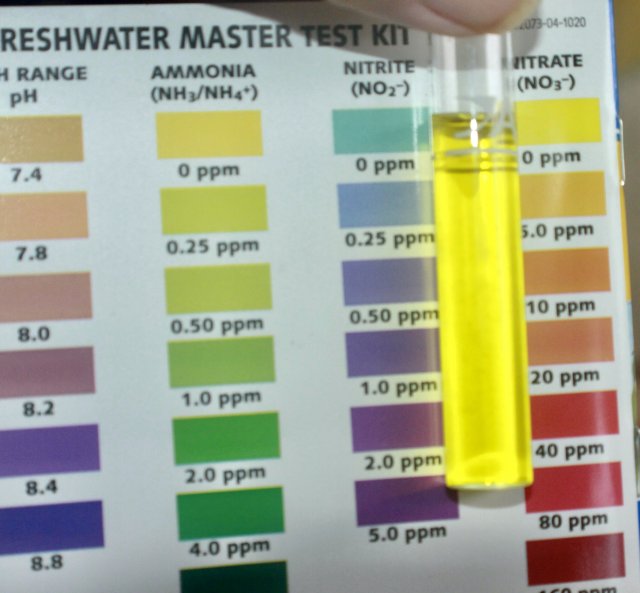
Below my average tank water nitrate results
D8CA7278-2FD9-40F1-B922-8F93002F34A7_1_201_a.jpeg
My suggestion would be to up your water change routine until you bring those nitrates minimally below 10ppm, and keep that routine up, regularly measuring nitrate.
But....
not to expect an overnight cure or even visible change in just a month, the medication suggested is a good bandage, but the underlying cause is what is needed to keep the fish from relapsing.
It has probably taken some time for your GT to get HLLE, so will take time to get rid of it.
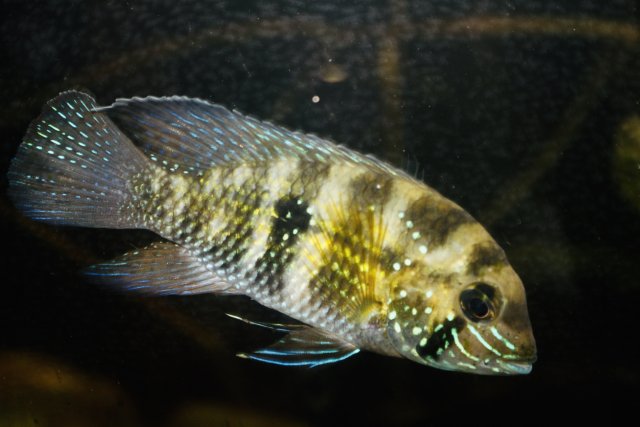
One of my Andinoacara below
4F6755D5-2A8C-45C1-9ADE-C4747212BF9A_1_201_a.jpeg
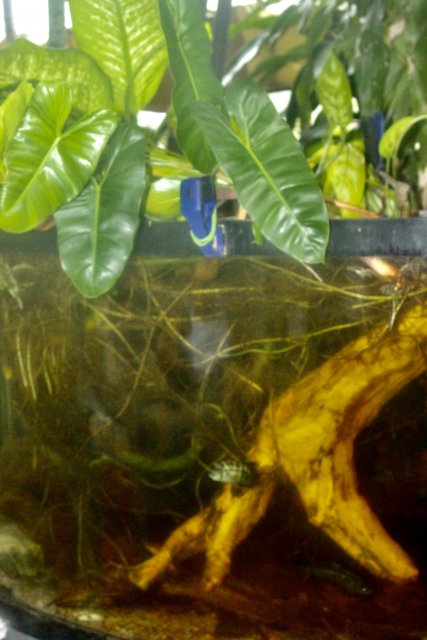
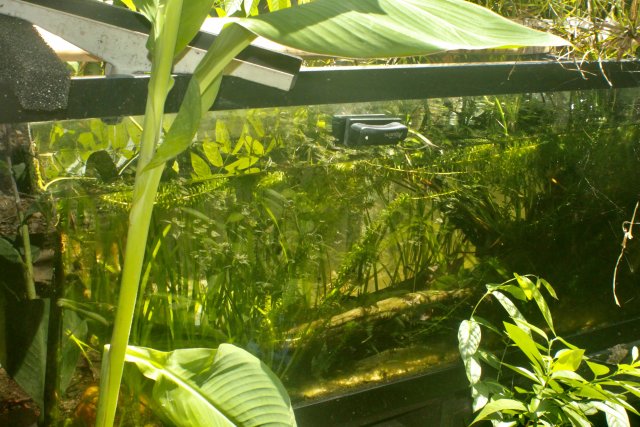
Another factor in maintaining low nitrate is the addition plenty of aquatic and terrestrial plants, a much higher mass than the fish.
E7EA2C5B-3F9D-4ABA-9113-8B08ED9318F5_1_201_a.jpeg
The main tank above, the planted sump below
6562F28E-1A9D-48F8-AF12-AFDCAE0A7031_1_201_a.jpeg
 
  • Like
Reactions: Deadeye
he bacteria that are associated with HLLE prefer a pH between 7.2 -8.5.+/- a few tenths.


Not to nit pick my elder, but HLLE is not the same as HITH. :)

The former is associated with marine fish, the latter with freshwater, which is why one doesn't typically see lateral line erosion as a symptom in freshwater fish that have this health issue. See previous links amigo.
 
  • Like
Reactions: Deadeye
Thank you all for replying I’ll up the water change and make sure I keep nitrates as low as possible! I’ll feed the metroplex with bloodworms using focus as that’s all she will eat. Would feeding bloodworms every day be bad for her? I can also try some peas today
 
MonsterFishKeepers.com


