That spawning on a leaf behaviour is similar to Andinocara coerleopunctatus, and allows them to move the eggs out of harms way (especially in places where eggs predators like plecos are common), and considered by some, to be a precursor to a mouth breeding step in evolution.
[/QUOTE
I also had a pair Cichlasoma amazonarum that did this the first couple of times they spawned. It was very interesting to watch them, sometimes while moving the leaf it would turn upside-down and they would spend ages trying to turn it over again. Subsequent spawns were bigger, probably too big to fit on the relatively small leaves I had in the tank, and they later spawned on solid surfaces. Though once they split the spawn, half on a rock and half on a leaf one parent guarding each!
Not surprising these Bujurquina and Andinoacara would have similar behaviour patterns, both were considered part of the genus Aequidens for many decades.
Cichlasoma amazonarum (and the other SA Cichlasomas) also used to be included in the genus Aequidens.
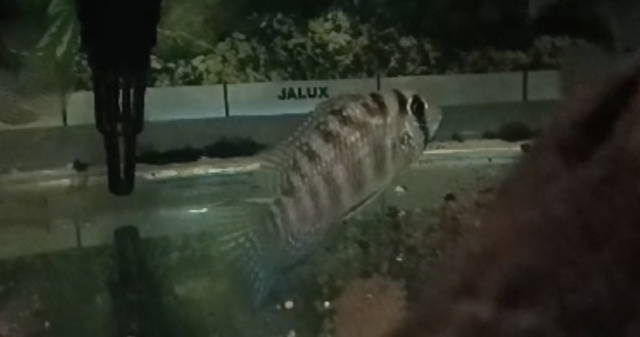
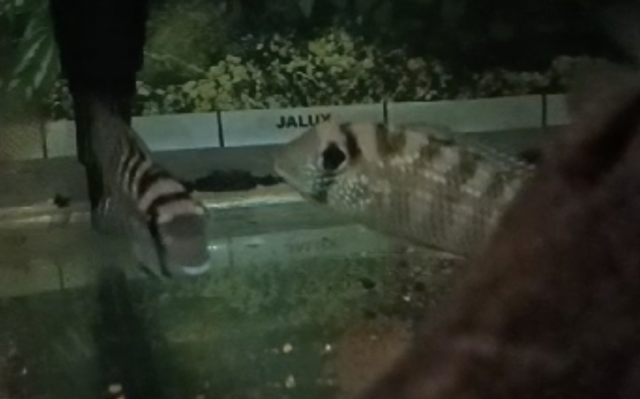
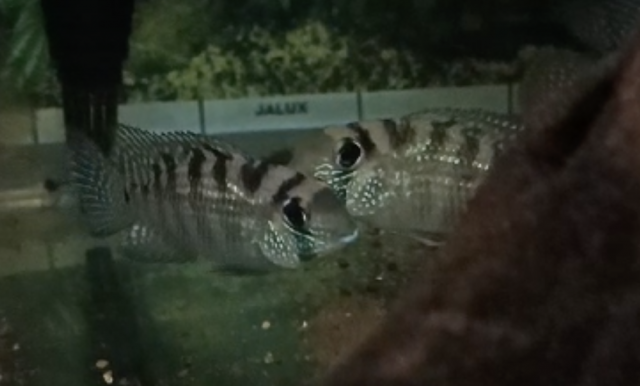
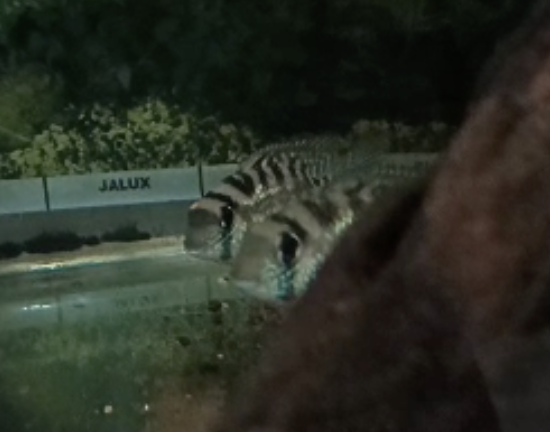
These are some shots I took from the video I was sent of the adult Bujurquinas, I haven't seen them myself:

And this is the link to the paper I mentioned (tried to send the pdf but it didn't work).
Based on recent discoveries, Bujurquina appears to be the most widely distributed and species-rich cichlid genus in the western Amazon of South America. In this study, using a large representative sample of Bujurquina covering its whole distribution area, we use morphological and molecular data...

bioone.org
And another thing, the person who caught them told me that in the same river there were also some tetras, similar in size and shape to diamond tetras, with a yellow dorsal fin, some small spotted plecos and some large shrimps that he is hoping to collect on another occasion... No idea what these species are, but one day it might be interesting to try a biotope tank? Even if I can only keep one pair of the Bujurquinas eventually, in a 4ft, 63 gallon approx that I could potentially make available.