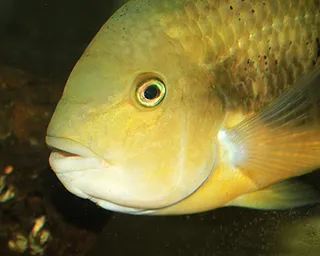
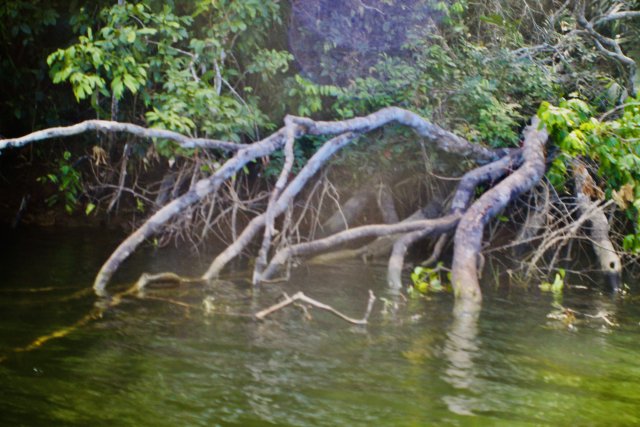
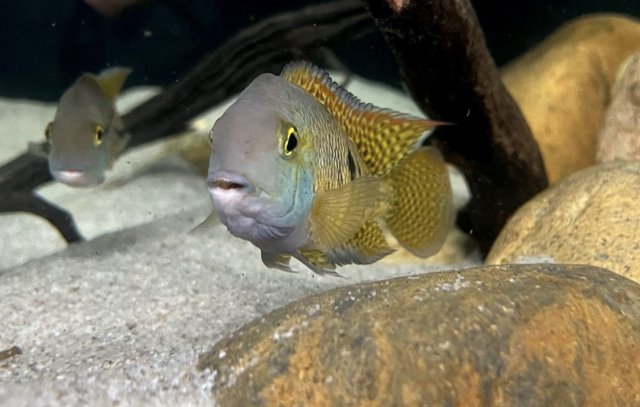
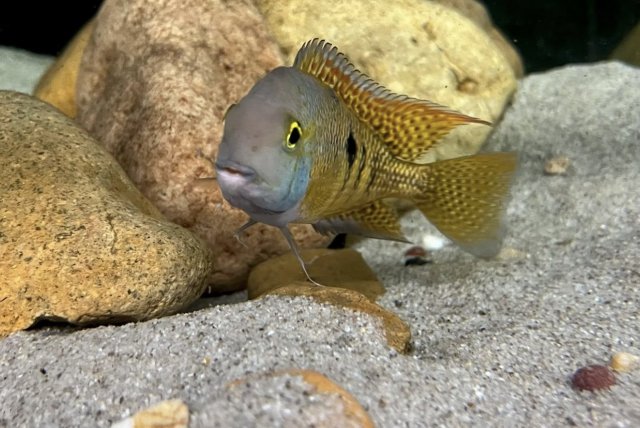
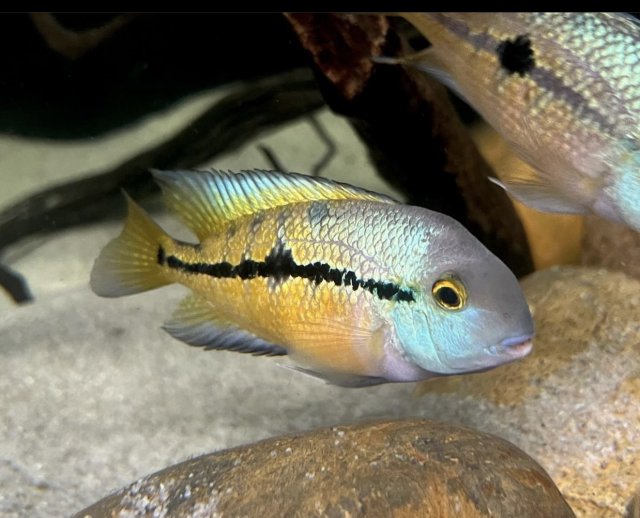
Nicaraguan Cichlids - Colour localities.

  • We are currently upgrading MFK. thanks! -neo
That paper is from 2007. they have been revised again since then.

Brilliant thankyou! I’d missed the last one!
 
That paper is from 2007. they have been revised again since then.

Thanks again for this managed to find the 2016 paper to download - interesting read and interesting place they have been put. No real discussion about them being a diverse species though and it is a more comprehensive look than the preserved specimens from 2007. I'm still not convinced but I personally do think that the 'strain' - not sure how best to describe it - with irregular black markings are from Costa Rica. I think these are what used to be called C.Spilotum - would love to work out the reason for the name too, find it unlikely that it is someones name but not sure what the reference is, there are a few other animals called Spilotum but not found a reference to what it describes.

One thing this paper did flag that is interesting is that they term Nicaraguensis as an open water fish that lives over sand/mud where they dig pits to spawn in but there are a few field reports from hobbyists that have found them in nests dug out into river banks. This was discussed in contrast to the Neetropulos that live in rocks so I suppose Nics living against soil and sand river banks to dig into is not too different?

Wills
 
  • Like
Reactions: Toiletcar
Most CB you will see are from Nicaragua and believe they have more green than blue.
 
One thing you might want to consider, is that its not so much location as far as country of origen itself that influences colors, as water turbidity, water color and other environmental factors of an certain area.
To attract mates in turbid water, natural evolution will select for bright color, and distinguishable markings, whereas in clear waters this is not as important.
Here in Panama, Geophagus crassilabris found near normally turbid, murky, stirred up river deltas are often much more colorful than those in clearwater streams inland.

If you compare deep reds of Hemichromis exsul endemic to turbid Lake Turkana, with some other species of Hemichromis from clear water areas, the color contrast can be quite dramatic

And one of the most familiar to aquarists is the decades long confusion of Vieja synspillum with V.melanura. Where environmental factors of an area favored the muddy yellow and black of what was considered V. melanurum from one with the blues and reds of V. synspilla enough for scientists to consider them separate species

I have kept 2 variants of Chuco intermedia from separate, but close river systems, but where the different topography over time selected for quite distinct variants.
Oct2709001


1663253266739.png
 
Last edited:
One thing you might want to consider, is that its not so much location as far as country of origen itself that influences colors, as water turbidity, water color and other environmental factors of an certain area.
To attract mates in turbid water, natural evolution will select for bright color, and distinguishable markings, whereas in clear waters this is not as important.
Here in Panama, Geophagus crassilabris found near normally turbid, murky, stirred up river deltas are often much more colorful than those in clearwater streams inland.

If you compare deep reds of Hemichromis exsul endemic to turbid Lake Turkana, with some other species of Hemichromis from clear water areas, the color contrast can be quite dramatic

And one of the most familiar to aquarists is the decades long confusion of Vieja synspillum with V.melanura. Where environmental factors of an area favored the muddy yellow and black of what was considered V. melanurum from one with the blues and reds of V. synspilla enough for scientists to consider them separate species

I have kept 2 variants of Chuco intermedia from separate, but close river systems, but where the different topography over time selected for quite distinct variants.
Oct2709001


View attachment 1503093

Very true! Something that was mentioned in a couple of things I've been reading but in terms of Nicaraguans there does not seem to be the provenance a lot of the time where as some other cichlids like Salvini that in certain places I do see with a river local attached to them. Though I think I would faint with excitement if I came across some Nicaraguans with known lineage haha!

Interestingly they kind of sit between some of the more mass bred cichlids like Convicts, JDs and Blue Acaras producing line bred strains but also out of the reach of the pure wild strains too.

Wills
 
Also duanes duanes what would you recommend in terms of substrate colours in a tank for them? I've got quite a light sand I want to use but worried they will wash out.

Wills
 
I always prefer natural color sand, stark white sand tends make any cichlids color wash out, and if it black, it just looks unnatural to me.
09C39E87-637D-40AC-9361-AB773CB8DB47_1_201_a.jpeg
My interest is in biotope tanks, so I tend to go with nature
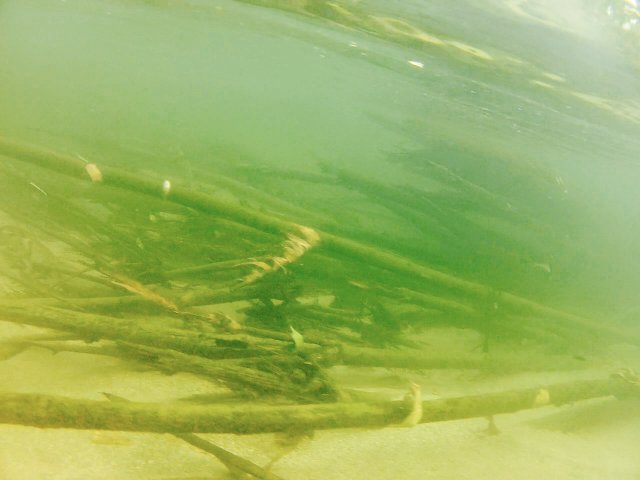
Above....River habitat shot I too in Colombia.
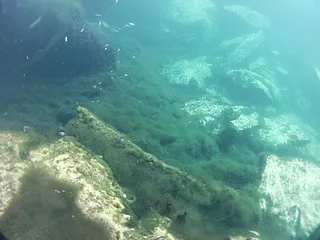
Below, a Cenote in the Yucatan
1663264407989.png
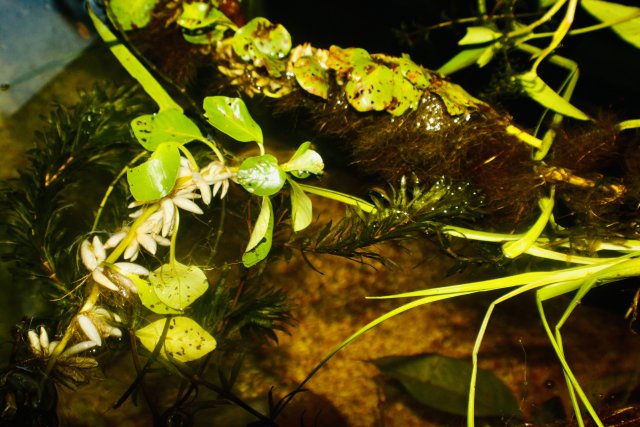
Below, a couple shots taken while collecting in Lake Gatun, Panama
5AB2A611-851C-4583-9ACF-A69059946825_1_201_a.jpeg
A3EC4AC5-3950-4C2B-B370-382D8A1A5FA4_1_201_a.jpeg
 
I always prefer natural color sand, stark white sand tends make any cichlids color wash out, and if it black, it just looks unnatural to me.
View attachment 1503105
My interest is in biotope tanks, so I tend to go with nature
Above....River habitat shot I too in Colombia.
Below, a Cenote in the Yucatan
View attachment 1503106
Below, a couple shots taken while collecting in Lake Gatun, Panama
View attachment 1503107
View attachment 1503108
Fantastic! What I have in mind is natural but on the light side of natural if you see what I mean? I might have a look around I just don’t want something too yellow
 
MonsterFishKeepers.com