

Blackwater conditions and Cichla....

  • We are currently upgrading MFK. thanks! -neo
I like the effects these leaves give, just a question thou how many oak leaves/almond leaves is too much?
i have a sack full of almond leaves just sitting here at the moment, and i would use them if i knew how many to put in a 470g tank

Mfg Peter
 
Peter if you read this thread from page one there is a small amount of info on dosage...

Jcardona when are you going to put this dslr into some use ;)
 
camera comes in later this week, and im in boston right now. i measured the ph in my 55g the day after and it was still the same, might change slowly :)
 
I may as well chime in on this...

I've used a number of items and compounds over the years to create black water. My favorite method is adding 2-3 cups of peat and half a dozen almond or oak leaves to a large pot of RO or DI water and boiling this concoction for 30 minutes. The hot water steeps out all of the tannins and other beneficial compounds in the peat and leaves creating a very dark, nutrient rich liquid. I simply strain out the peat and leaf particles and am left with a very rich liquid. In this manner you can create gallons of black water extract for the same price as one of those stupid bottles of Tetra BlackWater Extract costs.

A few items that I'd like to point out and/or clear up that I've seen mentioned in this thread.

1. pH. Adding leaves, blackwater extract, driftwood, etc. will not affect your pH greatly if you have a high alklinity. Typically a high pH is associated with a high alkalinity. Granted, the best way to know where you are at is to test your water but don't expect the pH to drop much if your water is rich in carbonates. That doesn't mean the tannins and other dissolved organics/compunds will not benefit your fish just don't expect the pH to change much.

Adding these items to water that has been run through an RO or DI unit, or water that is naturally soft, will have a much greater effect on water chemistry.

Also, pH kits which use reagents and a change in color of said reagents to test the water don't work so well in black water. The color of the test is greatly affected by the initial color of the water.

2. Water softness. Again, if you have naturally hard water adding leaves, driftwood or extract will not make much a difference. Trust me. I've used almost an entire bale of peat before in an attempt to soften water and it simply does not work unless you have relatively soft water to begin with.

3. Stability. I've seen several people mention stability as being critically important when using black water conditioning agents. I disagree to a certain extent. It is sudden shift in the water chemistry that signal fish that it is time to breed. A downpour washes a large amount of decaying plant matter into the water resulting in a sudden chemical shift in water parameters. It also can drop the water temperature by several degrees. This signals the fish that it is time to breed.

Ever notice how a friend will have a pair of fish that have stopped breeding and gets rid of them to find that they breed within just a few days of having been placed in their new home? Or when you transfer fish from one tank to another only to have them breed unexpectedly? The sudden change in water chemistry from one tank to the next is the trigger.

I like to pour a couple gallons of my homemade extract into the tank all at once. The fish go nuts and seem to really like it. Over the course of the next couple of weeks it slowly gets diluted as I perform water changes.


I'll try and remember to take some pics the next time I create some extract and add it to the tank.

Lastly, I strongly feel that the tannins and other chemical compounds that result from adding the extract to the tank water offer great benefits beyond just softening and/or lowering the pH. Vigour, color, disease resistance and appetite all seem to be positively affected by adding the extract.
 
^ great info scat, thanks for chiming in :thumbsup: just a few quick question on your homemade extract which i really like the idea of...
- how much of the extract do you generally add per gallon of water? have you came up with a rule of thumb for the amount to add?

- do you think the extract has a "shelf life"? can you make extra and keep it around or does it have the possibility of spoiling?

- peat, i dont know much about this. where can you get it and what in particular should i look for?

thanks! :)
 
This is a pretty good read, thanks for everyones experiences and input.
 
jcardona1;3456462; said:
^ great info scat, thanks for chiming in :thumbsup: just a few quick question on your homemade extract which i really like the idea of...

- how much of the extract do you generally add per gallon of water? have you came up with a rule of thumb for the amount to add?

It's never the same. Sometimes I'll only make a gallon or so. Other times I'll make 5 gallons and pour it all in. I do know that even just a gallon of my 'brew' added to the 125 will significantly change the color of the tank water.

jcardona1;3456462; said:
- do you think the extract has a "shelf life"? can you make extra and keep it around or does it have the possibility of spoiling?

Not sure. I've never kept it around for more than a week or so before using it all. It's so easy to make I'm not sure that I'd make any more than what I could use within a month at the most.

jcardona1;3456462; said:
- peat, i dont know much about this. where can you get it and what in particular should i look for?

Dried peat moss. You can get it at any home or garden center. It usually comes in large bales but I think you can get it in small bags as well. It is 10 times the cost in small quantities. Just make sure that you buy 100% peat moss. Don't buy peat that has any additives such as fertilizers. A large bale runs approx $15

Basically, peat is just dead moss that is dug up from bogs. It is dried and then packaged for sale as a soil ammendment for gardens.

Peat is also very acidic, around 4.5 pH. It has been shown to soften its surroundings by taking up calcium and magnesium ions. When the peat itself is placed in an aquarium it will acidify the water as well as soften it. The problem, as I pointed out earlier, is that it takes a lot of it to effect any substantial changes if your water is already very hard and high in pH. To add enough in a 60 gallon tank to make any changes you'd end up with more peat moss than water in the tank. Plus it is very messy. Adding it to a tank with large boisterous fish will result in a huge mess.

Most people will place the peat in a nylon sock or bag and drop it in the sump or place it in a canister filter. For smaller tanks with already soft water this is great. For large tanks with large fish I have found that making my brew has been the best way to utilize it.

I suspect that the pH of my brew is in the low to mid 4's. Plus it is full of the beneficial tannins. I suspect that there are other compounds that peat releases into the water that are beneficial but are as of yet unknown.

As mentioned earlier, I place 2-3 cups of peat in a large pan and add RO or DI water. Bring it to a boil and then turn the heat down and let it simmer for about 30 minutes. After it cools I pour the mess through a bath towel placed over a 5 gallon bucket. This strains out the used peat allowing the black water to gather in the bottom of the bucket. I then just pour it into my sump where it is delivered up into the tank.
 
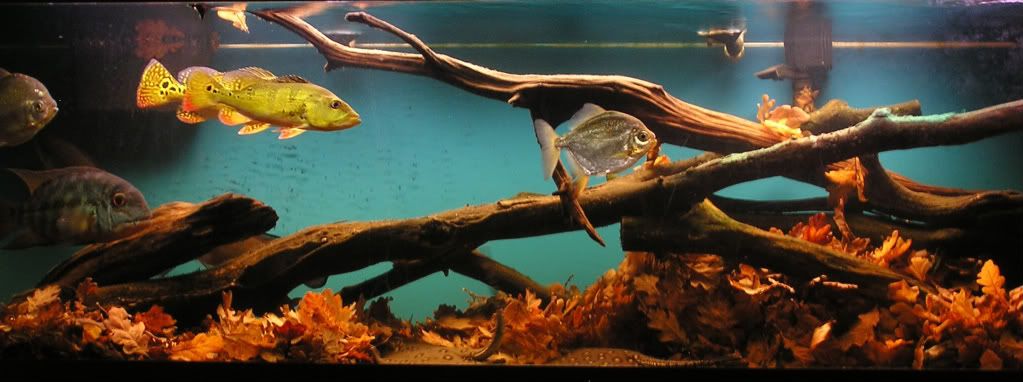
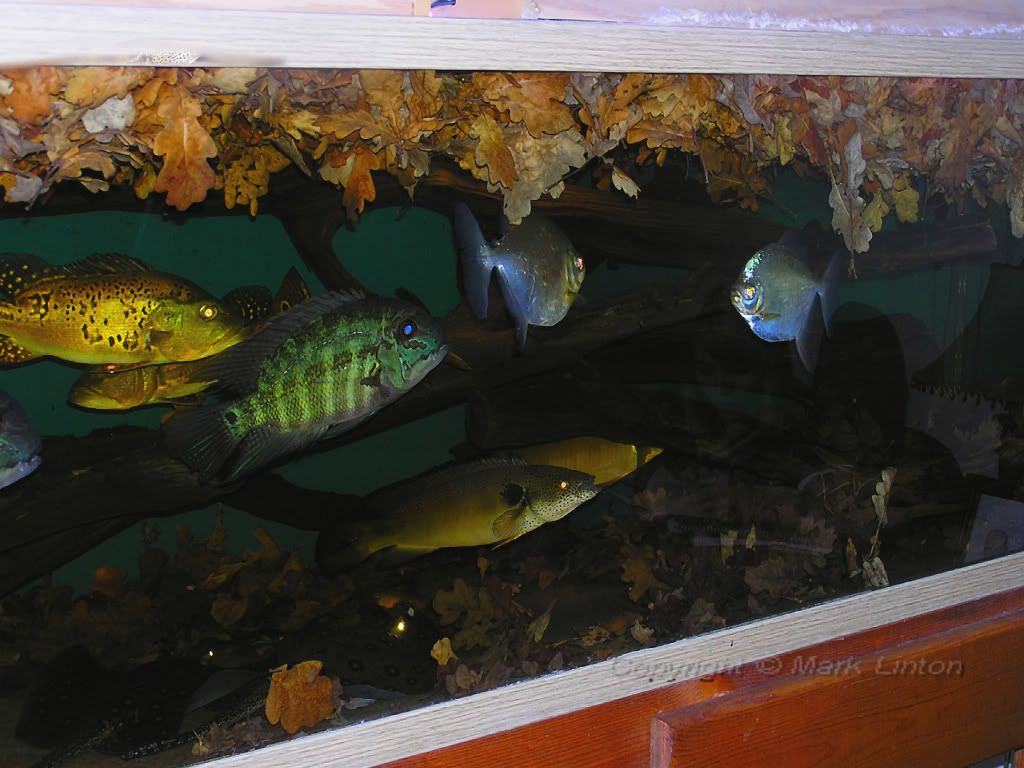
From the 'Oak Leaf' days...

125LeafLitter-4_32508_edited-1.jpg


125Leaves-3_32208-1.jpg
 
Does anyone here use RO or DI systems already? I use it to lower ph. I buy it from the LFS. I need to invest in a good unit. I am curious does anyone already have a unit set up and currently using some sort of black water treatment.
 
awesome, thanks for the help. definitely gonna try the peat moss brew when i run out of almond leaves. my neighbor also has a huge oak tree :D
 
MonsterFishKeepers.com
