

Elasmobranch ID game

  • We are currently upgrading MFK. thanks! -neo
Brenden;1866268; said:
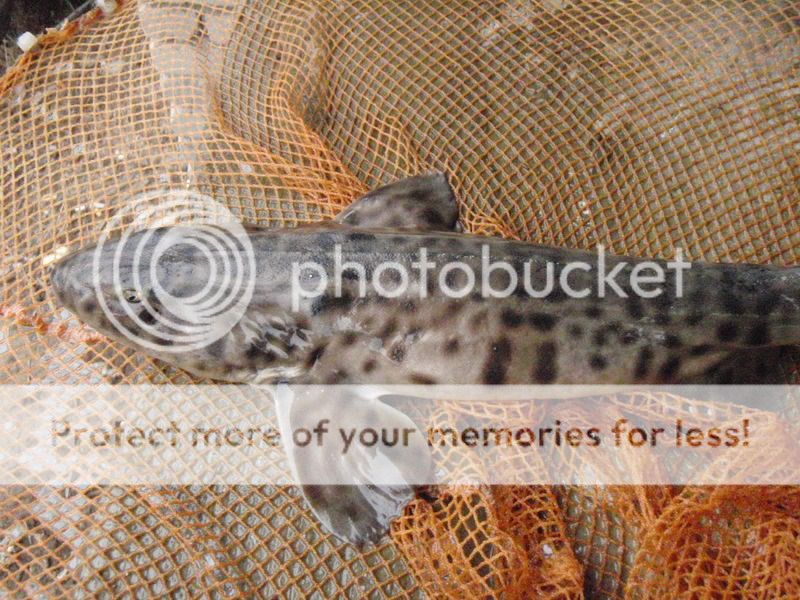
catshark1.jpg

Thanks for the replies. Does anyone have any C. hasselti pics for reference?

serafino, I was refering to this shark as the C. Indicum
 
Hmmm .. Have consider the possibility that they are both Chiloscyllium indicum

maybe the spotted one is a adult - while the banded one is a juvenile or small sub-adult.

After all such changes in stripes or coloration between juvenile & Adult forms are fairly common among Hemiscyllids.

 
krj-1168;1933849; said:
Hmmm .. Have consider the possibility that they are both Chiloscyllium indicum

maybe the spotted one is a adult - while the banded one is a juvenile or small sub-adult.

After all such changes in stripes or coloration between juvenile & Adult forms are fairly common among Hemiscyllids.

Thats a possibility. Wheres Brenden to tell us?
 
Im still not convinced. Here is the FAO colour description for the C. hasselti "young with prominent saddle marks consisting of broad dusky patches with conspicuous black edging and separated by light areas and blackish spots and black or dusky blotches on all fins." seems to fit the juvi description for the picture above. Collins Field Guid SHARKS of the World and the Prinston Field Guide show pictures of both juvi and adult C. hasseltii and C indicum and the two are clearly distinguishable.

The C hasselti is not described with numerous dark spots. C indicum is described with the black spots in addition to being slender.

I think that the C hasselti in the link Ken provided looks to be a younger pup then the pic Brenden provided and I think they are more likely to be the same species then the two pics Brenden provided.

If you do not have the field guides check out this link and zoom into the pics:

ftp://ftp.fao.org/docrep/fao/009/x9293e/X9293E11.pdf
 
Chris, from the pictures I posted and the pictures in the link Ken posted of the Indonesian Bamboo's I do not see it possible that such a prominent colour morph could take place between a small pup and a young juvenile. Just my two cents however.
 
That is quite possible however I think that the FAO pictures of C. hasselti resemble your pictures more so then the pictures of the other link from Ken. no?
 
The bad thing about drawings - is that it's very hard to identify a species based solely on a drawing - unless it's happens to be a very highly detailed & accurate drawing. And I wouldn't consider those to be highly detailed or very accurate.

Plus - Often times the living animal may look different than the drawing. This is why a good quality photo is key for proper species identification.
 
MonsterFishKeepers.com