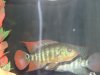
Festae- Quality VS Trash!!

  • We are currently upgrading MFK. thanks! -neo
Agreed! I took loads of Cichlasoma Festae babies into two seperate local aqurium stores in California, and was given the agreed upon price of $1.00 each in trade. Didnt have to pay for any supplies as long as i kept those babies coming in. These guys would grow some to three inches and sell e off for $19.99 a pop. No problem.
 
POINTLESS thread....I'll just enjoy my festae the way she looks even though she has no stripes. I'm more of a Midas guy anyways.

k9w3f4.jpg

I actually like the color on the Festae.
 
Jason, previously in this discussion you stated
this thread was made to bring awareness to what is going on with festae being sold with deformities.

My question to you is this ......... how does one know whether a breeding pair of festae will throw a large percentage of deformities, unless the breeder hangs on to the juvies long enough to catch any/all deformities? Not to put you on the spot, but at what size do you feel one can safely buy a juvie festae, without worrying about the fish later becoming a frankenfestae?
 
Jason, previously in this discussion you stated

My question to you is this ......... how does one know whether a breeding pair of festae will throw a large percentage of deformities, unless the breeder hangs on to the juvies long enough to catch any/all deformities? Not to put you on the spot, but at what size do you feel one can safely buy a juvie festae, without worrying about the fish later becoming a frankenfestae?

Well you are correct in that one will only know if a breeding pair throws a large percentage of deformities if they do grow out at least the first couple batches to look for trends or consistenties in deformed or non-deformed fry. Some pairs do throw large numbers of deformed fry and those pairs need to be recognized and fry culled when noticable.
I have made mistakes in the past in not recognizing deformities in the fry. But since then I have learned and pay closer attention. Usually deformities can be noticed at an inch. But if one is unsure of what to look for it does help to grow them out to larger sizes. Other deformities may occur as well like being crushed with gravel from parents, poor diets, water properties, battle wounds, or just poor care in general which can result in deformities after birth.

All I or anyone can really do is to use their best judgment call because nobody or no fish is perfect. I've even seen some deformities start becoming noticeable after the fish was 6-7" whereas at a smaller size I couldnt really tell. And to answer your question, at what size can one be safe buying a health festae. I say ensure to buy from reputable sources first. I personally would take my chances at an inch from some people. Others I prefer fish to be at least 3.5". But imo you should be in the clear by 3.5"
 
Thanks Jason. I was thinking 3-4" as well. I saw a young 5" male yesterday that was one of the 1.5" "wild caught" festae that are circulating at the moment. The color was amazing, but as I got closer I noticed that his face had the sloped deformed look to it.
Even if we speculate that this fish was actually an F1, it still seems odd to me to see semi-adult festae with these kinds of deformaties showing up. I've seen this same pushed in sloped face in other F1 as well, ones not from this vendor.

I'm beginning to think that the comments made on page 1 of this thread (by fishman & myself) may have more merit than what was given.
 
I'm gonna have to agree, I have seen more light since this thread has been started by further research. I know of a wild pair that in one persons hands producing fantastic fry. Then when the pair was in possession of someone else, the fry had high percentage of deformities. In that case I believe those deformities resulted from improper care and handling.

Maybe fishman was on to something about festae possibly being overall genetically weaker than other cichlids. I am curious to this and would like to find a way to research this theory. Maybe it has something to do with the fishes environment and water conditions in the wild which are playing a role on the festae???
 
I can only say that the sloped faces that I have seen, have nothing to do with improper care and handling, and everything to do with genetics.

As posted on page 1, I happen to agree with fishman.

Hi Jason, I would have to disagree with your comment above, as I have seen festae with this trait (downward sloping mouths) that were F1's. A percentage of their fry also carried this trait, which to me equates to a deformity, not a physcial trait that has evolved within a single generation from living in a pond.

In other words, fishman may very well be correct.


I've been in the cichlid game for a few odd years now, and have kept & raised numerous species, and never seen so many deformaties show up as they seem to do in festae, even F1 specimens. In some cases the parents both look fantastic, and yet some of their fry end up with a parrot like mouth/face, and/or humped back, etc. This just isn't something that I have seen on a regular basis in most other cichlid species.
 
MonsterFishKeepers.com