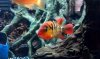
Festae- Quality VS Trash!!

  • We are currently upgrading MFK. thanks! -neo
POINTLESS thread....I'll just enjoy my festae the way she looks even though she has no stripes. I'm more of a Midas guy anyways.

k9w3f4.jpg
I actually like the color on the Festae.

The female that I got from youngpock is also stripeless. It's actually very cool to look at.
 
nice fish there
 
As one might gather from my name, I'm quite taken by festae. Actually they are responsible for getting me into the organized hobby and then the pet industry. I have been keeping them since I was in my teens, which is now 30 years. I was so bummed to hear that Eminence978 sold the female without bars. I was ready to make any offer on her. Any other enthusiasts that have a female without bars please e-mail me as I'm not on here that frequently at Lhprichard@aol.com Thanks!
 
Personally, I believe that the high rate of deformities are mostly attributable to poor and novice breeding practices. With low supply and high demand hobbyist/farms/wholesalers etc. were grabbing what they could find and breeding without any thought. Think about it, the advice most often given towards breeding is to buy a group, grow them out and let them pair up naturally. Well problem #1 is 95% of those that did so bought from the same parents. Thus starting out with siblings, inbreeding, and selling groups to others who do the same again and again.
When so much hype, demand, and greed come together any species will suffer. Adding F0 to an ad has become the calling card for many looking to drive interest and sell quickly. 95% of the time the odds are against it being truely caught from the wild whether the seller knows it or not.
To me there's no way the high number of deformities can blamed on true F0 Festae. I have owned, bred, and raised too many for far too long to believe such nonsense. If something was going on in their native habitat then we'd also be seeing issues in Green Terrors and the others which inhabit the same waterways.
Furthermore just because a Festae came from Ecuador or Peru doesn't make it wild caught. There area couple of farms over there too. Not nearly as many as in Florida.

IME there are 3 fan types of Festae:
Purists, Fair weather fans, and opportunists:shark:.

Too many hobbyist post photos of some of the most substandard specimens ever seen and are patted on the back for a good find. Now I am not for publicly vilifying anyone, but to only applaud color and not the standards set by nature is foolish. We are seeing more and more females with little to no barring because that is what is most often being bred. Sadly the majority of hobbyist are just jumping on the bandwagon and do not have any long term exposure to the breed, thus thinking that what is mostly seen today is the standard. Nature begs to differ. And so do I.
To lend a little weight to my argument I have attached 4 pics of authenticated F0 juvies from Ecuador acquired earlier this year. These are roughly 4". 1st pic is a male, next 3 are females-Verifed. Even though they are in a stressed mood their bars are remarkably distinguishable. The muzzles are strong and not snippy nor are there any arced spines or muzzles. When true F0 festae were more readily available in years gone by, they looked no different than these upon arrival whether they were from the lower Esmeraldes or Guyacil. Collection points within Ecuador offer roughly 5% or less variation. Pretty much all of the F0's I have ever owned looked remarkably similar to these at this size no matter their locale, including my only group from Rio Tumbes. But once they begin to hit the larger sizes like 8" and up, I began to see slight variations in structure and color tones within locales. In breeding across locale lines, I have not seen the issues so prevalent today.
View attachment 804463View attachment 804464View attachment 804465View attachment 804466
 
Good input bomilly, and not that I disagree with anything that you stated, but it seems to me that festae appear to be far more sensitive to inbreeding, than most other cichlids in the hobby. There are species of cichlids in the hobby where there has been (and still is) FAR more hype, and FAR more demand than festae, yet we do not see such obvious deformaties in most of these species, even when inbred to the nth degree. Think about all of the mass produced species of cichlids that are found in most big box LFS, most of these fish are hundreds, some probably thousands, of generations removed from the wild. Yet one can buy a related group of juvies, breed them, and not end up with nearly the amount of problems that one seems to find in festae.

A classic example of that, is Pierre Brichard's breeding of the now common Labidochromis caeruleus "yellow lab" , which was bred for several years, producing many thousands of fry, and all of them were related to one single pair of wild caught fish. For close to 20 years every last "yellow lab" in the hobby were to some degree related to each other.


Even if we discount sellers that label 1" fry as "wild caught", and they are in fact F1, why do a fair percentage of even those juvies result in deformed fish? I just saw one of these so called WC juvies, that is now a 4-5" male, which has a very pushed in sloped face. Out of only a few festae purchased by this hobbyist, one of them is clearly worthy of nothing more than a good culling. It will be interesting to see how the rest of these so called 1" wild caught festae turn out over the next year.

Another young pair that I saw sold in the recent past as F1 (from a reputable vendor?) were both deformed, with the same sloped in face.

But you are right, most people don't want to point out the obvious, least they offend the owner. Ironically enough, you & I were the only ones to point out/question these flaws when the pics were posted in the following past discussion.
http://www.monsterfishkeepers.com/forums/showthread.php?386734-Festae-look-like-they-might-breed

I have since visited that breeders home & explained to them in person why that type of festae is NOT something one wants to breed, and circulate the offspring in the hobby. Of course some of the juvies they had from this pair appeared fine, others shared the same deformatity as their parents. IMO, those two adult fish should have been culled from the get go, not sold as a "breeding pair".

 
Sorry guys. I previewed the post before sending it and everything appeared in order. Will retry later tonight. Thanks.

PS-
I agree with RD on Festae sensitivity to inbreeding especially when done more than once.
 
Any fish whether wild caught or many generation removed from the wild is going to produce a certain percentage in each spawn of fry that have deformities in one form or another. I have been fishing all my life and over the years have caught a large number of fish that by aquarium standards has undesired deformities yet still seam to be healthy fish that are making a living for themselves in the wild. Lets say a species of fish in the wild has an average spawn of say a 1000 fry probably less than 1% of those fry reach adulthood in the best of conditions. And sure fish that have deformities are even less likely to be in that lucky 1% because of natural selection yet many do make it. I do not think any one can discount a reputable vendor that may have gotten 100 1" fry that indeed did come from the wild just because some of those fish have deformities because probably none of those fish with deformities would of made it if they were left in the wild. I do think the vendor or any one who is spawning fish has the responsebility to cull any fry that they know have deformities. A festea with a slope face may be undesireable by aquarium standards but may be a natural adaptation that may be allowing them to succeed in the wild.
 
MonsterFishKeepers.com