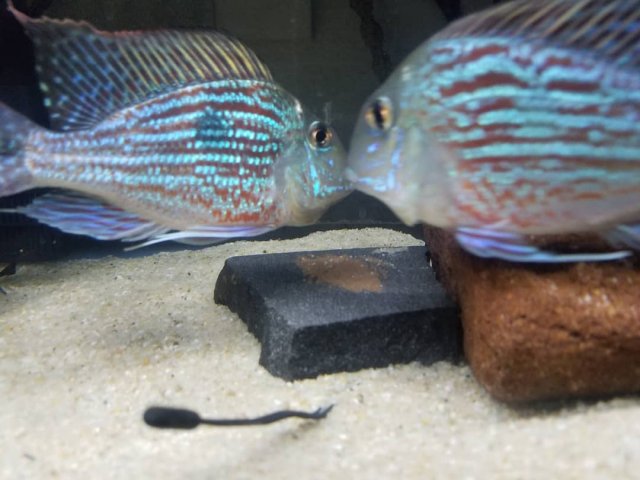
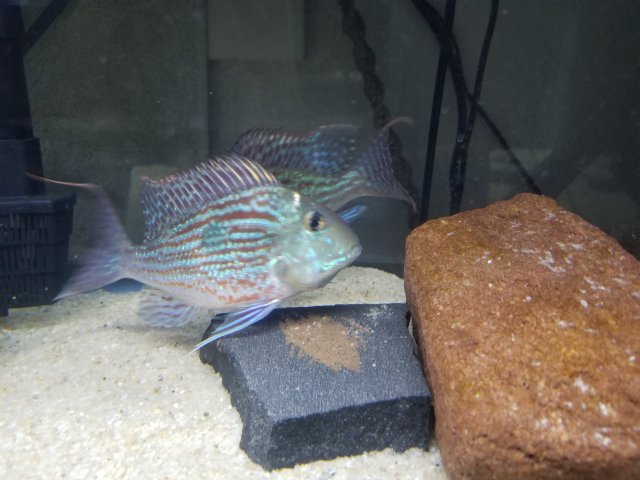
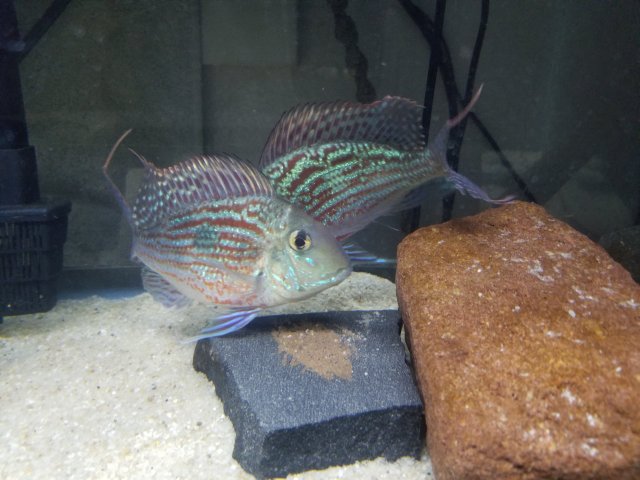
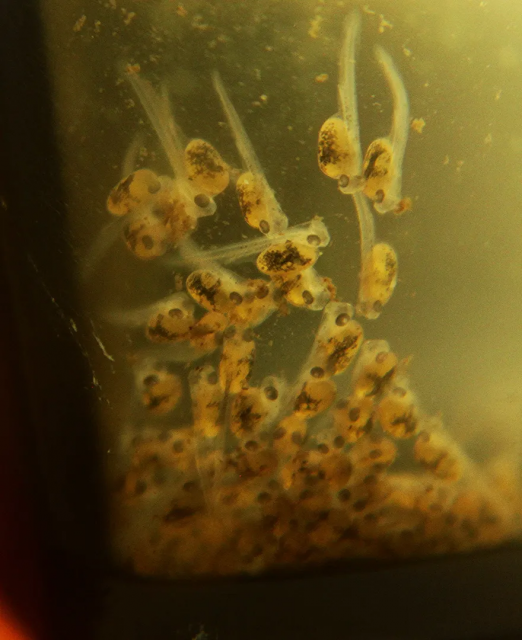
Many Geophagines (including the altifrons clade) do no mouth brood the eggs, they are postponocavous (meaning they pick up the young after eggs hatch), to mouth brood after the young become wrigglers.
I have (in community settings) removed the entire stone the eggs are placed on, and artificially raised cichlids in a large enough breeder box that way.
View attachment 1448918
View attachment 1448919
If not, remove or separate all other fish from the tank, and allow only the pair to comfortably share egg and fry duties, if that is is possible.
This is what I've done in the past with members of the altifrons group that have spawned.
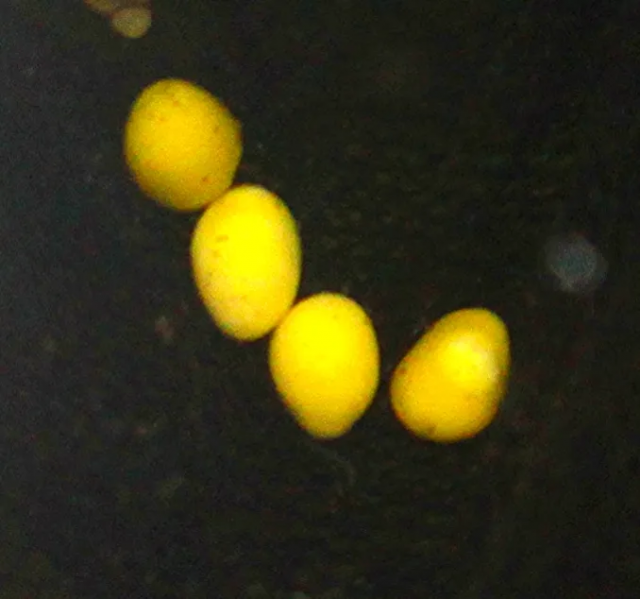
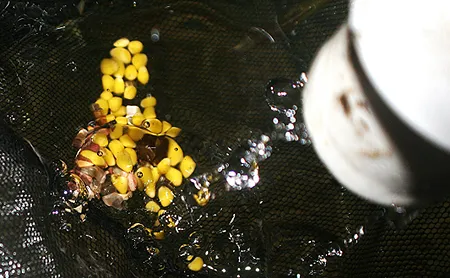
The eggs (which usually hatch in only 24 to 48 hours) are (I believe) attached to the stone with adhesive strands (unlike African cichlids) , and I've always figured scraping them off with a razor, severing the strands blade would do more harm than good.
African cichid eggs below, are quite different than the adhesive eggs a(bove)
View attachment 1448923
I know people who scrape Corydorus eggs off surfaces with razor blades like the tank glass and are successful.
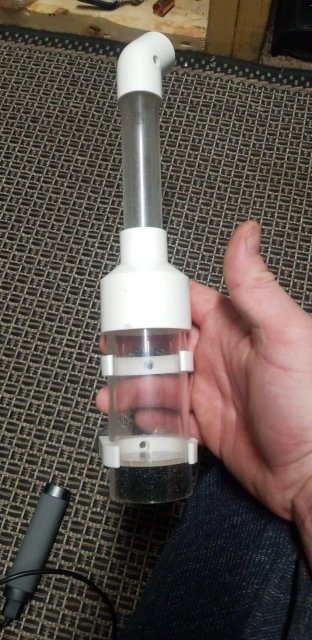
I've used egg tumblers with old world cichlids, but never done it with new world cichlid eggs.
View attachment 1448924
If isolating or removing other inhabitants of the tank isn't possible.....
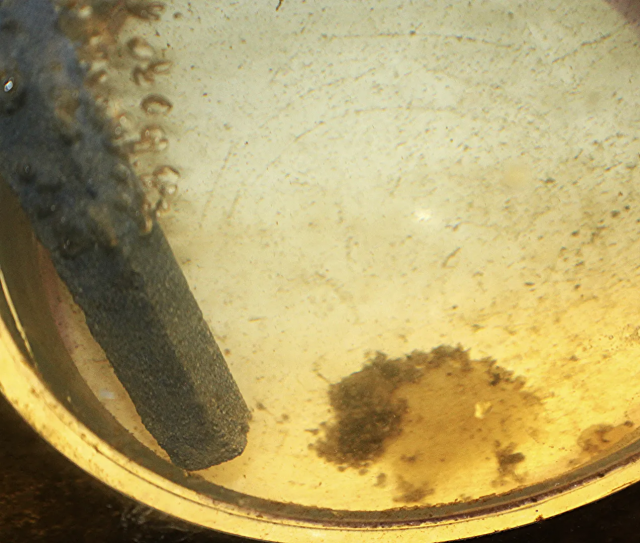
If you have a 10 or 20 gallon tank laying around that could be used to accomidate the entire rock, or spawning surface and could place an airstone near it to oxygenate the eggs, it might work.
View attachment 1448921
View attachment 1448922
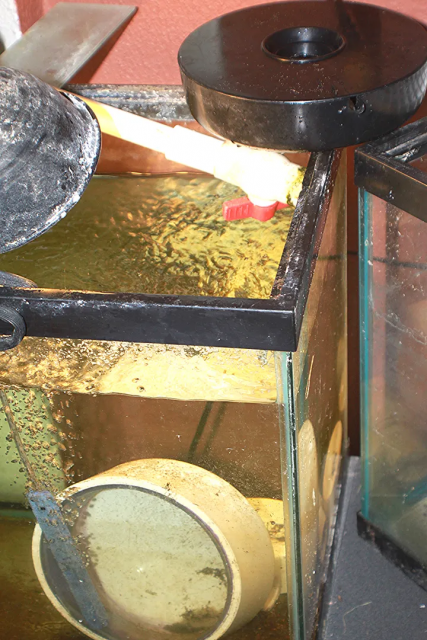
I was lucky when the cichlid that laid the eggs above, put them inside a large PVC cap, so I could easily remove it without exposing the eggs to the air to the already prepared fry tank above.
I would often set up small tanks in the same sump line, so water parameters were the same as the tanks they were spawned in as grout tanks.
View attachment 1448920