Help ID Giraffe catfish

  • We are currently upgrading MFK. thanks! -neo
I too want to say biscutatus. Yellowcat Yellowcat should confirm or refute.

If biscutatus, it is unlikely to break 1 foot.

The genus of Auchenoglanis is in a taxonomic limbo, so I'd not rely even on the reliable Planet Catfish Cat-eLog, until scientists agree (at least teamporarily), or more taxonomic work is done, or someone at PlanetCatfish reworks the current entries with the latest info in mind.


As it stands, I believe A. biscutatus are the slowest and the smallest growing in the genus, maybe similar to or aka A. senegali (A. tanganicanus too?).
How big do you believe them to grow

Is it for sure a species of auchenoglanis? This is all confusing me cause your saying it’s a small species but everywhere else says they can grow up to 2-3 feet
 
Last edited by a moderator:
  • Like
Reactions: thebiggerthebetter
The fish is a. biscutatus. The coloration is rather pale compared to my 3 specimens which are much more brown rather than gray as is yours which as others have suggested as a sign of stress. In many cases specimens from different regions may express different colors but environmental conditions within a different tank set up such as amount of light, substrate color and available shade etc., are more likely to contribute to overall pigmentation. Also stress can become a factor related to the fish's sense of security, available hiding places, possible stressful interaction with aggressive tank mates along with questionable water parameters.
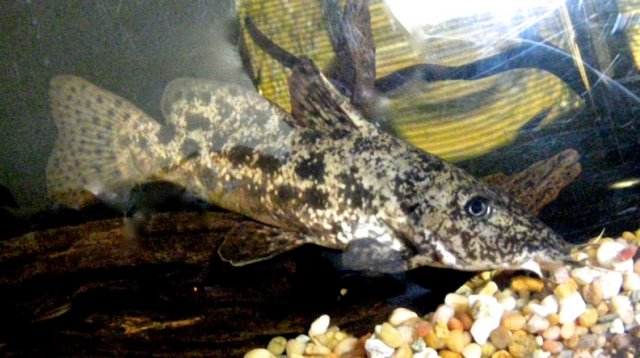
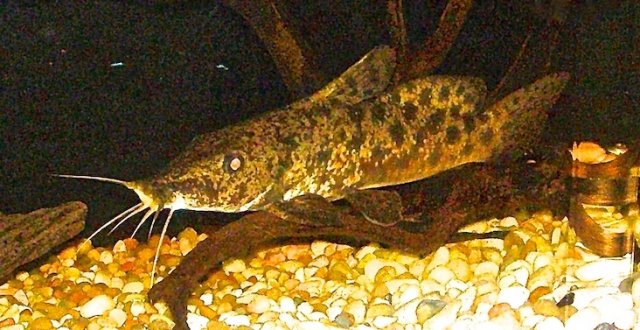
I should mention that what was formerly known as a. senegalis is a synonym of a. biscutatus according to the latest revision of the genus. As far as potential size and growth they are the smallest and slowest growing within Auchenoglanididae in my experience. My three a. biscutatus I received almost a year and a half ago remain small. Arriving at about 2", 2 1/2" and 4" have grown quite slowly and their growth has been proportionate to their original size. The smallest of the group in now at 3" and the largest is now around 9" TL. Here's 2 photos of my largest one at different times that reflect minor color differences:
P1013009.JPG
P1013015 2.JPG
Hopefully having a fish that remains small isn't a disappointment, I have kept many of the large growing fish of the a. occidentalis group and had to sell them once they past 18" or so and waited many years to finally find a. biscutatus available, they are quite rare in the hobby. The large ones such as formerly known as a. occidentalis, a. wittei and "bouche" variants are more easily found if that's whats desired. The nice thing about the large varieties is that once they overcome their initial shyness they become much more tame and interactive with their keepers. My question is whether or not a. biscutatus will also reflect similar behavioral traits as their larger cousins. My 3 reside in a 75G tank with only a synodontis pardalis for a tank mate , in a room infrequently visited on any given day. With 10 tanks to manage there's little time to focus on them, plus they are quite reclusive and rarely seen out in the open from their driftwood hiding places so they may prove to not be very interactive. Hopefully others keeping these fish may report some interactive behavior, would be nice to know...

 
The fish is a. biscutatus. The coloration is rather pale compared to my 3 specimens which are much more brown rather than gray as is yours which as others have suggested as a sign of stress. In many cases specimens from different regions may express different colors but environmental conditions within a different tank set up such as amount of light, substrate color and available shade etc., are more likely to contribute to overall pigmentation. Also stress can become a factor related to the fish's sense of security, available hiding places, possible stressful interaction with aggressive tank mates along with questionable water parameters.
I should mention that what was formerly known as a. senegalis is a synonym of a. biscutatus according to the latest revision of the genus. As far as potential size and growth they are the smallest and slowest growing within Auchenoglanididae in my experience. My three a. biscutatus I received almost a year and a half ago remain small. Arriving at about 2", 2 1/2" and 4" have grown quite slowly and their growth has been proportionate to their original size. The smallest of the group in now at 3" and the largest is now around 9" TL. Here's 2 photos of my largest one at different times that reflect minor color differences:
View attachment 1458319
View attachment 1458321
Hopefully having a fish that remains small isn't a disappointment, I have kept many of the large growing fish of the a. occidentalis group and had to sell them once they past 18" or so and waited many years to finally find a. biscutatus available, they are quite rare in the hobby. The large ones such as formerly known as a. occidentalis, a. wittei and "bouche" variants are more easily found if that's whats desired. The nice thing about the large varieties is that once they overcome their initial shyness they become much more tame and interactive with their keepers. My question is whether or not a. biscutatus will also reflect similar behavioral traits as their larger cousins. My 3 reside in a 75G tank with only a synodontis pardalis for a tank mate , in a room infrequently visited on any given day. With 10 tanks to manage there's little time to focus on them, plus they are quite reclusive and rarely seen out in the open from their driftwood hiding places so they may prove to not be very interactive. Hopefully others keeping these fish may report some interactive behavior, would be nice to know...

Ok I read this several times thank you I understand most of it but it’s just confusing with what I see everywhere else online cause you say the opposite of everywhere else and yes the fish was stressed it was taken early in the morning when they aren’t use to the light being on cause I was up earlier than usual but my only question is how big the catfish can get and the rarity of the species
 
  • Like
Reactions: thebiggerthebetter
I think we can consider the ID established - Auchenoglanis biscutatus (synonimous with A. senegali).

As I tried to tell you, the genus is in a limbo and in a bad, conflicting, unclear taxonomic standing (which is not unusual), hence the conflicting info on the biscutatus / senegali. One must know who to trust when reading threads, datasheets, etc. and know the nuances, as I, for example, said that PlanetCatfish entries are probably outdated.

Yellowcat is an expert on this genus. On Planet Catfish, Birger is an expert. There could be others, my memory is not instantaneous.

The volume of info is not always the decisive factor for what's true. In this case, this is for sure. Biscutatus has been often confused with the large growing wittei, I suppose, or maybe even occidentalis.

Bona fide, your fish will likely grow very slowly (like zero to 1"-2" a year) and not exceed 12" over lifetime. Males will be even significantly smaller. But we are learning as we go as well.

If you keep this fish several months, you will see yourself. With adequate care, the large-growing Auchenglanis species grow roughly 1' in the first year.
 
Briefly, it's likely to grow to a maximum of no more than a foot long, few keep this species so I haven't seen reports of specimens larger than that. Rarity, as in distribution within the African continent, this species is found from the Nile river in Egypt to several west African countries. Scientific papers suggest they are rarer in nature than the larger varieties of 'Giraffe' catfish that are found in the same waters. Rarity in the hobby is another thing that depends on available exports from Africa and the desirability to import them based on popularity in the hobby and profitability from sales. In any case, it seems this species is rarely imported here in the U.S. or in Europe...
 
  • Like
Reactions: thebiggerthebetter
I think we can consider the ID established - Auchenoglanis biscutatus (synonimous with A. senegali).

As I tried to tell you, the genus is in a limbo and in a bad, conflicting, unclear taxonomic standing (which is not unusual), hence the conflicting info on the biscutatus / senegali. One must know who to trust when reading threads, datasheets, etc. and know the nuances, as I, for example, said that PlanetCatfish entries are probably outdated.

Yellowcat is an expert on this genus. On Planet Catfish, Birger is an expert. There could be others, my memory is not instantaneous.

The volume of info is not always the decisive factor for what's true. In this case, this is for sure. Biscutatus has been often confused with the large growing wittei, I suppose, or maybe even occidentalis.

Bona fide, your fish will likely grow very slowly (like zero to 1"-2" a year) and not exceed 12" over lifetime. Males will be even significantly smaller. But we are learning as we go as well.

If you keep this fish several months, you will see yourself. With adequate care, the large-growing Auchenglanis species grow roughly 1' in the first year.
I’m sorry thank you so much for the help everyone here on mfk is amazing this is my first day on the site and I love it but what I’m understanding is my catfish will either grow to be over 1’ or it can stay small and slow extremely slow this is one confusing catfish

Briefly, it's likely to grow to a maximum of no more than a foot long, few keep this species so I haven't seen reports of specimens larger than that. Rarity, as in distribution within the African continent, this species is found from the Nile river in Egypt to several west African countries. Scientific papers suggest they are rarer in nature than the larger varieties of 'Giraffe' catfish that are found in the same waters. Rarity in the hobby is another thing that depends on available exports from Africa and the desirability to import them based on popularity in the hobby and profitability from sales. In any case, it seems this species is rarely imported here in the U.S. or in Europe...
Okay this cleared up so much thank you so much so from my understanding about this catfish which is not a lot at all is that it won’t get as big as 2 feet like I was hoping but it’ll still get reasonable size

And another thing is rarity I’m in the U.S and from what you say is that this catfish isn’t common to find in the states which makes me happy cause one thing I go for with my fish is rarity
 
Last edited by a moderator:
MonsterFishKeepers.com