Help with efficient lighting...

  • We are currently upgrading MFK. thanks! -neo
I'm just going by what you said. You said you got that pea soup because you ran 4 T5HO nothing else. If course filtering will not filter out green water. You must not understand the effects of good biological filtering has a breaking down the build up ammonia from fish waste and other decaying uneaten food that will explode algae growth couple with lights left on to long whether its 4 bulbs or 2 bulbs in a new tank setup. It also looks like you didn't have very many plants to start with. That too can lead to a build up ammonia. But I'm not saying its only filteration. I say few possible reason for pea soup that it was not just running four T5HO. And over fertilizing will grow algae
 
MyGiants;4286869;4286869 said:
I'm just going by what you said. You said you got that pea soup because you ran 4 T5HO nothing else. If course filtering will not filter out green water. You must not understand the effects of good biological filtering has a breaking down the build up ammonia from fish waste and other decaying uneaten food that will explode algae growth couple with lights left on to long whether its 4 bulbs or 2 bulbs in a new tank setup. It also looks like you didn't have very many plants to start with. That too can lead to a build up ammonia. But I'm not saying its only filteration. I say few possible reason for pea soup that it was not just running four T5HO. And over fertilizing will grow algae
that's fine, i just dont agree with your points at all. a school of a dozen or so rasboras is NOT going to create a big ammonia load. please dont explain biological filtration to me. i understand it better than most people. this tank was started using established ceramic media from another tank.

if your theories are correct, how do explain the green water/algae never returning after I removed the UV light? the only thing i changed was cutting down on the lighting. it was until months down the road that i added more plants.
 
and on the subject of too much ferts. i'll let a more popular expert handle that one. if you disagree with Tom, then there's really something wrong with you. all i need to do is look at his tanks and his plants, then ill believe every single word he says.

You can and should modify EI, that's the main point, you start at an upper reference point, then reduce(or not), there is no assumed or demonstrated risk.

PPS, PMDD, non CO2, whatever commercial brand, sediment sources, they all add the same things.

So you are not going to get away from that.

Planted tanks are about 50% light 40% CO2 (if used) and only 10% nutrient dosing.

The dosing method is rarely the problem unless you simply are not addign enough or adding everything you should be, in other words, excess ferts poise no risk.

Most of the real risk in the assumptions aquarist place on nutrients being all important, when in fact, light and CO2 are and cause most of the mismanagement, and certainly 99% of all fish death/mortality is caused not from nutrients, rather, CO2.

The best solution might be to go to the sediment rich methods+ water column, in case you space out and forget to dose, there is a redundant back up (I do this on most of my own tanks) + low light (folks add and waste too much light and then complain they have issues with nutrients and CO2).

If you want to test and fiddle with 11 different nutrients and dose some other ratio to the water column, I doubt you will gain anything. You might run into some correlation and ascribe the results to some thing entirely unrelated, this happens often.

The best way to rule out ferts, is from a non limiting reference, that's all EI is, from there, you can reduce it down slowly, watch the plants to reduce water changes etc. I have tanks that go 2-3 weeks without any water changes. EI was never intended to be treated as rigid as many assume.

Nor was PMDD, and it's cousin, PMDD+PO4.......from which EI evolved.
Over/under dosing a little is fine and poses no risk. Those that believe it does clearly have not mastered CO2/light and have dependency in their system.

If the CO2 is poor, then no dosing method will prevent issues unless the nutrient limitation is greater than the CO2 limitation. This might get rid of the algae, but it certainly does not grow the plants efficiency or get the most out of the lighting/CO2 etc.

All dosing routines add the same stuff, whatever gets enough ferts in there for a given rate of growth is really all that matters. Still, EI is just a simple method to rule out nutrient issues. It's also about as simple as dosing can be made using the cheap DIY salts.

But without test kits, we can simply reduce and dose less and watch plants, this is not a method really, more just a tweak, wether you start low and increase, or start at a non limiting level and reduce, they should both end at the same point. Water changes offer the hobbyist a simple way to reset things. With decent observational skills, you should be able to go long times without water changes, but I still do them to stay on top of things. Some tanks do fine, others seem to need the water changes more for the goal.

You can avoid water changes/test kits for months, and dosing for the most part by going non CO2, still, fish food is still "dosing". Or dose lightly once a week. Plants grow all for the same reasons in every "method". Plants will still grow(non CO2 or not), but the rates they grow and the light use efficiency changes greatly. This is the key difference.

Since all growth starts with light, management is best done by adjusting and limiting light, then CO2 and nutrients/sediment nutrients/algae issues are far easier.

Step back and look at the bigger picture, not focus strongly on dosing or its micromanagement. I've never seen that be particularly productive for anyone trying to get to their goal.

Regards,
Tom Barr

 
UV lights generally placed inside a canister filter or inline somewhere. UV kills pathogens and bacterial. It doesn't just kill bad bacterial it can kill good bacteria too. running UV lights inside a canister filter seems your defeating the purpose of the biological filter cause it kills all your bacteria your trying to establish. If you kill your good bacterial that keeps the tank biological filter working, well you know happens. Both my canisters on my 25 and 40 have built in UV lights in them. I have never run them not once. I bought those canisters cause of there large capacity. They just happen to come with UV lights.

I don't over feed my fish I have 18 Siamese algae eaters, 16 Rasboras, 12 Glowlites, 4 Gobies, 6 Loaches, 1 big Swordtail, 1 Zebra Danio in that 25 gallon tank. 58 fish!
 
jcardona1;4286880; said:
it was until months down the road that i added more plants.
This is what I also don't recommend. Its better to fully stock your tank with plants from the get go. It helps keep ammonia from building up. Gets your tank balance established faster. If you got good lighting with co2 your plants will grow and you can then begin to trim out your plants.
 
MyGiants;4286912;4286912 said:
UV lights generally placed inside a canister filter or inline somewhere. UV kills pathogens and bacterial. It doesn't just kill bad bacterial it can kill good bacteria too. running UV lights inside a canister filter seems your defeating the purpose of the biological filter cause it kills all your bacteria your trying to establish. If you kill your good bacterial that keeps the tank biological filter working, well you know happens. Both my canisters on my 25 and 40 have built in UV lights in them. I have never run them not once. I bought those canisters cause of there large capacity. They just happen to come with UV lights.

I don't over feed my fish I have 18 Siamese algae eaters, 16 Rasboras, 12 Glowlites, 4 Gobies, 6 Loaches, 1 big Swordtail, 1 Zebra Danio in that 25 gallon tank. 58 fish!
alrighty then. its obvious you dont understand biological filtration. if you did, you would know that beneficial bacteria does not float around in your water column. it's anchored to your filter media, in your substate, on surfaces, but it doesnt just float around. jesus man where do you get your information from? :screwy:

the UV light was only used for a week or so, to rid my tank of green water. after that it was never used. UV lights are widely used, in aquarium and massive facilities. they must not know what theyre doing right? :screwy: how are their fish still alive? because according to you, theyre killing all their good bacteria by using UV lights. why arent thousands of dollars in high-end koi not dying right before our eyes? because you have no clue what youre saying, thats why :)
 
MyGiants;4286933;4286933 said:
This is what I also don't recommend. Its better to fully stock your tank with plants from the get go. It helps keep ammonia from building up. Gets your tank balance established faster. If you got good lighting with co2 your plants will grow and you can then begin to trim out your plants.
sweet baby jesus. adding plants to a tank causes ammonia problems??? :shocked: :duh: :confused: :nilly: that was the last straw for me. your posts are so full of bad information, i can no longer take you seriously. i'm sorry. this is just ridiculous. i saw the videos of your tanks, they are beautiful. i honestly dont know how you did it because there are so much mis-information in what you post
 
Not sure Tom's explanation which is dead on from a biological aspect , explains why your algae went down from just a reduction in light. On possible problem is phosphates which are common in commercial fish food. Without testing you can't confirm that theory but it worked for your setup, so go with it. Tom recommends tweak and observe. Algae being a much simpler organism can thrive in a much wider set of conditions be it, light, CO2, nutrients, heat etc.

UV light in the canister will not affect your Bio filter unless the bio media is exposed to the light, ie a cracked compartment wall. UV sterilizer will only kill bacteria and algae in the water column.
 
vladfloroff;4286955;4286955 said:
Not sure Tom's explanation which is dead on from a biological aspect , explains why your algae went down from just a reduction in light. On possible problem is phosphates which are common in commercial fish food. Without testing you can't confirm that theory but it worked for your setup, so go with it. Tom recommends tweak and observe. Algae being a much simpler organism can thrive in a much wider set of conditions be it, light, CO2, nutrients, heat etc.

UV light in the canister will not affect your Bio filter unless the bio media is exposed to the light, ie a cracked compartment wall. UV sterilizer will only kill bacteria and algae in the water column.
true. he also address the issue of high phosphates in this post here. somebody thought high phosphates was causing their algae problems. cant really argue with the man on this subject ;)

Let's get one thing straight, low KH=> this might offer you some benefit.
Low PO4 will offer you no benefit.

I'm adding 15ppm + per week to my tank and I have rich PO4 in the sediment as well.

cards2.jpg


Where O where is my problem PO4's? Why would I add this much?
Why is it that I have sold 300-400$ per month of plants out of this one tank?
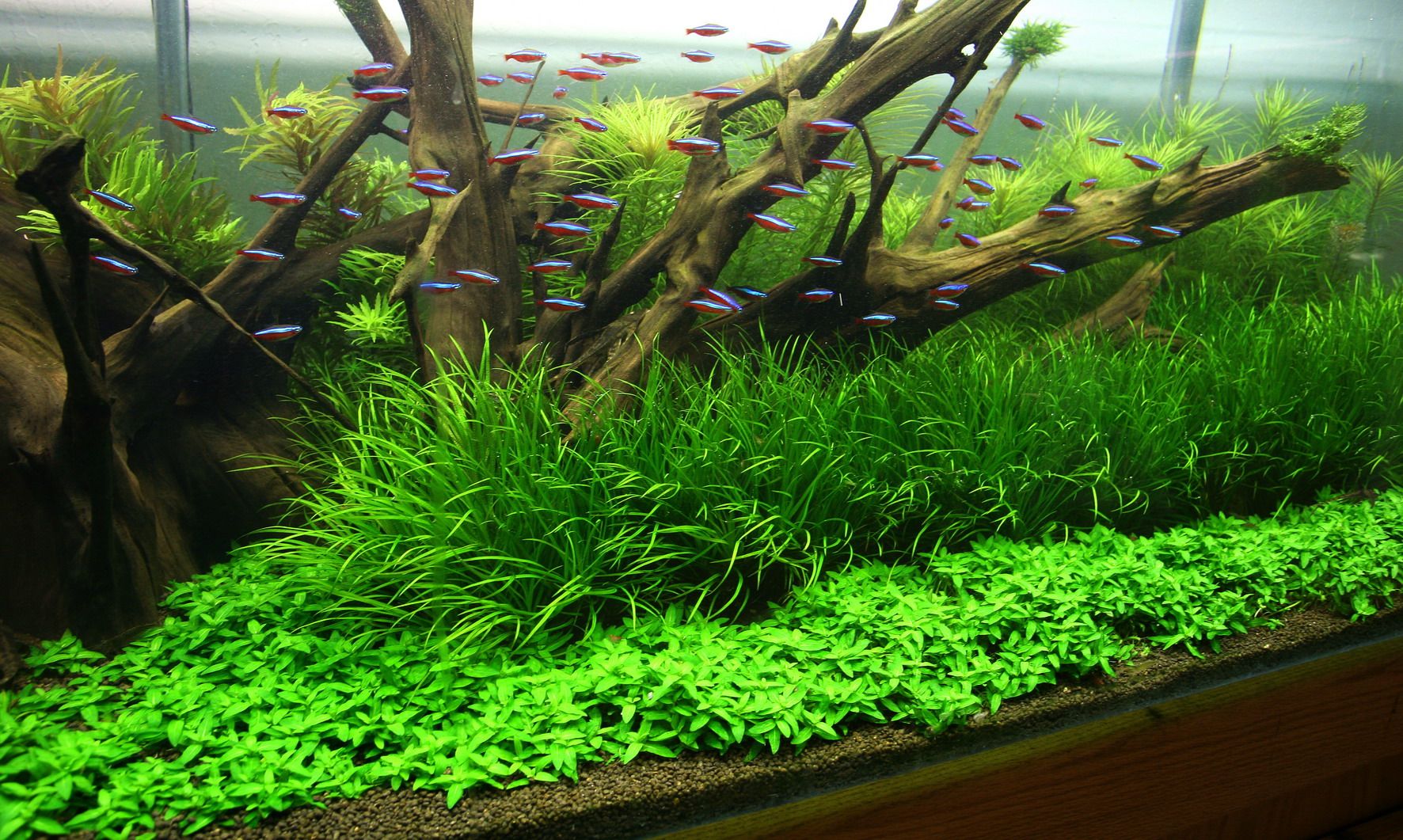
Why are my Cardinals fat, firsky and bite me when I put my hand in the tank?
Why is it that I have a lot of CRS and cull off 100 per month for sale?

I've been adding high PO4 since 1993, did not realize till about 1996, added even more around 1999, and this routine about 4 years ago.

Now where is the issue and risk again with PO4?
There might be other issues with the tap, but PO4 ain't one of them.


Regards,
Tom Barr
 
and i just wanna point out too, that planted tanks are a unique hobby. there is no concrete set of rules or guidelines on what will work and what wont.

we use rules of thumb and experience of others to give us a baseline for what we need. there is no 'one size fits all' when it comes to planted tank. each setup is different and will require different things. what works for one may not always work for the other. all this information is just meant to get you going. as vladfloroff mentioned, its up to us to tweak, adjust, and fine tune your tank to achieve the elusive and mysterious "Balance" that all the green thumbs speak of ;)
 
MonsterFishKeepers.com