Jack Dempseys: Love them, hate them, why?

  • We are currently upgrading MFK. thanks! -neo
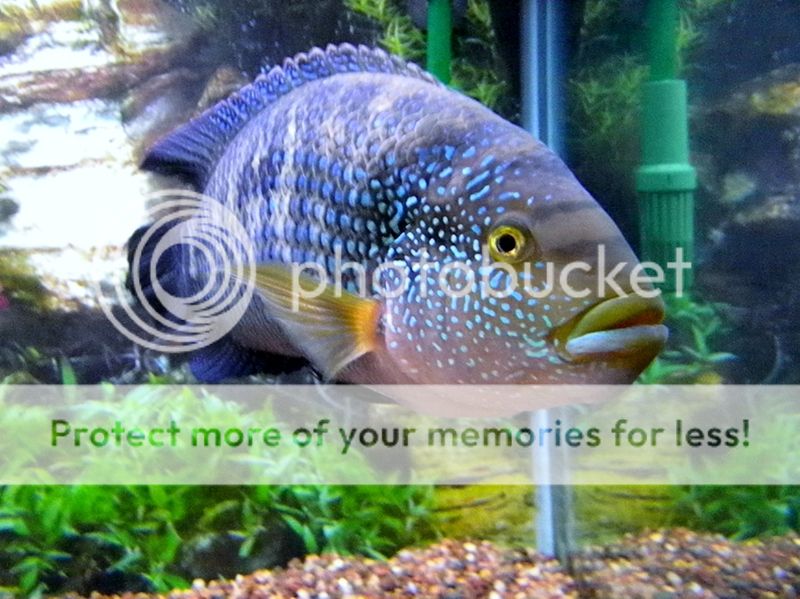
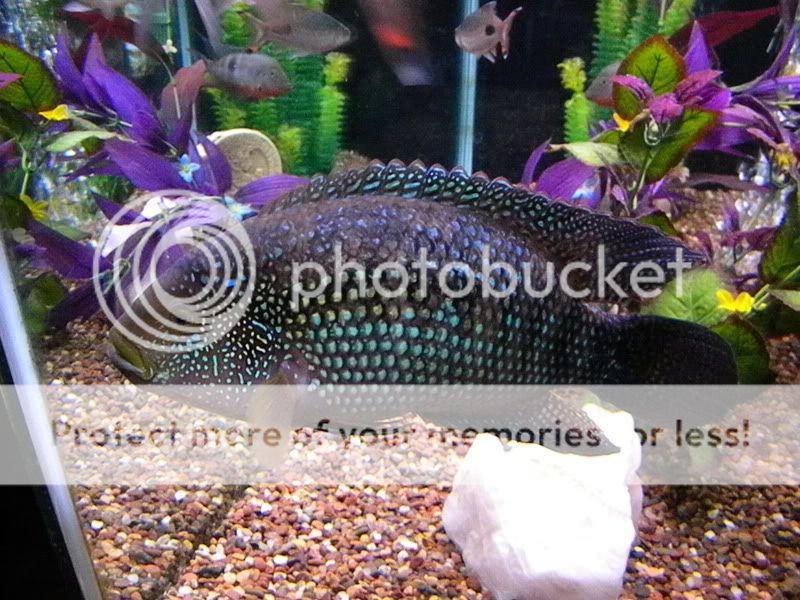
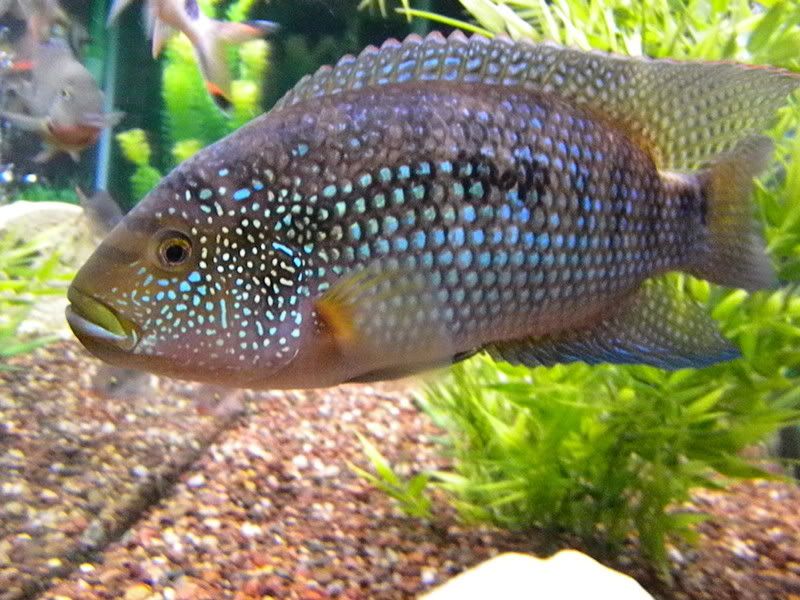
If you trace the line of scales that runs along the lateral line, you'll almost always see it dive, snapped like a pencil, right about where the anal fin starts. Go back even on this very thread and every large dempsey you see is cracked in half. It's probably just the inbreeding - this has been a staple species in our hobby for almost 100 years! That's a lot of sister-brother matings going on!
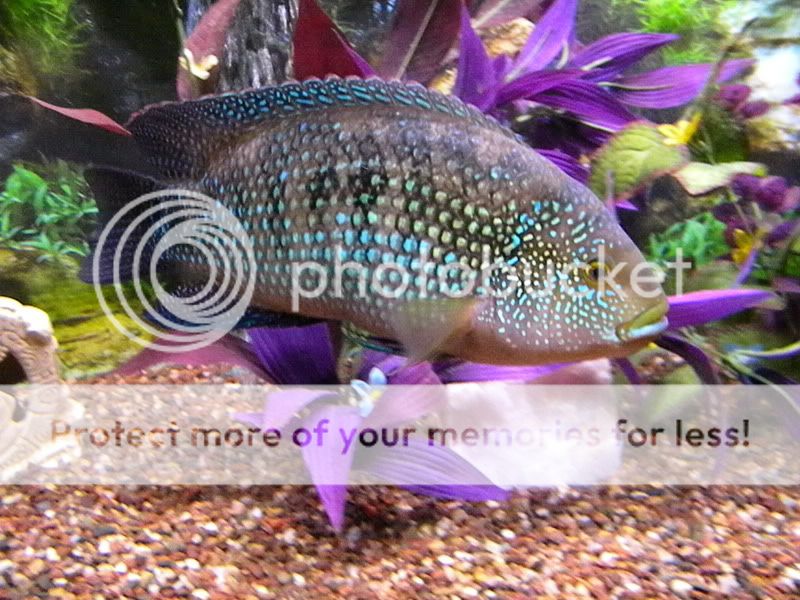
 
Seeing a big wild JD would go a long way toward clarifying the back-thingy. And the chances of this are pretty slim. (Where the heck are the wild Dempseys!?)

I remain puzzled. This fish is over 10". Where's the deformed "back crack"?

DSCN5074.jpg


DSCN5149.jpg


DSCN5065.jpg


T-Day011.jpg
 
Seeing a big wild JD would go a long way toward clarifying the back-thingy. And the chances of this are pretty slim. (Where the heck are the wild Dempseys!?)

I remain puzzled. This fish is over 10". Where's the deformed "back crack"?

DSCN5074.jpg


DSCN5149.jpg


DSCN5065.jpg


T-Day011.jpg

In these pictures you can see the tale is pointing down. His body is shaped like an arch. They don't look like that when they're young. It doesn't look natural in my opinion, but to each their own. One man's garbage is another man's treasure.

Sent from my SCH-R720 using MonsterAquariaNetwork App
 
Good example! See how it looks like two fish were cut diagonally and pasted together? On the third photo, reach out your hand and cover his head, then cover his tail. It's two fish, facing two different directions!

In the first photo, directly above the flower, the back cracks like a twig. Those scales that run horizontally across the fish should generally be staunchly straight, not like a rainbow and definitely not like the upside down V you see in these photos. While some species do have curved bodies normally (angels, discus, centrarchids, severum and many others) this species should have a straight body.

First wild dempsey I see on the web (unverified) looks like this:

everything-jack-dempsey-fish.jpg


Nice, straight lines and body.
 
Seeing a big wild JD would go a long way toward clarifying the back-thingy. And the chances of this are pretty slim. (Where the heck are the wild Dempseys!?)

I remain puzzled. This fish is over 10". Where's the deformed "back crack"?

DSCN5074.jpg


DSCN5149.jpg


DSCN5065.jpg


T-Day011.jpg

Where isn't it? If you fail to see it then maybe you've been looking too long?
 
They don't look like that when they're young. It doesn't look natural in my opinion ...
Most fish look different as adults. Whether something is "natural" is a function of how it appears in nature. Our only reference picture of a wild JD is dubious.

While some species do have curved bodies normally (angels, discus, centrarchids, severum and many others) this species should have a straight body.
And we know this how? I'm having more than a little difficulty finding pics of big wild JDs. They were introduced to the hobby in the early 1900s. Arguably it's no longer the same fish.
If you fail to see it then maybe you've been looking too long?
Or maybe I remain unconvinced that there's some eternal Breed Standard. I'd be grateful to see a link to it. Is it like the AKC, or is it in the Book of Genesis? "On the eighth day God said let there be Jack Dempseys and let them look like torpedoes and all deviations shall be abominations unto me.":grinno: JDs have been in the hobby over a century. They are the way they are.

 
Ah, but the fact that this deformity does not occur in all individuals ought to tell you something. Also, that this defect occurs frequently in other inbred lineages of cichlids attests to the trait being a sign of genetic weakness.

JDs have been in the hobby over a century. They are the way they are.
And decomposing rapidly.
 
It tells me there's genetic variation in the pool. In terms of evolutionary biology, define "defect" and "deformity" and "weakness." ALL traits of all living things arise as mutations. Preferring trait X to trait Y is a matter of aesthetics. Why is a fish that isn't shaped like a submarine (or rolling pin, or whichever standard we've all agreed on) "defective" or suffering from some "weakness"? Again, I haven't seen ANY pics of 10" wild JDs. Do we know there's no variation in that gene pool?
 
MonsterFishKeepers.com