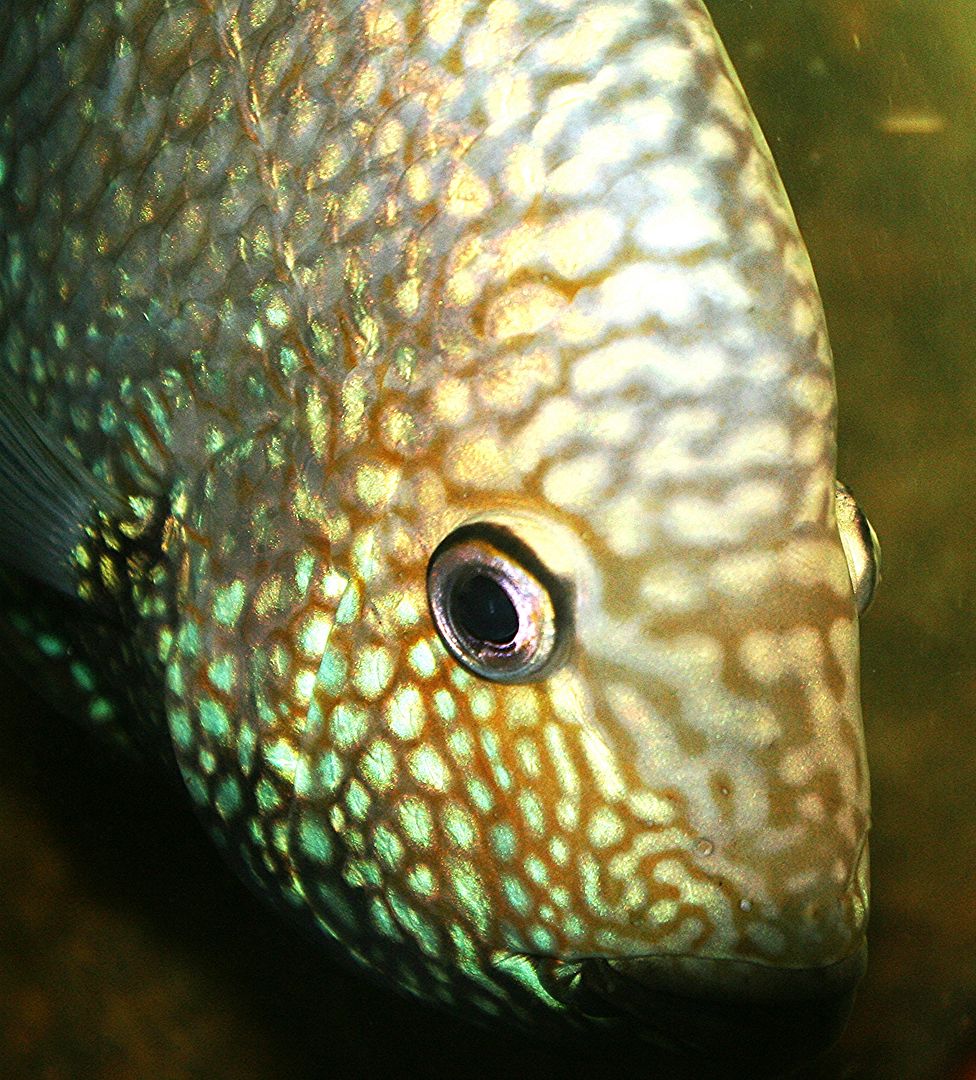
My H. Cyanoguttatus/ carpinti

  • We are currently upgrading MFK. thanks! -neo
Andy woods cichlids uk Andy woods cichlids uk yes he pushes the jags around. The biggest jag has 1” length on him but the texas has the body girth. I was worried about putting my big jag in this tank while I set up his 300 gallon. I thought he would terrorize the tank but he hasnt. I also moved this 150 so they were all reintroduced together and with a different scape setup. So hierarchy had to be re established. The JD was tank boss in the original setup with the texas second. The texas came into the new setup determined to take the top spot. He quickly achieved dominance of the jags. Then he went for the JD who still held dominance over everyone. They had a few good squabbles and fights but the JD remains king. I think it will change as the texas continues to gain size over the JD.
 
Andy woods cichlids uk Andy woods cichlids uk yes he pushes the jags around. The biggest jag has 1” length on him but the texas has the body girth. I was worried about putting my big jag in this tank while I set up his 300 gallon. I thought he would terrorize the tank but he hasnt. I also moved this 150 so they were all reintroduced together and with a different scape setup. So hierarchy had to be re established. The JD was tank boss in the original setup with the texas second. The texas came into the new setup determined to take the top spot. He quickly achieved dominance of the jags. Then he went for the JD who still held dominance over everyone. They had a few good squabbles and fights but the JD remains king. I think it will change as the texas continues to gain size over the JD.
I find it amazing how most people say and have experience with JD as being very mellow and although can stick up for themselves usually find themself low on the hierarchy totempole... but some can be right mean and push some of the other more notable aggressive cichlids around
 
This JD is the most aggressive one I have ever kept. Just before lights went out in the tank I could hear some water splashing. The JD had the texas backed up against the back wall at the top of the water. Both fish were flared up and lip locking at times and taking bites at each other as they roiled around each other. The JD kept him pinned up and won the exchanges again. Every time the texas tried to move out and swim the JD let him know he was still the boss. The jags found themselves in the jd’s sights a couple times as well. All he had to do was swim towards them and they scattered.
 
  • Like
Reactions: Nilsafeller
This JD is the most aggressive one I have ever kept. Just before lights went out in the tank I could hear some water splashing. The JD had the texas backed up against the back wall at the top of the water. Both fish were flared up and lip locking at times and taking bites at each other as they roiled around each other. The JD kept him pinned up and won the exchanges again. Every time the texas tried to move out and swim the JD let him know he was still the boss. The jags found themselves in the jd’s sights a couple times as well. All he had to do was swim towards them and they scattered.
Haha ya crazy isnt it... how big is the JD...
 
To me it looks like a normal carpintus, not mixed with anything (although these days its always a krapp shoot)
Below is an H carpintus location variant Chairel

I also do not consider JDs high on the aggression scale, as long as they are kept in spacious tanks.
In nature I have watched pairs defend areas of about 250 gallons square from any other cichlid, so the average accepted tank by most aquarists is, sadly too small.
And I find in nature when JDs are in an area with other cichlids, they often suffer, they get quite beat up, and the JD population numbers are often low.
In the video below where JDs share a Cenote with M uropthalmus, there are few, and tattered.
027 zps4b102ffd
Yet in the Cenote video below, where there are few other cichlids, the JDs dominate, and the story is very different
Eden2

 
Last edited:
Nilsafeller Nilsafeller The JD is 8.5”.

duanes duanes I forgot about those photos. I have seen them before and ya they have allot of reddish or brownish tones. He could very well be just a plain old carpintis. What do you think about the possibility of the native population of the texas cichlid getting mixed with carpintis that get released into the texas cichlids native waters? Would a carpintis survive the colder climate the texas lives in?

This JD has ruled the 150 gallon tank since they were put in as juvies. The JD is 8.5”, Carpintis is 8.5”, 3 jags the biggest is 9.5” middle 8” smallest 6.5”.
Heres a quick video from the same day I took the pics.
 
Some carpintus come from areas of Mexico that get pretty cool at night, and in winter, I kept my carpintus outside late May thru Sept in Wisconsin and they easily took temps down to 60'F.
And in places like Louisiana where they are feral, crossing wouldn't be out of possibility..
As to whether or not cyanoguttatus have been released in carpintus natural habitat boundaries, I can't speculate.
 
Nowadays, without some kind of provenance back to the wild, it could be just about anything.
Thats kinda what I was trying to get at when I asked duanes if released carpintis could destroy the purity of the native cyano blood lines. Will a day come that we no longer have pure H. Cyanoguttatus fish.
 
MonsterFishKeepers.com

