setting up 180 frontosa tank need advice

  • We are currently upgrading MFK. thanks! -neo

TRENT

Candiru
MFK Member
Nov 18, 2007
586
7
48
OREGON
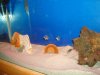
This will be my first front tank so I need some advice. I will be keeping 10-12 (1" babies). Base will be sand, some rock and fake plants. I am going to try to turn the 55 their in into a sump. So I will be running a 55gal sump, 2 ac110's and two power heads. Does this sound ok for filteration? I really don't have the cash for a canister (fx5) right now. Should I add it when they get bigger? Next question Coral, does anyone run it in their sump? How much do i need? Should I just mix it in with the sand? what is Ideal PH? Here is what it looks like so far. 180 will be here monday.

DSC00744.JPG
 
TRENT;2241292; said:
This will be my first front tank so I need some advice. I will be keeping 10-12 (1" babies). Base will be sand, some rock and fake plants. I am going to try to turn the 55 their in into a sump. So I will be running a 55gal sump, 2 ac110's and two power heads. Does this sound ok for filteration? I really don't have the cash for a canister (fx5) right now. Should I add it when they get bigger? Next question Coral, does anyone run it in their sump? How much do i need? Should I just mix it in with the sand? what is Ideal PH? Here is what it looks like so far. 180 will be here monday.

Ideal PH is above 8. but Captive Bred Frontosa will do fine in mostly any unaltered PH. I use finely crushed Argonite sand to help buffer it to 8.2. It's very pure white and sparkles nicely. You could also buy large crushed coral and shells and put it in a submerged drip tray in the sump. Seachem, makes a product called Tanganyika Buffer which buffers and maintains at 9.0-9.4. (I might try to use this to see if it stimulated breeding, but my colony is doing great anyways) but altering PH in this way requires close attention and constant regular testing.

Wood can lower the PH of the water, but I like it to much not to have some in with my Frontosa.

When piecing together your sump, make sure that if the pump turns off, the water from the top tank that flows out through the overflows (if the tank is drilled) has enough room in the sump, to not overflow it. If you use a HOB (Hang on Back) overflow unit, then you wont have this issue.

Your sump pump should turn the main tank over (the entire 180 gallons should pass through the filter) at minimum 3 times an hour. So the pump should have a uninterrupted flow rate of 540 gallons per hour as a minimum. Don't be afraid to use a pump rated for double that though.

If you have a sump, you don't need a big FX5. I'd trade my canisters on my Frontosa Tank for a large sump any day. For your AC110s, I'd suggest just using a sponge on the bottom and a top the rest up with Biomax. These filters have a fair bit of bypass.
 
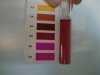
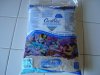
Thanks for the help guys. Here is a ph reading and the coral I will be using. Ph is a solid 8.2, I will leave it alone for now. I don't want to get it to high just yet because I may not be able to control it as well right away with the 180. I will do the coral in the sump then. How much coral should I use in the sump? Thanks T

DSC00763.JPG

DSC00764.JPG
 
I'm not positive on this, but using "live reef sand" could cause a big ammonia spike if used in a freshwater tank. I don't think a Fresh Water tank would support the life that is contained within and it would die off. For $30 you can get a 30-40lb bag of rough crushed dry coral containing large chunks and shells. When you put your sump together, install some drip trays and fill one with this.
 
Will Hayward;2241762; said:
I'm not positive on this, but using "live reef sand" could cause a big ammonia spike if used in a freshwater tank. I don't think a Fresh Water tank would support the life that is contained within and it would die off. For $30 you can get a 30-40lb bag of rough crushed dry coral containing large chunks and shells. When you put your sump together, install some drip trays and fill one with this.


I will second Will's statement. I suggest returning the live reef sand too if you can, the beneficial bacterias in there are not meant for FW tanks. Will is right, there will be a dieoff in the live reef sand cause its not transported or stored in salt water, Like uncured LR, it will cause a spike in ammonia once you put it in the tank. You could use regular sand for substrate.
 
Even if it's outdated and no good for saltwater. It was priced half off and the owner os the store told me was outdated and no good for saltwater any longer but it still had its ph value? Also will the spike be right away? I could put it in a bucket rinse it and then test it.

Will Hayward;2241762; said:
I'm not positive on this, but using "live reef sand" could cause a big ammonia spike if used in a freshwater tank. I don't think a Fresh Water tank would support the life that is contained within and it would die off. For $30 you can get a 30-40lb bag of rough crushed dry coral containing large chunks and shells. When you put your sump together, install some drip trays and fill one with this.
 
Yes it'll still buffer the PH, likely not much more than 8.2. And also you'll probably have to let it "Die Off" in a separate container, and remove all the ammonia from it, as most of the Live Bacteria stored within the bags contents, will starve, rot and die.

Plus, that bag is 10 pounds and even at 50% off probably cost around $30+. For 30 bucks, you could get a 40 pound bag on crushed coral.
 
Have you considered just using regular sand (any color or grit) ? Your little frontosa will be just fine as long as the ph stays the same and does not fluctuate. Its better to have a ph lower than what is recommended than one that bounces up and down etc... I think the ph recommendations are most important for wild caught fish, fish that are tank raised here in states are not so sensitive to a lower ph as a wild caught fish would be... I personally dont use any ph buffering. Im lucky my well water is high ph and hard but even when i lived in a area with city water i did not do all the buffereing since as long as my fish were tank raised and bred in the USA chances are the fish are kept somewhere between 7-8 PH. I would ask what the ph is where you got them and then go with the same in your tank. If they had a ph above 8 then you should do the same but if not it would be much better to keep the ph lower where the fish are used to it. Just my two cents.
 
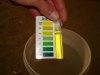
Thank you guys so much for your imput. I did go and open a bag rinsed it and ran a ammonia test. Not to prove anyone right or wrong just to make sure I didn't kill my fish. test looks good. I did notice the bag said sell before sept. 2007. So this stuff is way old. But the Ph is 8.2 and thats what I wanted out of it. I did open the other bags and have them soaking in water for a few days. The bags cost me 10.00 so their about the same price.


Will Hayward;2241945; said:
Yes it'll still buffer the PH, likely not much more than 8.2. And also you'll probably have to let it "Die Off" in a separate container, and remove all the ammonia from it, as most of the Live Bacteria stored within the bags contents, will starve, rot and die.

Plus, that bag is 10 pounds and even at 50% off probably cost around $30+. For 30 bucks, you could get a 40 pound bag on crushed coral.

DSC00773.JPG

DSC00775.JPG
 
MonsterFishKeepers.com